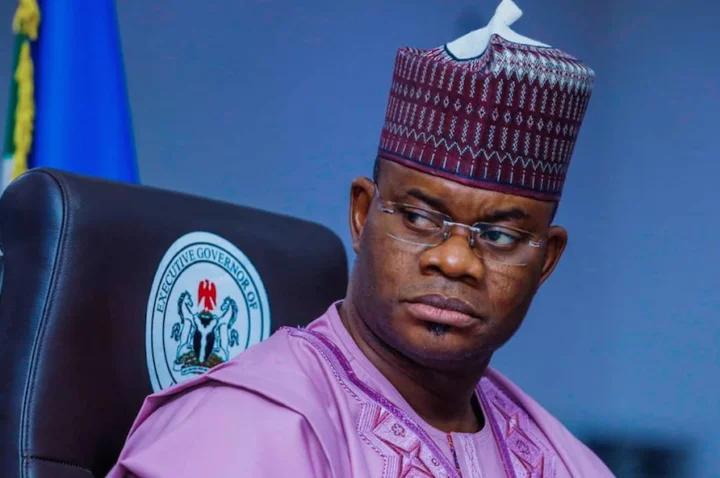

Anambra State Governor, Professor Chukwuma Charles in Soludo, has warned politicians against using churches and other places of worship as platforms for political campaigns ahead of the 2027 general elections.
The governor said religious institutions should remain sacred and neutral spaces where people of different political affiliations can gather to worship without being subjected to partisan activities or political pressure.
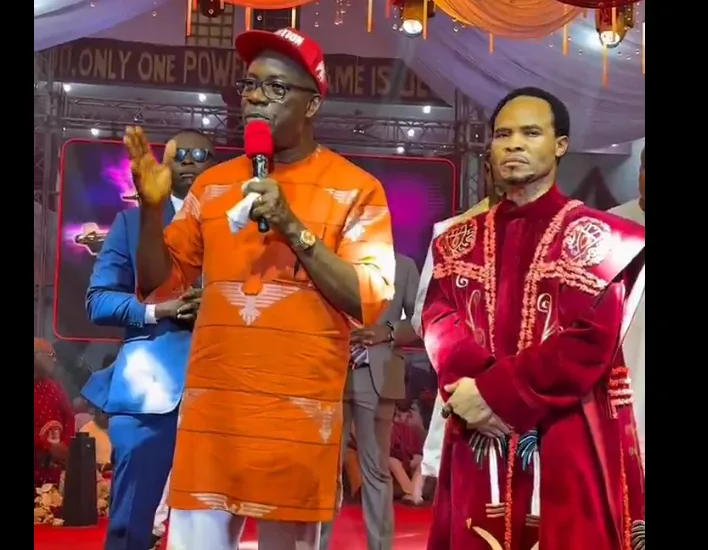
Soludo delivered the warning on Sunday, November 15, 2026, while attending the 30th anniversary celebration of the Mountain of Holy Ghost Intervention Deliverance Ministry Inc. in Onitsha, Anambra State.
The ministry was founded by popular cleric Prophet Chukwuemeka Ohanaemere, widely known as Odumeje.
Addressing the congregation during the anniversary celebration, the governor stressed that politicians should distinguish between religious activities and political engagement, insisting that churches should not be turned into campaign grounds.
He said: “We must never politicise the church. We must never politicise the place of worship. Politicians keep off places of worship.”
According to Soludo, political activities have appropriate venues, while churches should remain dedicated to spiritual development, peaceful worship and unity among believers.
He maintained that people with different political beliefs should be able to attend the same church and worship peacefully without the religious environment becoming a battleground for competing political interests.
Soludo Says Churches Should Remain Neutral Ahead of 2027 Elections
The governor’s comments come as political activities and consultations begin gathering momentum ahead of Nigeria’s 2027 general elections.
With political parties and their candidates expected to intensify efforts to attract supporters, religious institutions are likely to remain important spaces of public engagement.
In Nigeria, politicians frequently attend church services, mosque gatherings and religious celebrations, sometimes using such occasions to connect with worshippers, seek endorsements or communicate political messages.
However, Soludo argued that worship centres should not be used for partisan campaigning.
He explained that religious gatherings should accommodate people irrespective of their political affiliations, allowing worshippers to focus on their faith without being drawn into electoral activities.
The governor said: “The place of worship should be a holy place that people of all political persuasions should come and worship God in peace. It should not be a place for politics.”
He further urged politicians to conduct their campaigns at appropriate political venues rather than using religious platforms to solicit votes.
Governor Recalls Avoiding Church Campaigns Before His Election
Soludo also used the occasion to explain his personal approach to political campaigning, claiming that he deliberately avoided using churches to solicit votes during the six months preceding his election as Anambra governor.
According to him, he did not visit churches during that period to take microphones and ask worshippers to vote for him.
He said the decision was deliberate and reflected his belief that religious institutions should remain separate from partisan political activities.
The governor also stated that he worshipped at the government chapel during the period leading to the election and continued doing so afterwards.
He presented his position as a matter of consistency, insisting that politicians should respect the boundaries between religious worship and electoral competition.
Soludo added that his visits to religious institutions were motivated by his Christian commitment, religious tolerance and responsibility as governor of residents with different religious and political backgrounds.
He told Odumeje that Christians remained united through their faith, regardless of their individual political preferences.
“Once you are preaching in the name of Jesus Christ, we are one. Odumeje, you are part of Christendom,” the governor said.
Remarks Follow Political Activity at Odumeje’s Anniversary
Soludo’s warning came during an event that also featured political personalities and discussions connected to the 2027 elections.
Anambra Central Senator Victor Umeh, who is associated with the Nigeria Democratic Congress (NDC), reportedly made remarks at the celebration in which he praised Odumeje for supporting the aspiration for an Igbo presidency.
The development provided a political backdrop to the governor’s comments about keeping partisan activities out of churches.
The NDC’s presidential candidate, Peter Obi, is a former governor of Anambra State who served from 2006 to 2014. Soludo, who belongs to the All Progressives Grand Alliance (APGA), has publicly opposed Obi’s presidential ambition and has declared support for President Bola Tinubu’s re-election bid.
The political differences involving the major figures have become part of the wider conversation surrounding the approaching 2027 elections.
Nevertheless, Soludo’s message at the anniversary was directed at politicians generally, urging them not to turn places of worship into platforms for electoral campaigns.
Electoral Act 2026 Prohibits Campaigning in Places of Worship
The governor’s warning also comes against the background of provisions in Nigeria’s Electoral Act 2026 concerning the use of public and religious spaces for political campaigns.
According to PREMIUM TIMES’ report on the development, Section 96(3) of the Electoral Act 2026 prohibits the use of places designated for religious worship, police stations and public offices for political campaigns, rallies and processions.
The report also stated that Section 96(7) provides penalties for individuals and political parties that violate the restriction.
Under the provision as reported, an individual convicted of the offence may face a fine of up to ₦5 million or imprisonment for up to 12 months.
Political parties found in violation may face a ₦10 million penalty for a first offence and ₦5 million for subsequent offences.
The provision is significant because it gives the issue a legal dimension beyond the governor’s personal appeal to politicians.
It also reinforces the distinction between attending religious services as an individual and using a religious venue for organised political campaigning.
Politicians, political parties and religious leaders will therefore need to pay attention to the applicable electoral rules as preparations for the 2027 elections continue.
Old Video of Soludo in APGA-Branded Apron Resurfaces
Following the governor’s warning, a separate political controversy emerged online after an old video reportedly showing Soludo wearing an APGA-branded apron inside a church resurfaced.
The footage, said to date back to 2021, began circulating on social media hours after the governor’s remarks against using churches for political activities.
According to reports, the video showed Soludo inside the same church associated with Odumeje, wearing an apron bearing the colours and logo of the All Progressives Grand Alliance.
The resurfacing of the footage prompted online discussions, with some commentators questioning the consistency of the governor’s position on the separation of religion and politics.
The video and the governor’s recent remarks have therefore become separate subjects of public debate.
However, the circumstances surrounding the old footage should be considered independently of the specific warning he delivered on November 15, 2026. The available reports do not establish that the old video was part of a formal campaign event.
Soludo Commends Odumeje’s Humanitarian Activities
Beyond the political message, the governor also used the anniversary celebration to congratulate Odumeje on reaching 30 years in ministry.
He described the milestone as an important stage in the ministry’s development, representing maturity, preparation and the beginning of another phase.
Soludo recalled that his first encounter with the cleric was connected to the state government’s demolition of part of the church structure to facilitate the dredging of the Sakamori drainage channel.
He said he had since recognised the ministry’s charitable activities and contributions to society.
The governor also commended Odumeje’s advocacy against criminal activities carried out under the guise of idolatry, linking the effort to the state’s broader security campaign and the implementation of the Anambra Homeland Security Law.
He further acknowledged the role religious institutions can play in humanitarian work, community development and promoting public safety.
Soludo also announced state support for the ministry’s youth empowerment programme, saying the intervention would align with his administration’s One Youth, Two Skills initiative.
The programme is designed to provide young people with vocational skills and opportunities for economic empowerment.
2027 Elections: Debate Over Religion and Politics Intensifies
Soludo’s remarks have added another dimension to the growing national conversation about the relationship between religion and politics ahead of the 2027 general elections.
Religious institutions occupy influential positions in Nigerian society, and politicians across the country often seek opportunities to engage congregations and religious leaders.
While political participation and freedom of association remain important democratic principles, the use of religious spaces for partisan campaigning raises questions about neutrality, religious freedom and compliance with electoral regulations.
For many worshippers, churches and other places of worship are spaces for spiritual activities, fellowship and community support. Turning such gatherings into political events could create divisions among members who support different political parties or candidates.
The governor’s position is that political campaigns should take place in designated political venues, leaving religious institutions open to everyone regardless of political affiliation.
With the 2027 elections approaching, the issue is likely to remain relevant as political parties intensify their campaigns and religious organisations determine how to engage with political actors.
Soludo’s message is clear: politicians should keep partisan campaigning out of churches and other places of worship, allowing religious institutions to remain places where people can worship together in peace.
About the Author