
The Federal Government has announced plans to introduce a 24-hour electricity supply initiative in parts of Lagos, Ogun and Abuja as part of a renewed effort to address Nigeria’s persistent power challenges and improve electricity delivery to major economic centres.
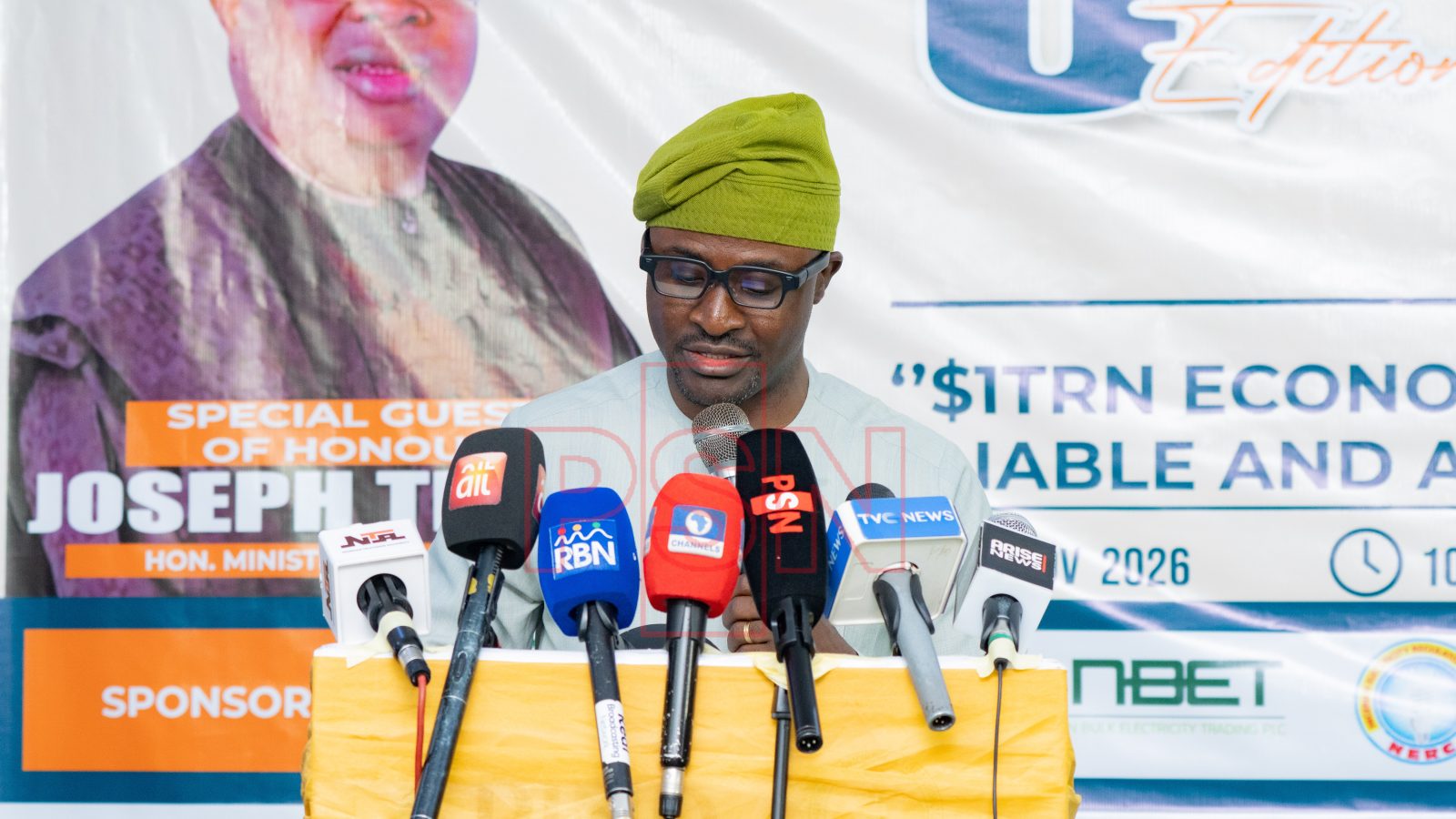
The Minister of Power, Joseph Tegbe, disclosed the plan during an interactive luncheon with senior media editors in Lagos on Friday, November 13, 2026.
According to the minister, the Lagos-Ogun axis and the Abuja electricity franchise area have been identified as proposed pilot locations for the initiative, subject to technical readiness and commercial viability.
The proposed intervention forms part of the Federal Government’s broader corridor-based electricity development strategy, which seeks to align electricity generation, transmission and distribution capacity with demand in important commercial and industrial centres.
Tegbe explained that the two proposed pilot areas jointly account for more than 50 per cent of Nigeria’s electricity demand, making them strategic locations for interventions aimed at improving power supply.
The announcement comes amid widespread complaints from households, businesses and industries over unreliable electricity, frequent grid disturbances, inadequate infrastructure and the high cost of alternative power sources.
Lagos and Ogun to lead the proposed 24-hour electricity initiative
The Lagos-Ogun corridor is expected to play a major role in the Federal Government’s electricity improvement programme because of its concentration of commercial, industrial and manufacturing activities.
Lagos is Nigeria’s commercial centre, hosting major financial institutions, businesses, technology companies, markets, manufacturing facilities and other economic activities that depend heavily on reliable electricity.
Ogun State, which shares a major industrial and economic corridor with Lagos, is also home to numerous factories, warehouses, manufacturing companies and industrial estates.
The two states are closely connected through business activities, transportation and industrial supply chains. Consequently, electricity challenges in one area can affect businesses and economic activities in the other.
The Federal Government believes that prioritising the corridor could help improve electricity reliability in locations where power interruptions have significant economic consequences.
However, the proposed 24-hour arrangement is not an automatic guarantee that every community, household or business across Lagos and Ogun will receive uninterrupted electricity immediately.
The initiative will depend on the availability of sufficient electricity generation, reliable transmission infrastructure, effective distribution networks and commercially sustainable arrangements among electricity market operators.
Abuja also identified as a pilot location
Apart from Lagos and Ogun, the Abuja electricity franchise area has also been identified as a proposed pilot location.
The Federal Government’s decision to include Abuja reflects the importance of reliable electricity to government institutions, businesses, residential communities and other economic activities within the nation’s capital.
The proposed initiative is expected to address weaknesses across the electricity value chain and improve coordination between electricity generation companies, transmission operators and distribution companies.
The government has indicated that the success of the pilot areas could provide a framework for extending similar interventions to other parts of the country.
Three major economic corridors targeted
Beyond the immediate pilot locations, the Federal Government is pursuing a corridor-based electricity development strategy covering three major economic zones.
These are:
- Lagos-Ogun economic corridor: This covers the industrial and commercial activities connecting Lagos and Ogun States.
- Benin-Enugu-Port Harcourt corridor: This is intended to support electricity delivery across important commercial and industrial centres in the South-South and South-East.
- Abuja-Kaduna-Kano corridor: This covers major economic centres in the North-Central and North-West regions.
The strategy is designed to ensure that electricity infrastructure development is better aligned with the energy requirements of major economic centres.
Rather than treating electricity challenges as isolated problems, the government wants generation, transmission and distribution capacity to work together within designated economic corridors.
The Federal Government believes this approach could improve electricity availability, strengthen industrial productivity and support its ambition of building a $1 trillion economy.
Four priorities behind the Federal Government’s power sector reforms
The Minister of Power has identified several interconnected challenges affecting electricity delivery in Nigeria.
These include inadequate gas supply, ageing infrastructure, transmission constraints, vandalism, poor metering and commercial difficulties across the electricity value chain.
To address these challenges, the Federal Government has identified four major priorities for its power sector reform programme.
1. Grid stabilisation
The government intends to strengthen the national electricity grid and reduce the frequency of system disturbances that disrupt electricity supply.
Grid instability has remained a major challenge for Nigeria’s electricity sector, with system disturbances affecting generation companies, transmission infrastructure and distribution networks.
The government says improved coordination and infrastructure upgrades are necessary to make electricity delivery more dependable.
2. Improved financial liquidity
The electricity industry has faced persistent financial difficulties, including unpaid obligations among operators and accumulated debts owed to electricity generation companies.
According to Tegbe, the Federal Government has paid approximately ₦1.23 trillion out of the ₦3.3 trillion approved by President Bola Tinubu for settling verified legacy debts owed to generation companies.
The payments are intended to reduce financial pressure on power producers and improve their ability to purchase gas, maintain generating plants and sustain operations.
3. Asset optimisation
The government also intends to improve the performance of existing electricity infrastructure.
This includes making better use of available generation facilities, transmission equipment and distribution assets.
The objective is to improve the amount of electricity that existing infrastructure can reliably deliver while addressing operational inefficiencies.
4. Network expansion
The fourth priority involves expanding and strengthening electricity infrastructure to meet increasing demand.
This includes investments in transmission substations, transformers, distribution networks and other equipment needed to deliver electricity from generating facilities to consumers.
The government believes that expanding network capacity will be essential to supporting industrial development and improving electricity access in major economic centres.
Government reports progress on electricity infrastructure
The Power Minister also highlighted some of the Federal Government’s reported achievements in addressing electricity sector challenges.
One of the developments is the Presidential Metering Initiative, under which more than 2.8 million electricity customers were reportedly metered between 2023 and October 2026.
Metering is considered important because it helps improve billing transparency, reduce estimated billing disputes and strengthen accountability between electricity distribution companies and consumers.
The minister also disclosed that recently commissioned substations and equipment had added more than 1,300 megavolt-amperes (MVA) to the national transmission capacity.
Locations covered by the reported transmission improvements include Apapa, Ijora, Ikeja, Kumbotso, Dankata, Mashi, Dan-Agundi, Biliri and Walalambe.
The government is also building a new National Grid Control Centre in Osogbo to replace the existing facility, which the minister described as more than 60 years old.
The proposed control centre is expected to strengthen the monitoring and management of Nigeria’s national electricity grid.
In addition, the administration is working towards expanding electricity generation capacity to 10,000 megawatts.
However, installed or available generation capacity alone does not guarantee reliable electricity for consumers. Adequate gas supply, transmission capacity, distribution infrastructure and effective electricity market operations are also required.
Why reliable electricity matters to Lagos businesses
The proposed 24-hour electricity initiative could have significant implications for businesses operating in Lagos and neighbouring Ogun State.
Many Nigerian businesses spend substantial amounts on petrol and diesel to operate generators because public electricity supply is often unreliable.
For manufacturers, frequent power interruptions can increase production costs, affect delivery schedules, damage equipment and reduce competitiveness.
Small businesses such as restaurants, supermarkets, cold-room operators, printing companies, salons, bakeries and technology firms also depend on electricity to maintain daily operations.
Reliable electricity could reduce dependence on generators and potentially lower operating expenses for businesses that currently spend a significant portion of their income on alternative power.
It could also encourage new investments in industrial facilities, manufacturing and commercial services across the Lagos-Ogun corridor.
For households, improved electricity availability could reduce the financial burden associated with purchasing fuel, maintaining generators and relying on alternative energy sources.
Nevertheless, the actual savings consumers experience will depend on electricity tariffs, service quality, metering arrangements and the cost of alternative energy.
Government acknowledges major obstacles
Despite the proposed interventions, Tegbe acknowledged that Nigeria’s electricity sector remained far from meeting public expectations.
Among the challenges identified by the minister are inadequate gas supply to power plants, ageing electricity infrastructure, transmission limitations, vandalism, poor metering and commercial difficulties.
Gas supply remains particularly important because a significant portion of Nigeria’s electricity generation comes from gas-fired power plants.
Where gas producers and suppliers face financial or operational difficulties, electricity generation can be affected.
Transmission constraints also limit the amount of electricity that can be transported from generating stations to distribution networks.
Even where electricity is generated, weaknesses in transmission and distribution infrastructure can prevent consumers from receiving the available power.
The government has also approved a coordinated anti-vandalism campaign involving relevant security agencies to protect critical electricity infrastructure.
The initiative is expected to strengthen the security of power assets and discourage activities that disrupt electricity delivery.
What will happen next?
The proposed 24-hour electricity initiative will require cooperation between the Federal Government, Lagos and Ogun State Governments, electricity regulators, generation companies, transmission operators and distribution companies.
The government has indicated that the pilot locations will be selected based on technical readiness and commercial viability.
This means that infrastructure assessments, electricity supply arrangements and operational agreements will be important before the proposed zones can deliver the intended results.
The Federal Government will also need to ensure that electricity generation, transmission and distribution capacity are sufficiently coordinated to meet the demand within the selected areas.
Consumers will be watching closely to see whether the initiative translates into fewer power interruptions, improved supply hours and more predictable electricity delivery.
For now, the government has announced its target and identified the proposed pilot locations, but it has not provided a firm date for when every part of Lagos, Ogun and Abuja will begin receiving uninterrupted 24-hour electricity.
A major test for Nigeria’s electricity sector
The Federal Government’s plan to introduce 24-hour electricity supply in Lagos-Ogun and Abuja represents an important development in its efforts to address the country’s longstanding power challenges.
With the two proposed pilot areas accounting for more than half of national electricity demand, their successful implementation could have significant economic implications.
The wider corridor strategy also offers an opportunity to improve electricity delivery across other major commercial and industrial centres.
However, Nigerians have witnessed several electricity reform announcements over the years, and the success of this latest initiative will ultimately depend on implementation rather than policy declarations.
For households and businesses in Lagos, Ogun and Abuja, the most important question is whether the proposed intervention will result in more hours of electricity, fewer outages and reduced dependence on expensive generators.
The Federal Government says it is working towards that objective. The coming months will reveal how quickly the plans can move from announcements to measurable improvements in electricity supply.
About the Author