
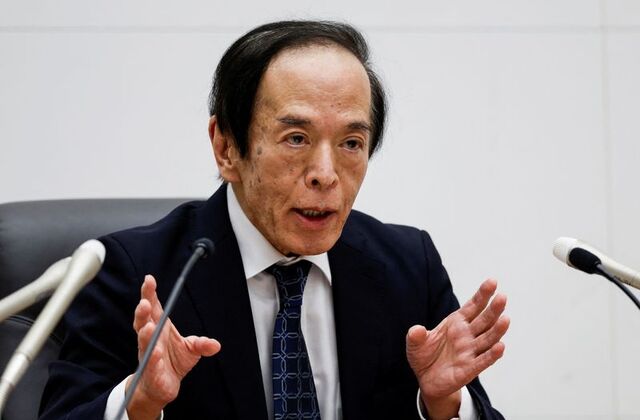
The Bank of Japan (BOJ) may raise interest rates at its upcoming December 18–19 meeting, Governor Kazuo Ueda said on Monday, marking the strongest indication yet that a policy shift is imminent.
Ueda stated that the BOJ will review the “pros and cons” of a rate hike, prompting a swift reaction in financial markets. The yen strengthened and Japanese government bond yields climbed, with traders now pricing in an 80% chance of a December hike—up from around 60% just a week earlier.
Speaking to business leaders in Nagoya, Ueda expressed confidence that Japan’s economy will rebound from its third-quarter contraction. He noted that the impact of U.S. tariffs has been less severe than initially expected, improving the likelihood that the BOJ’s economic and inflation projections will be met.
Ueda highlighted wage growth as a critical factor in the timing of the bank’s next policy move.
He said the BOJ is closely observing whether companies will continue active wage-setting behavior, citing persistent labor shortages, strong corporate profits, and calls from major business groups to maintain wage increases.
Ahead of the December meeting, the BOJ is “actively collecting” data on wage trends, he added.
Financial markets reacted immediately to Ueda’s comments:
-
The yen rose 0.4%, hitting 155.49 per dollar.
-
The two-year government bond yield—highly sensitive to BOJ policy—climbed to 1.01%, its highest level since 2008.
Analysts saw Ueda’s remarks as a clear signal.
“Ueda essentially pre-announced a December hike,” said Naomi Muguruma, chief bond strategist at Mitsubishi UFJ Morgan Stanley Securities. She warned that holding rates steady now would trigger significant market volatility.
The BOJ ended its decade-long massive stimulus program last year and lifted rates to 0.5% in January. While rates have remained unchanged since then, several board members have advocated for further tightening as inflation—driven largely by food prices—has stayed above the 2% target for more than three years.
Ueda stressed that another rate hike would still leave borrowing costs low and should be seen as “easing off the accelerator” rather than tightening, warning that waiting too long could fuel excessive inflation and force abrupt policy moves.
He declined to specify how far the BOJ may eventually raise rates but said more guidance will be provided once the policy rate reaches 0.75%, a level closer to what the bank considers neutral for the economy.
The yen’s persistent weakness has remained a concern, exacerbating import inflation and raising the possibility of government intervention. Ueda acknowledged that a weaker currency accelerates consumer inflation—something the BOJ must closely monitor in its policy decisions.
About the Author