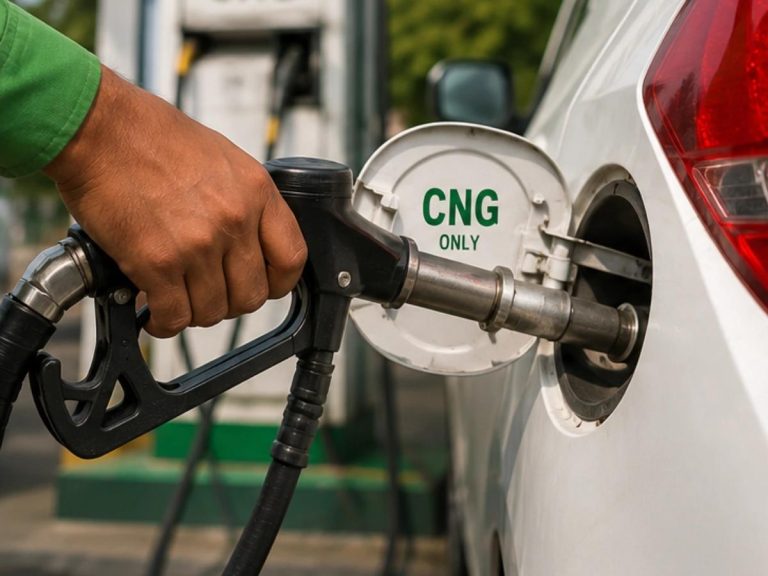

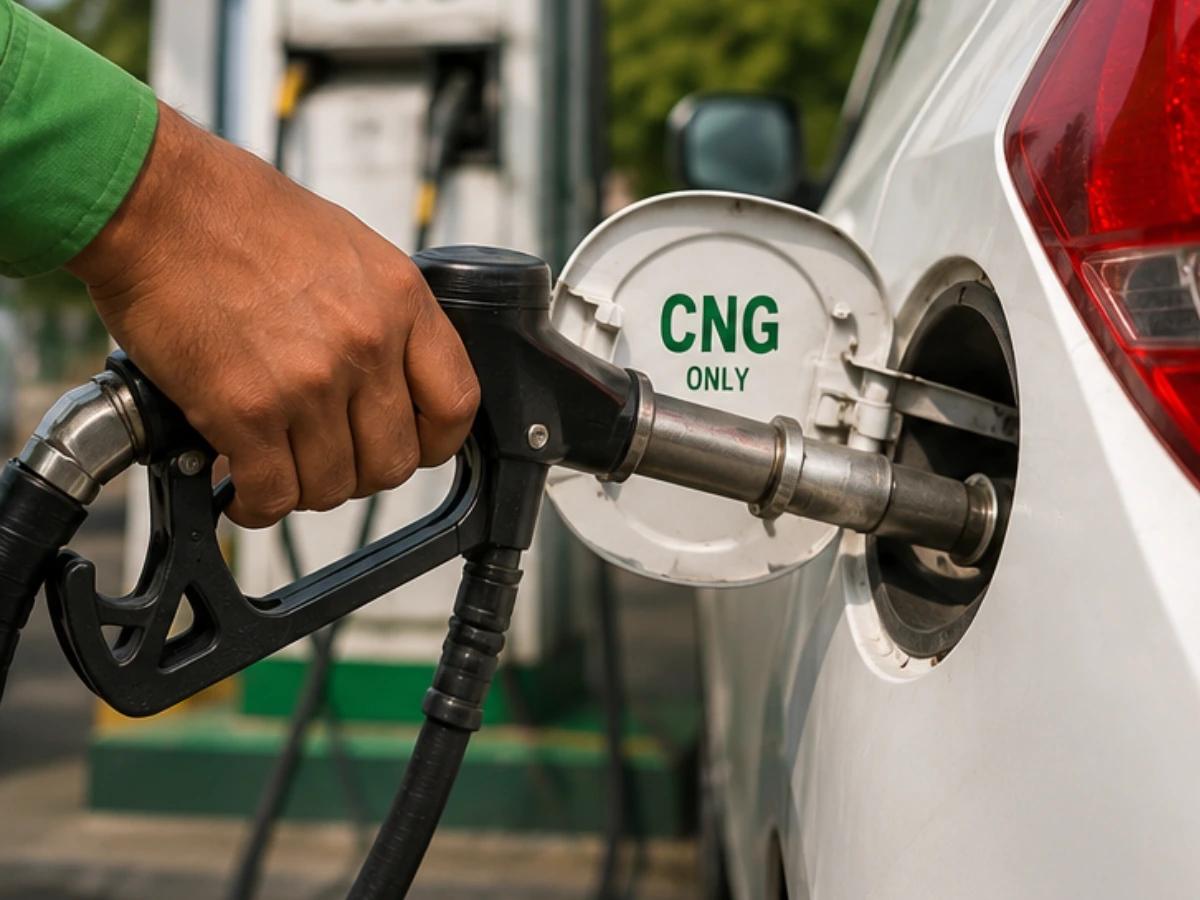
Nigerian motorists who converted their vehicles to compressed natural gas to escape high petrol prices are now facing long queues, limited refuelling stations and occasional shortages, with commercial drivers losing valuable working hours while waiting to buy the cheaper alternative.
Nigeria’s transition to compressed natural gas (CNG) was introduced as part of efforts to reduce transportation costs following the removal of the petrol subsidy. For many motorists, the alternative fuel has delivered significant savings, with some reporting that their daily fuel expenses have dropped by more than half.
However, a growing number of drivers are discovering that cheaper fuel does not necessarily mean easier transportation.
Across Lagos, Ogun and Oyo states, motorists who invested hundreds of thousands of naira, and sometimes more than ₦1m, converting their vehicles to CNG are increasingly struggling to find accessible refuelling stations.
Some spend several hours waiting in queues, while others travel considerable distances to locate stations with available gas. In certain cases, motorists arrive at filling stations only to discover that the product has run out.
The situation has created a frustrating contradiction: a fuel introduced to reduce the financial burden on Nigerians is now costing some motorists valuable time, lost business opportunities and additional transport expenses.
Drivers spend nights waiting for cheaper fuel
One of the motorists affected by the situation is commercial bus driver Debo Adeoti, who borrowed ₦1m to convert his vehicle to compressed natural gas.
Adeoti had expected the investment to reduce his operating expenses and improve his earnings. Instead, he says accessing CNG has become another major challenge.
According to a report by Saturday PUNCH, the driver sometimes travels to a refuelling station in Magboro, Ogun State, where he waits through the night for his turn.
Adeoti explained that motorists were encouraged to convert their vehicles to gas, but getting the product after completing the conversion had become difficult.
His experience reflects the growing concerns of commercial drivers whose livelihoods depend on keeping their vehicles on the road.
Another motorist, Wasiu Akande, described how he spent more than four hours waiting at an Ibile Oil and Gas Corporation station in Ikota, Lagos.
After waiting for hours, he was reportedly informed that the CNG had run out just as it was almost his turn to refuel.
Akande, who said he converted his vehicle about six months earlier through a government-supported arrangement that provided ₦650,000, described the experience as deeply frustrating.
He explained that the main attraction of CNG was its lower operating cost, but poor availability and accessibility were undermining the benefits.
How much cheaper is CNG than petrol?
Despite the difficulties, CNG remains financially attractive to many Nigerian motorists.
Figures reported by Saturday PUNCH showed that CNG was selling at approximately ₦380 per Standard Cubic Metre (SCM) for passenger cars and light commercial buses, while heavy trucks paid around ₦450 per SCM at the time of the report.
Petrol prices, by comparison, ranged between approximately ₦1,330 and ₦1,405 per litre, depending on the location and filling station.
These figures are not directly interchangeable because petrol is sold by the litre while CNG is measured in standard cubic metres. However, the reported operating costs from motorists demonstrate the potential savings.
Michael Awosika, a tricycle operator in Ibadan, said he could complete six trips along the Apata-Mokola route with approximately ₦2,700 worth of CNG.
He compared this with the possibility of spending as much as ₦15,000 on petrol for a day’s work.
Another driver, Idowu Olaide, said his daily fuel expenditure had dropped from approximately ₦50,000 on petrol to between ₦10,000 and ₦20,000 on CNG.
Interstate transporter Kayode Ojo also reported substantial savings. According to him, a journey from Ibadan to Lagos that previously required about ₦30,000 worth of petrol could cost approximately ₦7,000 using CNG.
These experiences explain why many motorists remain interested in the alternative fuel despite the difficulties involved in accessing it.
However, the savings can be reduced when drivers spend several hours waiting instead of transporting passengers and earning money.
Long queues observed across Lagos, Ogun and Oyo
Findings by Saturday PUNCH revealed that the problem extends beyond isolated incidents.
At the Ibile Oil and Gas Corporation station in Ojota, Lagos, approximately 30 vehicles were observed waiting in a queue at about 2pm during a visit on October 17. The queue remained visible roughly three hours later.
At the NIPCO Gas station in Magboro, Ogun State, more than 50 commercial and private vehicles were reportedly waiting for CNG.
Another station operated by FuelBuddy in Magboro had more than 20 private vehicles in its queue as late as 8:30pm.
At a Petrocam station in Mowe, more than 20 vehicles were also observed waiting on Sunday.
The situation was similarly concerning in Ibadan, Oyo State.
At the NNPC station around Agodi Gate, more than 30 private and commercial vehicles were seen waiting, alongside approximately 40 tricycles during the visits described in the report.
The queue reportedly remained visible until around 7:15pm.
For motorists living far from these stations, finding CNG has become an additional journey in itself.
Lukman Rasheed, a surveyor who lives in Egbeda, Ibadan, said he sometimes had to travel to different locations, including the Airport area, Agodi Gate and Toll Gate, to obtain the fuel.
He explained that on a previous visit to the Agodi Gate station, he arrived in the morning but was unable to buy gas because the station was waiting for a fresh supply.
Another motorist, Seun Bamgbopa, said he lived in Lagos but found CNG more accessible in Ibadan.
He suggested that more refuelling facilities in Lagos would make the transition considerably easier.
High conversion costs add to motorists’ frustration
The challenge is particularly concerning because converting a vehicle to CNG can require a substantial financial commitment.
According to a conversion price list obtained by Saturday PUNCH, the cost depends on the vehicle’s engine capacity and the type of conversion system installed.
An open-loop system for four-cylinder engines was listed at between ₦810,000 and ₦870,000.
Sequential systems for four-cylinder engines were priced between ₦870,000 and ₦880,000.
For vehicles with six- or eight-cylinder engines, sequential conversion could cost between ₦1.09m and ₦1.1m.
For some V6 vehicles, the cost was approximately ₦1.1m for a single-cylinder configuration and ₦1.39m for a double-cylinder arrangement.
Motorists interviewed by the newspaper also disclosed different amounts spent on conversion.
Adeoti borrowed ₦1m for his commercial bus, Seun Bamgbopa reportedly spent ₦950,000, while Awosika said he paid ₦500,000 to convert his tricycle.
These expenses make access to reliable refuelling infrastructure especially important.
For a driver who has borrowed money to convert a vehicle, long queues can delay the recovery of that investment and make it harder to meet loan repayments and other operating expenses.
What happened to the government’s CNG programme?
The Federal Government’s push towards CNG followed the announcement of petrol subsidy removal in May 2023.
The Presidential Compressed Natural Gas Initiative was subsequently established to encourage the adoption of natural gas as a more affordable alternative for transportation.
In June 2024, the Federal Government engaged transport stakeholders and announced support for vehicle conversions, including an arrangement under which it would shoulder 50 per cent of eligible conversion-kit costs.
The following month, free CNG conversions for commercial vehicles commenced in Abuja and Lagos.
However, the initial free-conversion programme was not the final phase of the government’s intervention.
According to Onyekachi Eke, Head of Brand and Communications at the Presidential CNG Initiative, the first Conversion Incentive Programme ran for approximately 15 months across 16 states before ending around July or August 2025.
He clarified that the conclusion of that particular phase did not mean government support for CNG conversion had ended.
Eke said a new phase, known as Pi-CNG 2.0, commenced in March 2026.
The newer programme introduced a broader support model involving subsidised and discounted conversion kits, alongside financing arrangements.
He disclosed that financing partnerships had been developed with organisations including Moniepoint and CREDICORP, with repayment arrangements intended to spread conversion expenses over time.
The initiative therefore maintained that its support for CNG adoption was continuing, although the model had changed.
NIPCO, NNPC and Pi-CNG respond to complaints
Operators and government representatives have acknowledged the difficulties motorists are experiencing, although they have offered different explanations for the queues.
The Assistant General Manager of NIPCO Group, Lawal Taofeek, said the company’s station ordinarily served between 80 and 100 vehicles daily, depending on operating hours.
He maintained that gas supply was not generally the problem at the company’s facility, arguing that the number of available refuelling stations needed to increase to reduce pressure on existing locations.
An IOGC representative also apologised to motorists who had encountered situations where gas was unavailable, explaining that a station could temporarily run out of product while waiting for replenishment.
NNPC Limited similarly attributed persistent queues to the limited number of available facilities serving an increasing number of CNG users.
The company’s spokesperson, Andy Odeh, disclosed that NNPC Gas Marketing Limited operated a CNG mother station at Ilasamaja in Lagos and jointly operated another facility with NIPCO at Ibafo, Ogun State.
He added that additional facilities were under construction at Lekki in Lagos and Ososa in Ogun State.
The company was also engaging third-party operators to supplement supply.
However, Odeh disclosed that NGML did not currently have CNG operations in Oyo State.
The Head of Brand and Communications at Pi-CNG, Onyekachi Eke, said the initiative recognised the complaints about long queues and waiting times.
He explained that the government’s focus was not limited to encouraging motorists to convert their vehicles but also included expanding refuelling capacity and improving the reliability of existing infrastructure.
According to Eke, several new facilities were at different stages of licensing, installation and commissioning.
He also said the government was working with the Midstream and Downstream Gas Infrastructure Fund, state governments and private-sector operators to develop additional mother and daughter stations.
Eke acknowledged that waiting time had a direct financial impact on commercial motorists.
He said expanding the number, capacity and geographical distribution of CNG facilities remained a major priority for the initiative.
Will the queues reduce before the end of 2026?
The Presidential CNG Initiative has expressed confidence that the pressure on existing stations should reduce as additional refuelling facilities become operational.
However, the effectiveness of that expansion will depend on how quickly planned projects are completed, commissioned and made accessible to motorists.
A check of the Pi-CNG and EV website by the newspaper’s correspondent showed that 105 Pi-CNG-certified CNG refuelling stations were listed across six geopolitical zones and 24 states, including the Federal Capital Territory.
Although the number represents an existing network, motorists’ experiences suggest that the geographical distribution and capacity of the facilities remain important challenges.
Having a large number of stations nationally does not automatically guarantee convenient access in densely populated cities or along busy transport routes.
For commercial drivers, the issue is particularly urgent because every hour spent waiting to refuel is an hour of lost income.
Nigeria’s CNG transition therefore faces a critical test: moving beyond vehicle conversions and making affordable fuel consistently available where motorists actually need it.
The success of the initiative will depend not only on how many vehicles switch to natural gas but also on whether drivers can refill their tanks without spending half a working day in a queue.
Until the refuelling network catches up with demand, the promise of cheaper transportation may continue to come with an expensive inconvenience.
About the Author