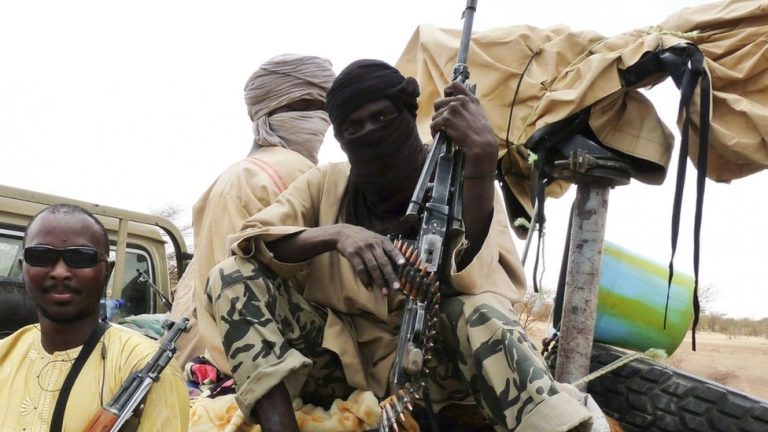

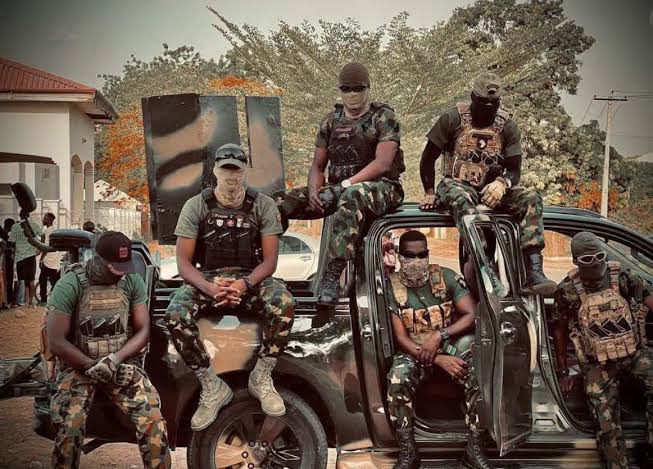
The Nigerian government has reportedly entered into a secret ceasefire agreement with a faction of Boko Haram led by Ibrahim Bakura Doro, according to an investigation by The New Humanitarian, raising fresh questions about Nigeria’s long-running military campaign against insurgents in the Northeast.
According to the report, the alleged ceasefire has been in effect since June 2026 and is believed to be connected to negotiations that resulted in the release of 360 civilians abducted from Ngoshe community in Borno State.
The reported development is particularly significant because the Nigerian government has publicly maintained a firm position against negotiating with Boko Haram and other terrorist organisations. However, sources familiar with previous attempts at dialogue told The New Humanitarian that behind-the-scenes contacts between government representatives and insurgent groups have continued over the years.
The alleged agreement has not been publicly confirmed by the Federal Government, the Nigerian Army or Defence Headquarters.
How The Reported Ceasefire Began
The reported ceasefire is believed to have emerged from negotiations surrounding the mass abduction of 360 civilians from Ngoshe, a community in southern Borno near the Mandara Mountains and the Cameroon border.
The civilians were reportedly abducted in March 2026 after Boko Haram fighters attacked a nearby military base.
Three people with contacts among Boko Haram members, including individuals with links to senior commanders, reportedly told The New Humanitarian that negotiations eventually resulted in the release of the abducted civilians in June.
The same sources said the release was followed by an agreement under which Boko Haram fighters would halt attacks in certain communities around Ngoshe.
Two of the sources reportedly said communities that had previously suffered repeated Boko Haram attacks experienced a cessation of attacks after the alleged agreement came into effect.
The reported arrangement was initially understood to last for three months, with sources indicating that it could be extended for another 40 days.
However, the exact terms of the alleged ceasefire remain unclear.
Controversy Over Alleged ₦5 Billion Payment
One of the most controversial aspects of the report concerns an alleged payment of ₦5 billion by the Nigerian government as part of the negotiations that led to the release of the abducted civilians.
The New Humanitarian reported that sources claimed the government paid approximately ₦5 billion, equivalent to about $3.7 million, in connection with the hostage negotiations.
The Federal Government has denied paying the alleged ransom.
The reported payment has generated further controversy because of separate allegations surrounding the handling or possible misappropriation of money allegedly connected to the release of the hostages.
It is important to stress that the reported ₦5 billion payment has not been independently established, and the government has rejected the ransom allegation.
The New Humanitarian said it contacted government officials, Defence Headquarters and the Nigerian Army for confirmation of the reported ceasefire, but did not receive a response before its report was published.
The Guardian subsequently reported that Defence Headquarters declined to comment when asked about the alleged agreement.
Government Has Publicly Rejected Boko Haram Negotiations
The reported secret agreement is striking because it appears to contrast with the Nigerian government’s public position on negotiations with Boko Haram.
For years, successive Nigerian administrations have emphasised military action against terrorist organisations operating in the Northeast.
The administration of President Bola Tinubu has continued to expand the country’s security capabilities, including plans announced in July 2026 to recruit 30,000 additional personnel and establish four new Army divisions.
The reported ceasefire therefore raises an obvious question: could the government be simultaneously pursuing military pressure publicly while exploring dialogue privately?
Sources cited by The New Humanitarian suggest that attempts at dialogue are not entirely new.
Security officials, diplomats and mediators familiar with previous negotiations reportedly described a history of discreet contacts between government representatives and Boko Haram figures.
Previous ceasefire efforts have reportedly collapsed, including attempts during 2022 and 2023.
One security official reportedly said earlier ceasefires could not be maintained, highlighting the enormous difficulty of reaching an agreement with a fragmented insurgent movement.
Boko Haram Is Not A Single Unified Organisation
Another major complication is the structure of Boko Haram itself.
The name “Boko Haram” is commonly used to describe the insurgency, but the movement has fractured into different factions over the years.
The faction involved in the reported agreement is linked to Ibrahim Bakura Doro, who emerged as a major Boko Haram leader following the death of Abubakar Shekau in 2021.
According to The New Humanitarian, Bakura Doro is regarded as the overall leader of the Boko Haram faction commonly associated with Jama’atu Ahlis Sunna Lidda’awati wal-Jihad, or JAS.
Several commanders reportedly operate within his wider structure, including Ali Ngulde, Alhai Kale and Abubakar Sadiku Saidu.
This fragmentation presents a major challenge to any ceasefire.
Even if one commander agrees to stop attacks, there is no guarantee that every fighter or faction will honour the arrangement.
ISWAP Is Not Part Of The Reported Deal
The alleged ceasefire also reportedly does not include Islamic State West Africa Province, commonly known as ISWAP.
ISWAP emerged from a split within the Boko Haram movement and has since developed into a separate and rival armed organisation.
The two groups have fought each other as well as Nigerian and regional security forces.
The New Humanitarian reported that fighting between Boko Haram and ISWAP has continued.
This means that even if the reported ceasefire with Bakura Doro’s faction is genuine and remains effective, it would not automatically end insurgent violence throughout northeastern Nigeria.
Communities could still face attacks from ISWAP or other armed groups.
Could Boko Haram Be Using The Ceasefire To Regroup?
While a temporary reduction in violence could provide relief to communities that have endured years of attacks, security experts have warned that ceasefires with armed groups can carry risks.
One concern raised in the reporting is that Boko Haram could use the period of reduced military pressure to reorganise, move fighters and equipment, or strengthen its position.
Two sources reportedly warned that the insurgents could potentially use the ceasefire to move equipment into the Mandara Mountains.
Conflict researcher Malik Samuel cautioned that the reported agreement should not necessarily be interpreted as the beginning of a permanent peace process.
The concern is that a tactical ceasefire could benefit both sides temporarily without addressing the deeper causes of the conflict.
For the government, negotiations could help secure hostages and reduce attacks in vulnerable communities.
For Boko Haram, however, a pause in military pressure could provide an opportunity to regroup.
That delicate balance could ultimately determine whether the reported agreement becomes a pathway toward peace or simply another temporary pause in a conflict that has continued for almost two decades.
Why The Development Matters
The Boko Haram insurgency began in earnest in 2009 and has caused enormous human and economic consequences across northeastern Nigeria.
Thousands of people have been killed, millions displaced and entire communities disrupted by years of violence.
A United Nations Development Programme assessment has estimated that the wider conflict resulted in nearly 350,000 deaths by the end of 2020 when direct and indirect conflict-related deaths were considered.
For residents of affected communities, therefore, even a temporary reduction in attacks could have significant consequences.
Farmers may be able to return to fields.
Families could travel with fewer fears of abduction.
Markets and local businesses could operate more freely.
Displaced people could potentially begin considering a return to their communities.
But the opposite is also possible if a ceasefire collapses.
A failed agreement could produce renewed attacks and potentially undermine confidence in future negotiations.
The Bigger Question: Can Dialogue End The Insurgency?
The latest report has revived an old debate in Nigeria over whether military force alone can defeat Boko Haram.
Supporters of dialogue argue that insurgencies rarely end solely through battlefield victories. Negotiations, rehabilitation, disarmament and reintegration may eventually be required to achieve lasting stability.
Critics, however, fear that negotiating with terrorist groups could reward violence and encourage armed organisations to abduct civilians or attack communities in order to gain leverage.
There is also the question of money.
If ransom payments or financial incentives become part of negotiations, critics could argue that such arrangements create an economic incentive for future kidnappings.
A former Boko Haram hostage negotiator cited by The New Humanitarian reportedly warned that giving insurgents money does not necessarily guarantee peace.
This is one of the central dilemmas facing any government attempting to negotiate with an armed group.
What Happens Next?
The immediate issue is whether the reported ceasefire will be extended and whether Nigerian authorities will eventually acknowledge or deny its existence.
The New Humanitarian reported that the agreement could be extended for another 40 days.
Its durability may depend heavily on whether Bakura Doro can ensure that the various Boko Haram factions operating under his wider command respect the arrangement.
The continued presence of ISWAP also means that the Nigerian military cannot simply suspend security operations across the Northeast.
For now, the reported ceasefire remains an allegation rather than an officially confirmed government policy.
The Federal Government has not publicly confirmed that it entered into such an agreement, while Defence Headquarters has declined to comment on the specific allegations.
What is clear, however, is that the report has reopened one of Nigeria’s most difficult security debates: whether the path to ending Boko Haram’s insurgency lies exclusively through military force, or whether carefully controlled dialogue could eventually form part of a broader peace strategy.
Meta Description
The Nigerian government has reportedly entered a secret ceasefire agreement with a Boko Haram faction led by Bakura Doro after negotiations linked to the release of 360 abducted civilians in Borno State.
About the Author