
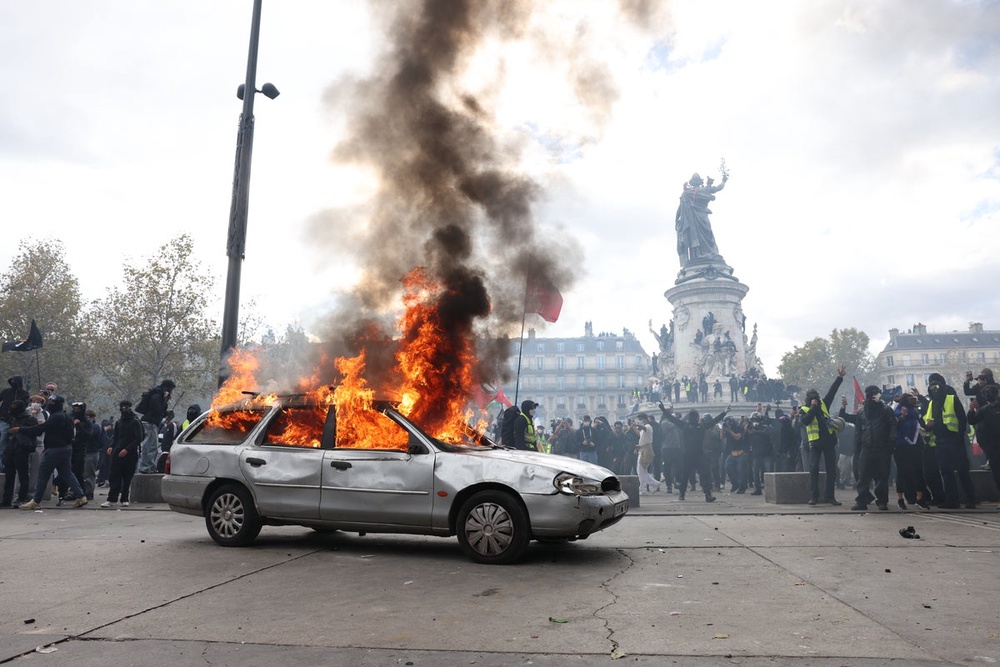
French authorities have extended overnight curfews and tightened restrictions on public gatherings in parts of the country following widespread rioting, looting and clashes during protests that erupted across several cities. The measures, which began after violence on October 17 and 18, 2026, are aimed at preventing further damage, protecting residents and businesses, and restoring public order.
As of Friday, October 23, the restrictions remain localised rather than applying to the whole of France. Paris authorities have extended an overnight curfew in two central areas until Monday morning, October 26, while other cities have introduced different restrictions, including curfews for minors, temporary bans on demonstrations and limits on public gatherings.
The unrest has created a significant security challenge for the government of Prime Minister Sébastien Lecornu, with businesses damaged, shops looted and police facing criticism over their handling of the demonstrations.
The situation has also drawn attention beyond France, following reports of unrest in other European cities, including Milan, Italy. However, the restrictions introduced by French authorities are national and local French measures, not a continent-wide curfew imposed by the European Union.
Paris Extends Overnight Curfew in Key Areas
Paris police have extended restrictions affecting parts of the French capital after several nights of heightened security following the weekend violence.
The curfew applies from 11 p.m. to 6 a.m. in two particularly affected areas: the central reservation of Place de la République and part of the Les Halles district.
The measure has been extended through the nights leading up to Monday morning, October 26. It does not cover the whole of Paris, and exemptions apply to residents, workers and emergency personnel who can demonstrate that their circumstances require access to the affected areas.
Authorities have also imposed restrictions on undeclared gatherings in several parts of the capital, including areas around government institutions, major public spaces and transport hubs.
The distinction between the curfew and the protest restrictions is important. The overnight curfew limits movement within specific zones, while separate orders prohibit certain gatherings and demonstrations during specified hours.
The restrictions have affected evening activities in central Paris, requiring residents, visitors and businesses to check which streets and public spaces are covered by the latest orders.
Transport arrangements have also been adjusted around some affected areas. On October 22, several metro stations in central Paris were closed to passengers or temporarily bypassed by trains during the evening, while certain connections were unavailable. These arrangements were linked to the security measures and should not be interpreted as a permanent shutdown of the city’s transport network.
Visitors and commuters have been advised to check official transport updates before travelling.
Other French Cities Introduce Different Curfew Measures
Paris is not the only city affected by the security restrictions. Local authorities in several parts of France have introduced measures tailored to the areas most affected by the violence.
In Lille and nearby towns, authorities initially introduced overnight restrictions covering selected areas. The original measures in parts of the northern region included curfews from 8 p.m. to 6 a.m. on October 19 and 20, with the rules varying according to location and age group.
In Nice, Mayor Éric Ciotti announced restrictions on minors in parts of the city centre, initially running from 9 p.m. to 6 a.m. The measures were intended to prevent young people from becoming caught up in further disorder.
Bordeaux also introduced restrictions targeting unaccompanied minors in areas affected by looting. The initial order covered specified areas from 10 p.m. to 7 a.m., with the restrictions scheduled to continue through October 26.
Lyon introduced overnight restrictions in parts of its central peninsula, known as the Presqu’île, following reports of vandalism and looting. Authorities also restricted demonstrations and gatherings in designated areas.
Meanwhile, Limoges announced further restrictions after violence during the October 17 mobilisation, including a local curfew from 10 p.m. to 5 a.m. on selected central streets from Friday through Monday. The city also introduced restrictions on gatherings and certain items that authorities said could be used to cause damage.
The measures differ from one municipality to another. Some apply only to minors who are not accompanied by a legal guardian, while others restrict movement or gatherings within defined areas regardless of age.
Authorities have continued to update their orders as they assess the risk of renewed violence and prepare for further demonstrations.
What Triggered the Protests and Violence?
The unrest followed weeks of demonstrations involving students and other groups concerned about living costs, public services and conditions in the education system.
On Saturday, October 17, large numbers of people took part in demonstrations across France. The protests brought together groups with different concerns, including students demanding improvements in schools and people expressing anger about the cost of living and government policies.
While many people participated in demonstrations, some gatherings descended into violence. Shops were looted, property was damaged and fires were set in several cities. Clashes between police and groups of demonstrators continued in some locations on Sunday.
The damage extended to commercial premises and public buildings, prompting local officials to seek stronger security measures.
The government has argued that targeted curfews and restrictions are necessary to prevent further looting and protect communities. Prime Minister Lecornu said the first round of localised curfews had contributed to a calmer night and warned that additional measures would be imposed wherever authorities considered them necessary.
He has also emphasised that the measures should be adapted to local conditions rather than imposed uniformly across the entire country.
The government has faced questions about why security services were unable to anticipate and prevent the scale of the violence. Some mayors have criticised the level of preparation and the response by security forces.
Thousands Arrested as Businesses Count Their Losses
The violence has resulted in thousands of arrests and extensive damage to commercial properties.
Reports published earlier in the week put the number of people arrested during the weekend at approximately 2,400, with subsequent reports placing the number of people taken into custody at around 2,700. The figures cover different reporting points and should not be treated as contradictory final totals.
French authorities have also reported substantial damage to shops, business premises and public buildings. Preliminary estimates cited by the government and business representatives indicated that approximately 3,000 businesses had been affected by vandalism or looting.
The damage has raised concerns among shopkeepers, restaurant owners, craftspeople and other businesses whose livelihoods depend on uninterrupted trading.
Finance Minister Roland Lescure has pledged support measures for affected businesses. The government has also called on online platforms to remove listings for goods believed to have been stolen during the unrest.
The scale of the damage has intensified pressure on the authorities to restore order while providing assistance to people whose businesses have been affected.
President Macron Faces Questions Over Security Response
President Emmanuel Macron has come under pressure following criticism of the government’s handling of the unrest.
Interior Minister Laurent Nuñez offered to resign amid questions about the security response, but Macron rejected the offer, citing the need to maintain continuity in the leadership of the security forces during the crisis.
The president called for greater transparency concerning possible failures in intelligence and operational planning. He also demanded measures to prevent a repeat of the violence.
Nuñez acknowledged that police had lost control of the situation in some locations, while authorities indicated that additional police and gendarmerie personnel would be deployed as necessary.
The government has also faced political disagreement over the causes of the unrest. Lecornu has blamed radical groups for exploiting the demonstrations, a claim disputed by political opponents who have called for evidence and argued that social and economic grievances should not be ignored.
The competing explanations have added to political tensions ahead of France’s 2027 presidential election.
The immediate challenge for the government is to prevent further violence without unnecessarily restricting peaceful protest or the daily activities of residents.
Italy and Wider European Security Concerns
The events in France have unfolded alongside reports of unrest in other parts of Europe. Italy, for example, has experienced unrest and looting in Milan, prompting additional security deployments, according to reports published earlier in the week.
However, it is important to distinguish those developments from the French curfews. As of October 23, the available reporting does not establish that France’s local curfew orders have been adopted as a single European policy or that a continent-wide curfew is in force.
Public order, policing and curfew decisions are generally handled by national governments and local authorities under their respective legal frameworks. Measures adopted in one French city do not automatically apply in another country.
Nevertheless, unrest in major urban centres can raise shared concerns about public safety, the protection of businesses, online coordination of violence and the ability of security services to respond quickly to rapidly changing situations.
For international travellers, the practical issue is to check restrictions in the specific city or neighbourhood they intend to visit rather than assume that all European destinations are operating under the same rules.
Impact on Residents, Tourism and Public Events
The curfews and protest bans have disrupted some normal activities in affected areas, particularly during evening and overnight hours.
Residents may need to plan journeys around restricted streets, while workers and business owners may have to carry evidence showing why they need access to certain locations. Tourists could encounter closed metro stations, altered routes, cancelled events or temporary restrictions near popular public spaces.
Cultural activities have also been affected. Reports on October 22 indicated that several major Paris museums, including the Louvre, the Musée d’Orsay, the Picasso Museum and the Grand Palais, were due to close temporarily amid security concerns. The Art Basel Paris fair at the Grand Palais was also affected.
Such measures can have financial consequences for tourism, hospitality, retail and cultural organisations. Even when a curfew covers only a small part of a city, restrictions around nearby streets and transport hubs can influence visitors’ movements and business activity.
Authorities have urged people to follow official announcements because the scope and duration of restrictions may change as the security situation develops.
What Happens Next?
French authorities are expected to continue reviewing the curfews and protest restrictions based on local security assessments.
Further demonstrations have been announced for Saturday, October 24, prompting officials in several locations to restrict gatherings or prepare additional security measures. Paris has extended its targeted overnight curfew through the weekend, while other cities have announced their own rules.
The government faces the task of protecting residents and businesses while ensuring that measures remain proportionate and geographically limited to the areas where they are needed.
For people living in or travelling to France, the safest approach is to consult local prefecture announcements, police notices and official transport updates before going out, especially at night or near areas where demonstrations have taken place.
The current situation illustrates the tension between restoring public order and preserving the ability of people to assemble and express grievances peacefully. Whether the restrictions can be lifted soon will depend on the evolution of the protests, the risk of further violence and the authorities’ assessment of public safety.
For now, France’s curfews remain localised, with different rules applying in different cities. There is no confirmed blanket curfew covering the whole of France or Europe.
About the Author