
Niamey Airport Attack Signals New Phase of Sahel Warfare
A brazen overnight assault on Niger’s international airport and a nearby military airbase in Niamey between January 28 and 29 has raised fresh concerns about the growing technological sophistication of armed groups in the Sahel.
Flashes of orange fire lit the sky as Nigerien forces returned gunfire, while residents sheltered indoors. The attack was later claimed by ISIL in Sahel Province (ISSP), formerly known as ISGS. The group said it killed several soldiers, though Niger’s military disputes the claim.
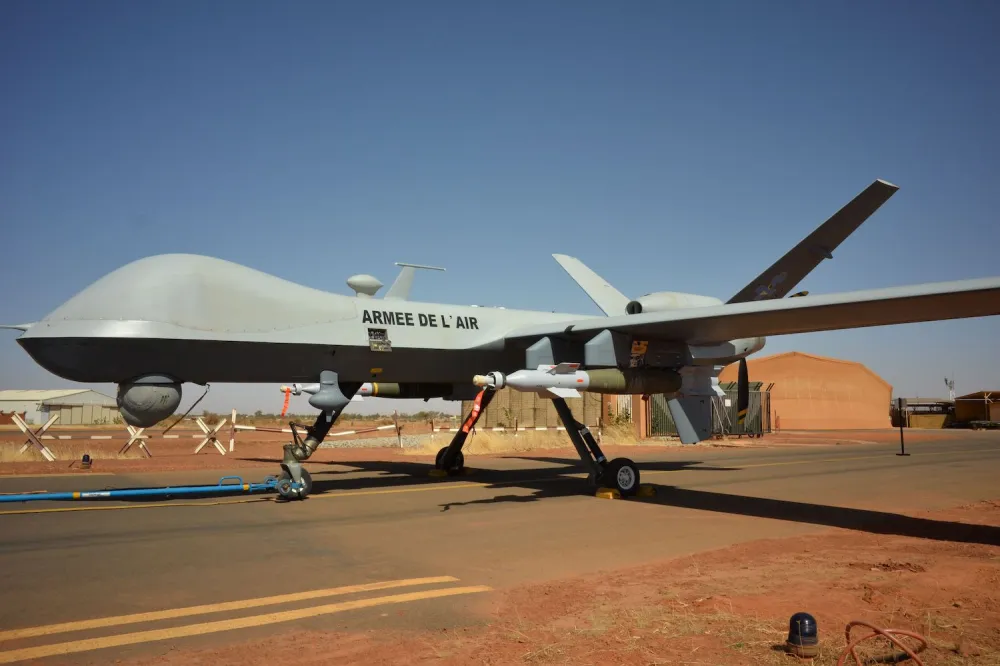
Videos circulating online show fighters breaching military drone hangars using rocket-propelled grenades and mortars, reportedly damaging aircraft and a civilian plane.
“This is unprecedented,” said Heni Nsaibia, senior analyst at ACLED. He noted that ISSP traditionally operated in rural areas using small arms like AK-47s. “To infiltrate and strike the capital reflects tactical strength and boldness.”
Conflict trackers suspect a drone may have been used in the attack, though officials have not confirmed this. If verified, it would mark the first known ISIL drone deployment in Niger.
Drone Warfare Expands Across the Sahel
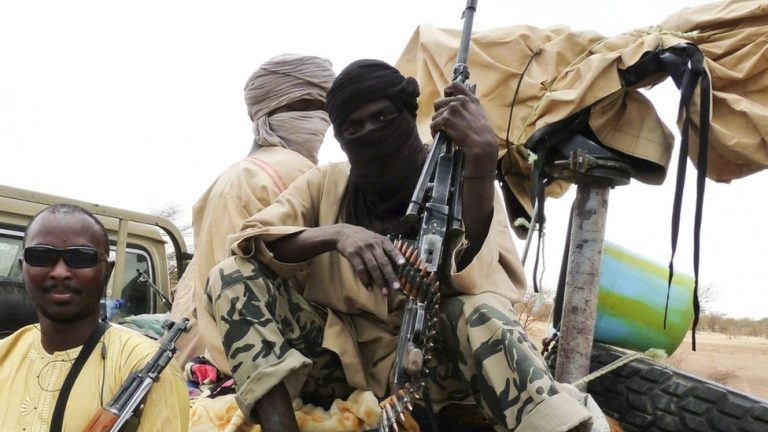
Across Niger, Mali, and Burkina Faso, armed groups are increasingly repurposing commercially available Chinese-made drones for surveillance and strikes.
According to analysts, these drones are modified with improvised explosive devices, grenades, or mortar shells, offering what experts call a “low-cost, high-impact” capability.
The al-Qaeda-linked Jama’at Nusrat al-Islam wal-Muslimin (JNIM) has emerged as the region’s most prolific drone user. Since 2023, the group has integrated drones into coordinated battlefield operations, pairing aerial surveillance with ground assaults. ACLED recorded at least 89 drone uses by JNIM between 2023 and 2025.
The group reportedly relies on DJI M30T drones for night surveillance and DJI Mavic models for cheaper operations. Drones have also been used to monitor fuel routes around Bamako, Mali, contributing to supply disruptions.
Separately, the Azawad Liberation Front (FLA) has deployed first-person view (FPV) drones, including one reportedly used to down a Malian military helicopter in July 2024.
ISWAP, the ISIL affiliate based in Nigeria, has used armed drones on a smaller scale, with 10 recorded deployments between 2024 and 2026.
AI Adds a New Layer of Complexity
Analysts warn that artificial intelligence tools are accelerating this shift.
Offline AI systems can help drones evade detection and jamming. Armed groups are also reportedly using AI tools to generate training materials, propaganda images, and communications.
The next phase could involve AI-enabled drone swarms, allowing coordinated multi-drone attacks on military installations.
Globally, drone use by armed groups has surged. ACLED reported that 469 armed groups deployed drones at least once in the past five years, compared with just 10 groups in 2020.
Regional Tensions Complicate Cooperation
The Sahel’s political landscape makes a coordinated response difficult.
Following Niger’s 2023 coup, relations with Nigeria deteriorated, leading to the suspension of defence cooperation amid tensions with ECOWAS. Niger, Mali, and Burkina Faso later withdrew from ECOWAS to form the Alliance of Sahel States.
However, recent meetings between Nigerien and Nigerian security officials in Abuja suggest renewed efforts to tighten border security and disrupt arms smuggling routes.
Experts argue that only coordinated regional intelligence-sharing and technological countermeasures can curb the spread of drone warfare.
Without strong countermeasures, analysts warn that major urban centres such as Niamey may face increasing risk in the medium to long term.
About the Author