
A Sudden Political U-Turn in Rivers
The impeachment push against Rivers State Governor Siminalayi Fubara has suddenly slowed, raising fresh questions about the political calculations behind the crisis.
For months, the Rivers State House of Assembly appeared determined to advance impeachment proceedings. However, following the intervention of President Bola Tinubu, lawmakers abruptly stepped back.
Observers argue that the pause reflects shifting elite negotiations rather than a renewed commitment to public interest.
The Shadow of Wike
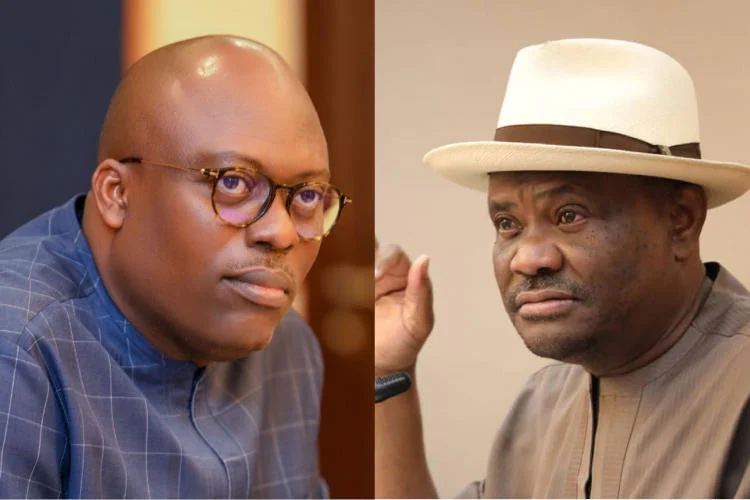
Many political analysts believe the Assembly’s actions have been heavily influenced by the Minister of the Federal Capital Territory, Nyesom Wike, whose political rivalry with Fubara has shaped the crisis.
Critics say the prolonged standoff has been less about constitutional accountability and more about control of political structures and influence in Rivers State.
When political alignments shift overnight, it signals that elite interests, not institutional integrity, are steering events.
Impact on Governance and Investment
The political uncertainty has already taken a toll. A 2025 analysis by BusinessDay indicated that investors adopted a wait-and-see approach or quietly redirected capital elsewhere due to instability in Rivers.
Governance itself has suffered. Institutions expected to serve as checks and balances have instead been drawn into power struggles. The Rivers State House of Assembly, the judiciary, and executive offices have all operated under intense political pressure.
The crisis underscores a broader concern: when political loyalty overrides accountability and transparency, democratic systems weaken.
Duty Bearers and Accountability
Key actors in the unfolding drama include:
-
Governor Siminalayi Fubara
-
FCT Minister Nyesom Wike
-
The Speaker and members of the Rivers State House of Assembly
-
President Bola Tinubu, whose intervention created the temporary pause
-
Rivers State Chief Judge, Justice Simeon Amadi
Critics argue that these leaders have an obligation to uphold citizens’ rights to stability, service delivery, and transparent governance.
When elite political battles disrupt governance, the state risks failing its constitutional and human rights responsibilities, including ensuring equitable development and security.
Pause, Not Resolution
While impeachment proceedings have been halted, the underlying power struggle between Fubara and Wike remains unresolved.
The presidential intervention has pressed pause rather than reset the conflict. Without structural transparency and genuine reconciliation, further political twists may follow.
What It Means for Rivers People
For citizens, the key takeaway is that governance cannot remain collateral damage in elite disputes.
Residents of Rivers State are urged to:
-
Demand legislative accountability from their representatives
-
Seek public briefings on how the crisis affects service delivery
-
Monitor budgets and development projects
-
Participate in civic forums and policy discussions
Young people, women, girls, and persons with disabilities are particularly vulnerable when governance stalls and must be included in public discourse.
Political calm without citizen-centred governance, analysts warn, is merely symbolic stability.
The responsibility of citizenship extends beyond election day. Active participation and sustained scrutiny are essential to ensuring that public office holders serve the people rather than personal political interests.
About the Author