

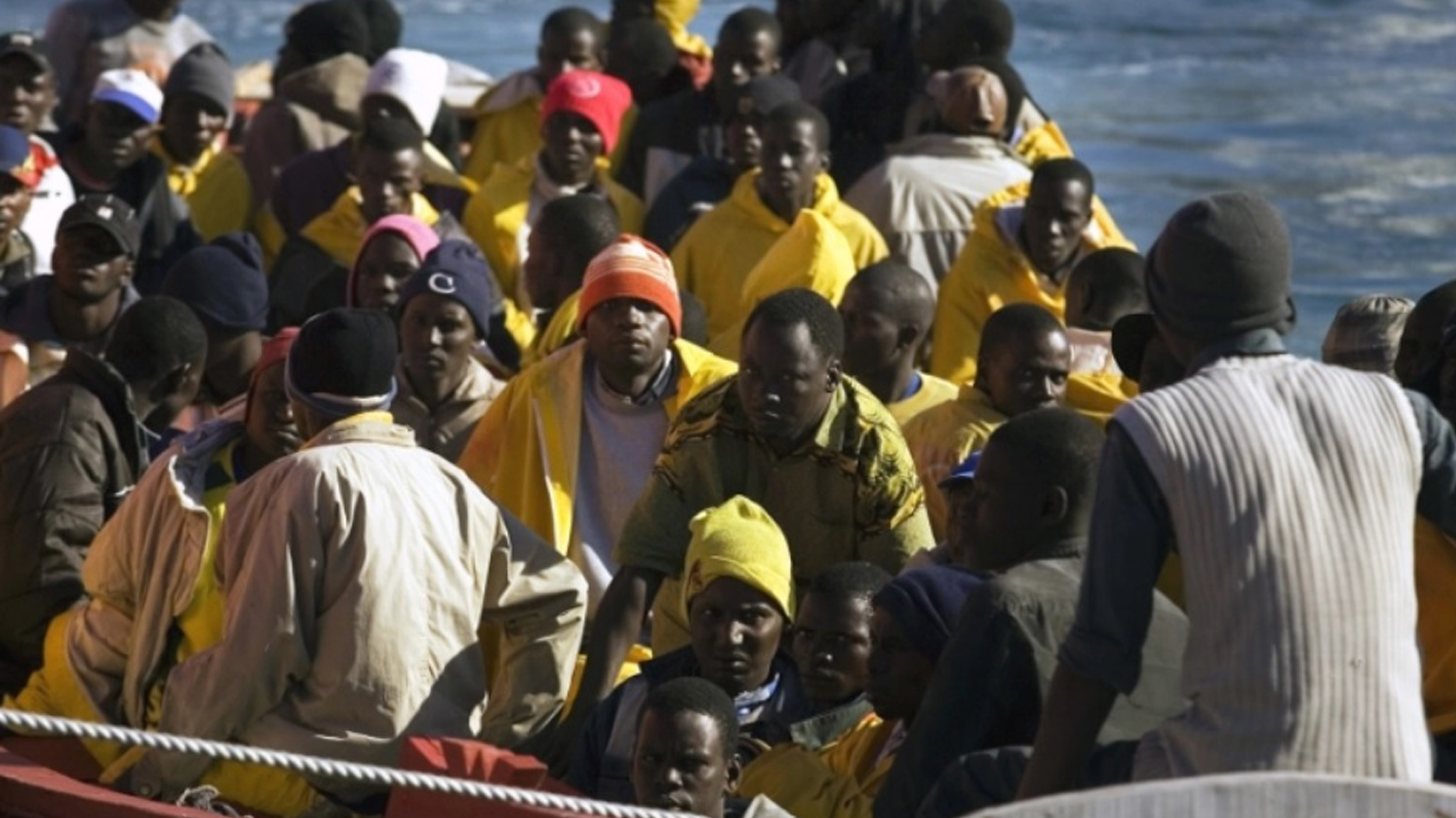
Europe’s Post-2015 Migration Strategy
Since the 2015 migration crisis, European governments have increasingly pressured African states to tighten border controls, accept returned migrants and cooperate on deportations, often regardless of local political or economic consequences.
While many European leaders publicly distance themselves from former US President Donald Trump, critics argue that recent policies echo hardline US immigration tactics. Analysts warn that such measures may not reduce migration in the medium to long term but could instead deepen instability, weaken governance and reinforce the drivers of migration across Africa.
UK-Ethiopia Migration Talks
On 2 February 2026, UK Foreign Secretary Yvette Cooper visited Ethiopia to strengthen cooperation on what the UK describes as illegal migration from the Horn of Africa.
The UK Foreign Office noted that about 30 percent of migrants crossing the English Channel by small boats over the past two years originated from Ethiopia, Eritrea, Somalia and Sudan. The Home Office granted protection to 99 percent of Sudanese and 87 percent of Eritrean asylum applicants at first instance during the 2024 to 2025 period.
The visit resulted in agreements to:
-
Deepen cooperation against migrant smuggling networks
-
Speed up the return of Ethiopian nationals
-
Strengthen law enforcement collaboration
To address economic drivers of migration, the UK signed a 400 million dollar Joint Development Agreement supporting electricity transmission projects and job creation initiatives, alongside 17 million pounds in humanitarian funding.
However, observers note that the UK did not publicly address Ethiopia’s internal conflicts or humanitarian crises, including the 2020 to 2022 Tigray conflict, which have contributed to displacement.
Migration Pressures in the UK
UK net migration has declined significantly from its post-Brexit and COVID peak of 908,000 in mid-2022 to 204,000 in mid-2025. Of the 670,000 non-EU arrivals in the year ending June 2025, only six percent arrived by small boat. Most migrants entered for work and study.
Despite relatively moderate figures, immigration remains politically sensitive. Public pressure has grown for tougher enforcement measures, with nearly 700,000 people signing a parliamentary petition advocating offshore detention and mass deportations.
Home Secretary Shabana Mahmood described the immigration system as “not working” and proposed reforms including:
-
Temporary refugee status subject to review
-
Repeal of certain asylum benefits
-
Faster deportations of failed asylum seekers
-
Longer timelines for citizenship eligibility
-
Limits on the use of the European Convention on Human Rights to block removals
The UK has also used visa restrictions to pressure countries such as the Democratic Republic of the Congo, Namibia and Angola to cooperate on deportations.
Rwanda Deal and Externalisation Policies
In 2022, the UK signed a controversial deal with Rwanda to process asylum seekers there in exchange for financial assistance. Only four volunteers were relocated before the agreement was cancelled by the Labour government after the 2024 elections.
In January 2026, Rwanda filed a 100 million pound arbitration case against the UK over unpaid commitments.
The European Union is advancing similarly restrictive measures, including offshore detention centres, streamlined deportations and “assertive migration diplomacy” toward countries reluctant to accept returns.
Amnesty International has criticised these reforms, arguing they mirror harsh enforcement models seen elsewhere.
Alternative Approaches: Spain’s Regularisation Model
In contrast, Spain recently announced a regularisation scheme for irregular migrants who have lived in the country for at least five months and have no criminal record. Between 500,000 and 800,000 migrants, mostly from Latin America, are expected to benefit.
Since the 1990s, European countries have implemented over 40 regularisation schemes, enabling migrants to work legally, contribute taxes and integrate into labour markets.
Implications for Africa
Africa faces multiple conflicts, governance challenges, and climate-related crises that drive displacement. Critics argue that conflating asylum with irregular migration and pressuring African governments to prioritise deportations over development risks exacerbating instability.
The article concludes that European leaders must weigh the long-term consequences of short-term political gains, while African governments should carefully assess whether compliance with assertive migration diplomacy aligns with their national interests.
About the Author