
None
Succession Debate Intensifies in Iran
Mojtaba Khamenei has emerged as a prominent contender to succeed his late father, Ali Khamenei, as Iran begins the process of selecting a new Supreme Leader.
The 56-year-old cleric would represent a rare hereditary transition within the Islamic Republic. Interestingly, his father publicly rejected the idea of dynastic succession in 2024.
Iran’s next Supreme Leader will be chosen by the powerful Assembly of Experts, an 88-member body responsible for appointing and supervising the country’s top religious authority.
One of its members, Ahmad Khatami, told Iranian state media that the body hopes to vote on a successor “at the earliest opportunity.”
Other Possible Contenders
While Mojtaba Khamenei is widely discussed, several other figures are considered possible successors, including:
-
Alireza Arafi, a member of the interim council currently helping run the country
-
Mohsen Araki, known for his conservative stance
-
Hassan Khomeini, grandson of the Islamic Republic’s founding leader
Ruhollah Khomeini led the 1979 revolution that ended Iran’s centuries-old monarchy under the shah.
Background of Mojtaba Khamenei
Born on September 8, 1969, in the holy city of Mashhad, Mojtaba Khamenei is one of the late Supreme Leader’s six children.
Despite maintaining a low public profile and rarely appearing in official ceremonies or media, his influence has long been the subject of speculation among both Iranian citizens and international observers.
He is widely considered the only child of the former Supreme Leader to play a significant political role, even though he has never held an official government position.
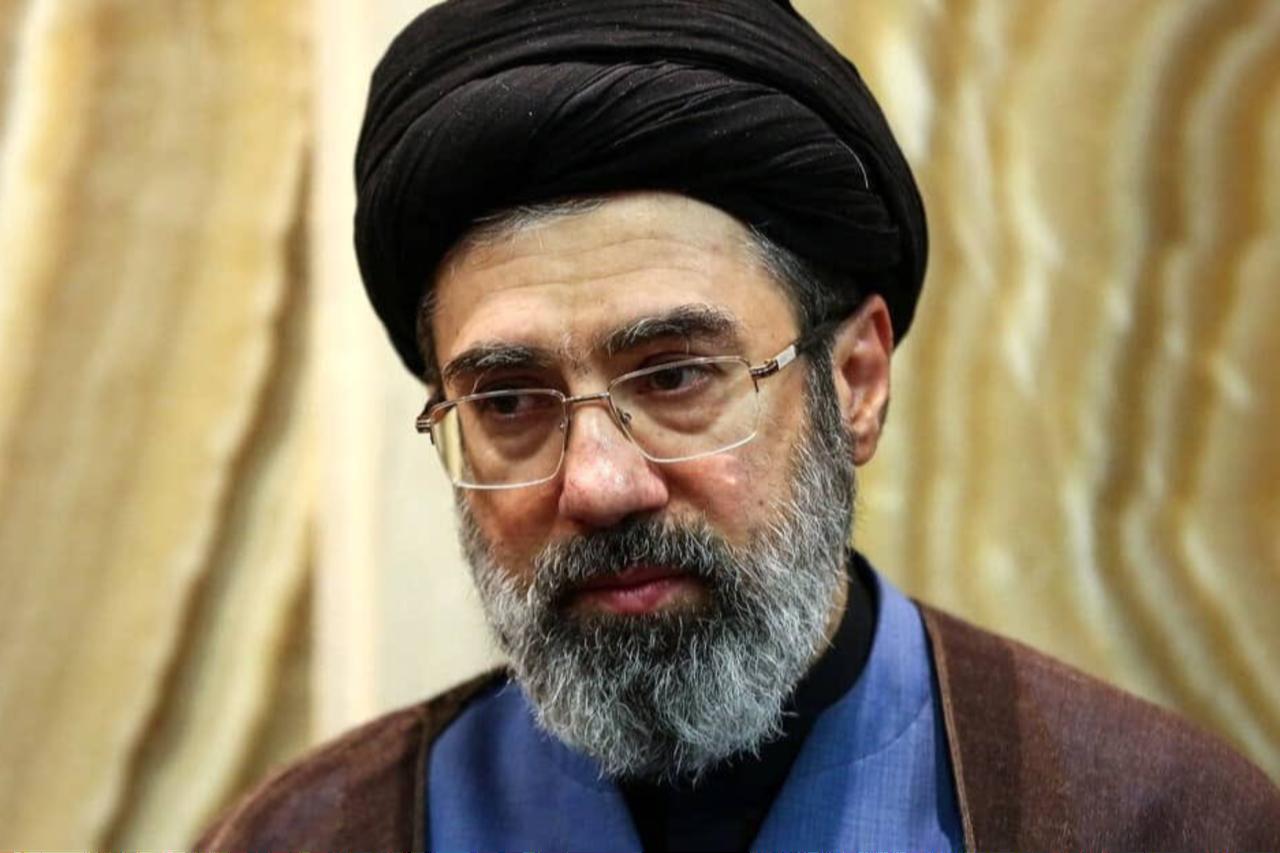
Recognizable by his salt-and-pepper beard and the black turban worn by descendants of the Prophet Muhammad, Mojtaba has been described by some analysts as a behind-the-scenes power broker within Iran’s leadership.
Close Ties to Security Forces
Mojtaba Khamenei is believed to have close relationships with the Islamic Revolutionary Guard Corps (IRGC), the powerful ideological military force in Iran.
His ties to the security establishment date back to his service in a combat unit during the final phase of the Iran–Iraq War.
In 2019, the United States Department of the Treasury imposed sanctions on him during the administration of Donald Trump.
The U.S. government stated that Mojtaba represented the authority of his father despite not being elected or formally appointed to a government role, and accused him of working closely with Iranian security forces to advance Tehran’s regional policies.
Controversies and Allegations
Opponents have also accused Mojtaba of playing a role in the violent suppression of protests following the disputed 2009 re-election of ultra-conservative president Mahmoud Ahmadinejad.
According to an investigation by Bloomberg, citing anonymous sources and intelligence reports, Mojtaba Khamenei may control wealth estimated at more than $100 million.
The report alleged that revenue from oil sales had been channelled into investments in luxury British real estate, European hotels, and property in Dubai through shell companies in offshore tax havens.
Religious Standing and Personal Life
Mojtaba studied Islamic theology in the religious center of Qom, where he later taught.
He holds the clerical rank of Hujjat al-Islam, a mid-level religious title below that of Ayatollah, the rank held by both his father and revolutionary founder Ruhollah Khomeini.
Iranian authorities also confirmed that his wife, Zahra Haddad-Adel, was killed in the same US-Israeli strikes that claimed the life of the Supreme Leader.
Growing Security Concerns
Following the death of Ali Khamenei, Israel Katz warned that any successor to the Iranian leader could become “a target,” highlighting rising tensions during the leadership transition.
The Assembly of Experts, whose members are elected every eight years, has only overseen one previous leadership transition, when Ali Khamenei himself was selected in 1989 after the death of Ruhollah Khomeini.
About the Author