
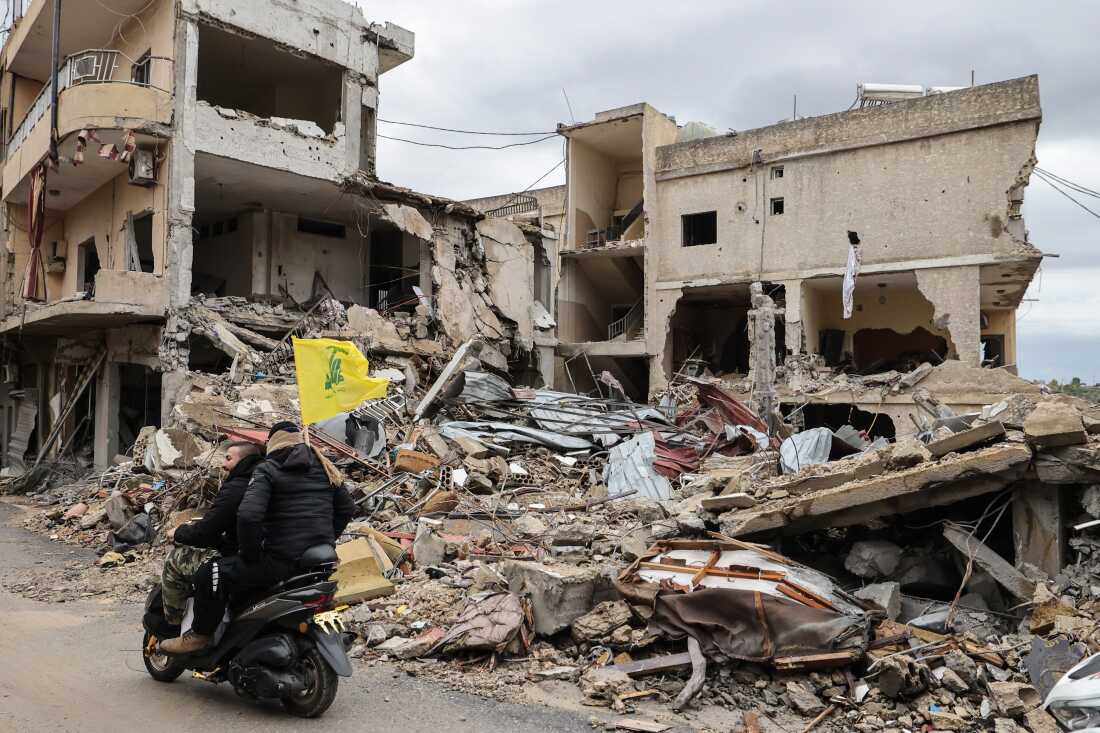
TOPSHOT - Men ride a scooter with a Hezbollah flag past destroyed buildings as people make their way back to their homes in the south of Lebanon after a ceasefire between Israel and Hezbollah took effect, on November 27, 2024, in the southern town of Qana. A ceasefire between Israel and Hezbollah in Lebanon took hold on November 27 after more than a year of fighting that has killed thousands. (Photo by Anwar AMRO / AFP) (Photo by ANWAR AMRO/AFP via Getty Images)
The fragile peace that many hoped would take hold in the Middle East is facing its most severe test yet. Despite a three-week extension of a U.S.-brokered ceasefire, heavy fighting between the Israel Defense Forces (IDF) and Hezbollah continues to rage across southern Lebanon and northern Israel. The escalating violence is not only claiming lives on both sides but is also threatening to dismantle the diplomatic framework intended to end the 2026 Lebanon War.
A Ceasefire in Name Only?
The current conflict, which erupted in early March 2026 following broader regional tensions involving Iran, saw a temporary pause on April 17. While the truce was recently extended to allow for direct peace talks in Washington, the reality on the ground tells a different story.
Over the past 48 hours, the border region has seen a surge in kinetic activity. On Sunday, May 10, 2026, the IDF reported intercepting a volley of Hezbollah rockets aimed at Israeli troops stationed in southern Lebanon. This follows a “bloody Saturday” where Lebanese sources reported over 80 Israeli airstrikes and drone operations across the Chouf region and southern villages like Jibsheet and Bedias.
The toll on civilians and first responders has been devastating. The Lebanese Health Ministry recently updated the death toll to over 2,840 people since the start of the war on March 2. In recent strikes, paramedics from the Islamic Health Committee were reportedly targeted, while the IDF maintains its operations are focused on neutralizing Hezbollah commanders—including the recent killing of Ahmed Balout of the elite Radwan Force—and destroying militant infrastructure.
Strategic Stalemates and Ground Realities
The conflict is currently characterized by a grueling war of attrition.
-
Hezbollah’s Strategy: The group has pivoted to heavy use of UAVs and drones, targeting IDF positions in frontline villages like Ras al-Bayyda and Qantara. Hezbollah leadership asserts that their operations will continue as long as Israeli forces occupy Lebanese territory, independent of any broader agreements involving Iran.
-
The IDF Response: Israeli Chief of Staff Lt. Gen. Eyal Zamir recently stated that there is “no ceasefire” on the northern front in practical terms, emphasizing the urgent need for troop reinforcements. The IDF’s stated mission remains the creation of a “security zone” to protect northern Israeli communities from anti-tank missiles and infiltrations.
Diplomatic Hurdles in Washington
The persistence of the fighting has cast a long shadow over the third round of peace talks scheduled to take place in Washington later this week. Lebanese President Joseph Aoun has called on the European Union and the international community to pressure Israel into adhering to the truce terms, specifically regarding the “bulldozing” of homes in occupied border villages.
Conversely, Israeli officials and U.S. mediators are grappling with the fact that Hezbollah was not a formal signatory to the April agreement. This legal loophole has allowed the group to justify “defensive resistance” while the IDF maintains its right to act against “imminent threats.”
The Humanitarian Crisis
Beyond the headlines of rocket fire and airstrikes lies a deepening humanitarian disaster. Over 1.2 million people—more than 20% of Lebanon’s population—remain displaced. In northern Israel, tens of thousands of residents are still unable to return to their homes, living under the constant shadow of sirens and intercepted projectiles.
As the mid-May deadline for the current ceasefire extension approaches, the international community is watching closely. Without a significant de-escalation in the next few days, the Washington talks risk becoming a footnote in a war that continues to defy diplomatic solutions.
About the Author