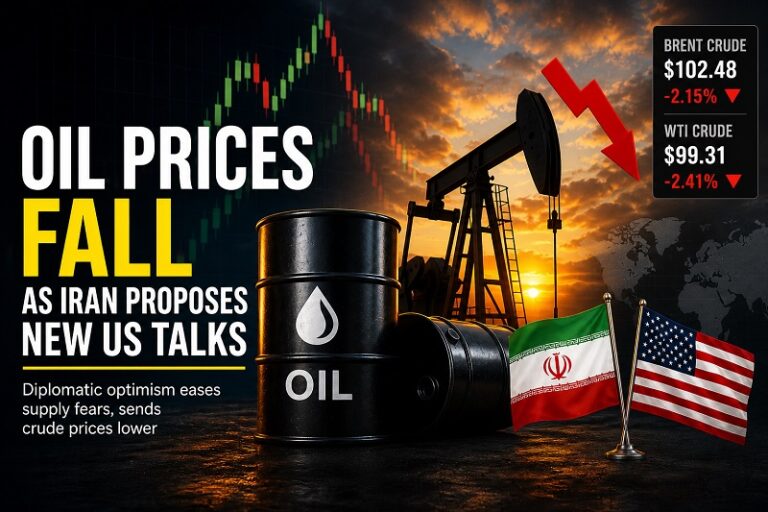

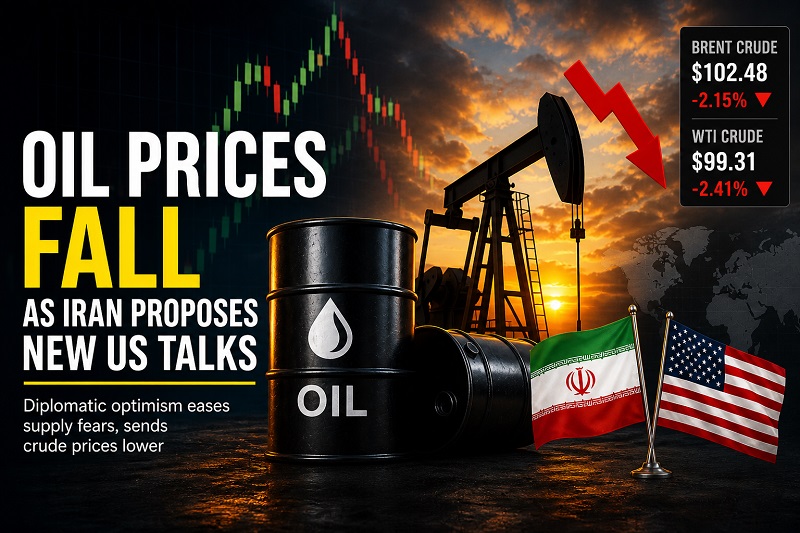
Oil prices slipped after Iran proposed new talks with the United States, raising expectations that the prolonged conflict disrupting global energy supply could ease. According to recent reports, U.S. crude futures dropped significantly, with West Texas Intermediate (WTI) briefly falling below the key $100 per barrel mark before stabilizing slightly above it.
Why Oil Prices Are Falling
The decline in oil prices is closely tied to renewed optimism around diplomacy. Iran’s proposal for negotiations has injected cautious hope into global markets, which have been rattled for months by supply disruptions and military tensions.
- Oil futures dropped after Iran signaled willingness to reopen dialogue with the U.S.
- Markets reacted quickly, as easing tensions could lead to increased oil supply
- The symbolic $100/barrel threshold was briefly breached, signaling a psychological shift in market sentiment
In essence, the oil market behaves like a nervous orchestra, and diplomacy just handed the conductor a steadier baton 🎼
The Bigger Picture: War, Supply, and the Strait of Hormuz
At the heart of the volatility lies the Strait of Hormuz, one of the world’s most critical oil transit routes. The ongoing conflict has severely disrupted shipping through the region, tightening global supply.
- The U.S.-Iran conflict has limited oil flows, pushing prices to multi-year highs in recent weeks
- Any progress in negotiations could reopen supply channels and stabilize markets
- However, uncertainty remains, as previous talks have stalled or collapsed
Recent data shows oil prices had surged above $120 per barrel before this latest dip, highlighting just how sensitive the market is to geopolitical signals.
Iran’s Proposal: What We Know
Iran has reportedly submitted a new framework for negotiations, aimed at ending hostilities and easing economic restrictions.
- The proposal includes demands such as lifting sanctions and restoring access to global trade
- It also touches on security arrangements in key oil routes
- U.S. officials are reviewing the proposal, though skepticism remains about its viability
While the proposal has sparked optimism, analysts warn that a final agreement is far from guaranteed.
Market Reaction and What Comes Next
The oil market’s reaction has been swift but cautious:
- Brent crude dropped by around 2% following the news
- Traders remain wary, given the fragile ceasefire and history of failed negotiations
- Energy analysts predict continued volatility in the coming weeks
Even with falling prices, the market remains on edge. If talks succeed, prices could stabilize or drop further. If they fail, another surge could be just around the corner.
Key Takeaways
- Oil prices fell after Iran proposed new talks with the U.S.
- Diplomatic optimism is easing fears of prolonged supply disruptions
- The Strait of Hormuz remains a critical factor in global oil stability
- Markets are still volatile, with uncertainty dominating investor sentiment
About the Author