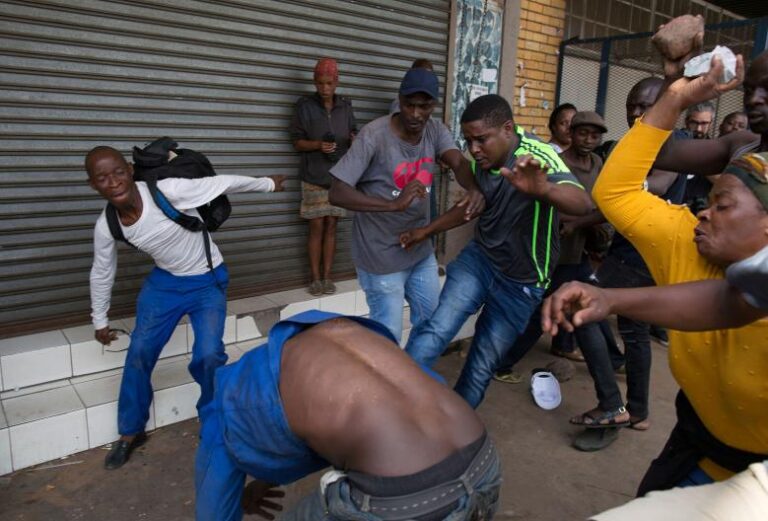

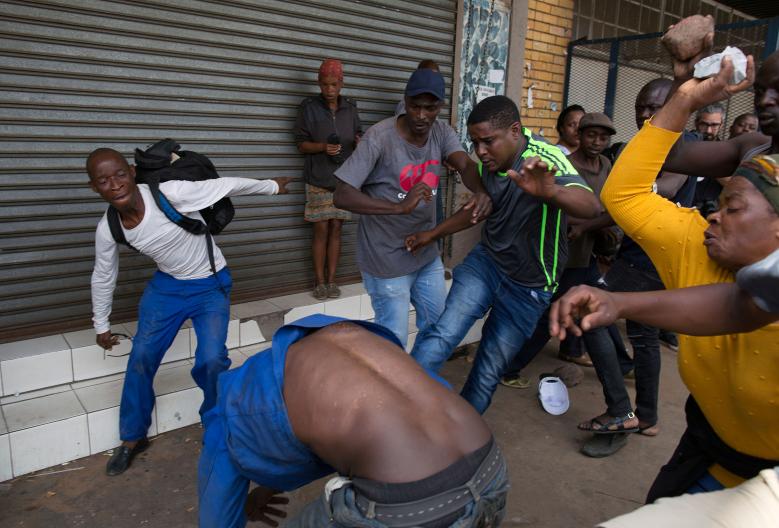
African migrants reveal south Africa's shocking xenophobia crisis .
South Africa is once again gripped by a wave of xenophobic violence targeting African migrants, and the world is watching. As of this week, Nigeria has officially begun evacuating 130 of its citizens, Ghana has summoned South Africa’s envoy, and Mozambique has joined the diplomatic protest — exposing a crisis that threatens the very idea of Pan-African unity.
The Crisis Unfolds
Over the past several weeks, anti-immigrant sentiment in South Africa has escalated dramatically. The movement “March and March” has organized large protests in Pretoria and Johannesburg, with demonstrators carrying signs reading “If fighting for my country means I’m xenophobic, then I’m proudly xenophobic.” Armed with sticks and branches, hundreds have marched through city centers demanding the deportation of foreign nationals.
In response, the Nigerian government confirmed that 130 of its citizens in South Africa have applied for emergency voluntary evacuation. Foreign Minister Bianca Odumegwu-Ojukwu announced on May 4 that “this figure is expected to rise,” adding that “Nigerian lives and businesses in SA must not continue to be put at risk.” Two Nigerians have already been killed in incidents connected to South African security personnel.
Ghana summoned South Africa’s Acting High Commissioner for a demarche over “continuous xenophobic attacks on Ghanaians and other Africans.” Mozambique’s President Daniel Chapo has also traveled to Pretoria for crisis talks with President Ramaphosa, making it three African nations now formally protesting.
What Migrants Are Saying
African migrants living in South Africa have shared heartbreaking accounts of fear and uncertainty. Gloria Cossa, a Mozambican who moved to South Africa in 2001, told TimesLIVE: “When I applied for citizenship, it took 10 years for me to get it. So I have a legal right to be in this country; I will not go. If I go home, what are my children and I going to eat?”
Olaniyi Abodedele, Chairman of the Nigerian Union in South Africa, told the BBC: “We are all very careful. We are in the dark because we don’t know how our government is going to react if any of us is to be affected or is to be killed. As long as you are a Nigerian, you are profiled and you are stereotyped immediately.”
Immigrant shopkeepers and vendors report being attacked during the marches. Many have shuttered their businesses and kept their children home from school as tensions remain high.
Government Inaction and Political Rhetoric
Despite repeated outbreaks of xenophobic violence since 2008, critics argue the South African government has shown limited concern. The rise of movements like “Operation Dudula” reflects how xenophobia has moved from the fringes into mainstream political discourse. President Cyril Ramaphosa, in his Freedom Day address, urged citizens not to allow concerns about illegal migration to “breed prejudices and hatred towards our fellow Africans” — but critics say stronger action is needed.
Acting Police Minister Firoz Cachalia has condemned the acts, but on-the-ground enforcement remains inconsistent. Meanwhile, the Nigerian House of Representatives has called on the federal government to review all bilateral agreements with South Africa, with Senator Adams Oshiomhole demanding economic retaliation including sanctions on MTN and DSTV.
The Economic Root of Hatred
At the heart of the crisis is a struggle for resources. South Africa’s unemployment rate hovers near 33%, one of the highest in the world. Populist movements have scapegoated African migrants for the lack of jobs and high crime rates. Yet, South Africa is home to about 2.4 million migrants — just less than 4% of the population. Bilateral trade between Nigeria and South Africa alone is worth approximately $3.5 billion annually.
Experts warn that immigrants are being scapegoated for South Africa’s economic woes, and that anti-migrant fervor is being driven by populist pundits online. Police reported nearly 47,000 deportations last year, but protesters vow to keep marching until more action is taken.
UN and International Reaction
The UN Secretary-General António Guterres has raised serious concerns over reports of xenophobic violence in KwaZulu-Natal. The African Commission on Human and Peoples’ Rights has also deplored the attacks. Ghana’s high commission advised its nationals to close businesses and keep a “low profile,” while the Nigerian Consulate in Johannesburg issued a “code red” advisory.
Civil society groups have pushed back. Over 150 people gathered at Mary Fitzgerald Square in Johannesburg to protest against xenophobia, holding placards reading “No person is illegal” and “Africa for Africans.” Yet these counter-protests remain outnumbered by the anti-migrant marches.
A Threat to Pan-Africanism
This crisis is a significant blow to the ideals of the African Continental Free Trade Area (AfCFTA). While leaders speak of “one Africa,” the reality on the ground is one of borders and bias. Each cycle of violence and evacuation further erodes the trust necessary for regional integration.
“When governments fail to protect vulnerable populations, and regional bodies remain silent, the consequences are measured in human lives, dignity, and the erosion of shared African values.”
— Human Rights and Legal Research Centre
For now, thousands of African migrants in South Africa live in fear — their shops closed, their children kept home from school, and their futures uncertain. With more protests scheduled between May 4 and May 8, the continent watches anxiously to see whether diplomacy will prevail over hate.
This article was updated on May 5, 2026 with the latest developments including Nigeria’s evacuation announcement, Mozambique’s diplomatic intervention, and calls for economic sanctions. Follow Kiki’s Blog for more in-depth news coverage from across Africa.
About the Author