
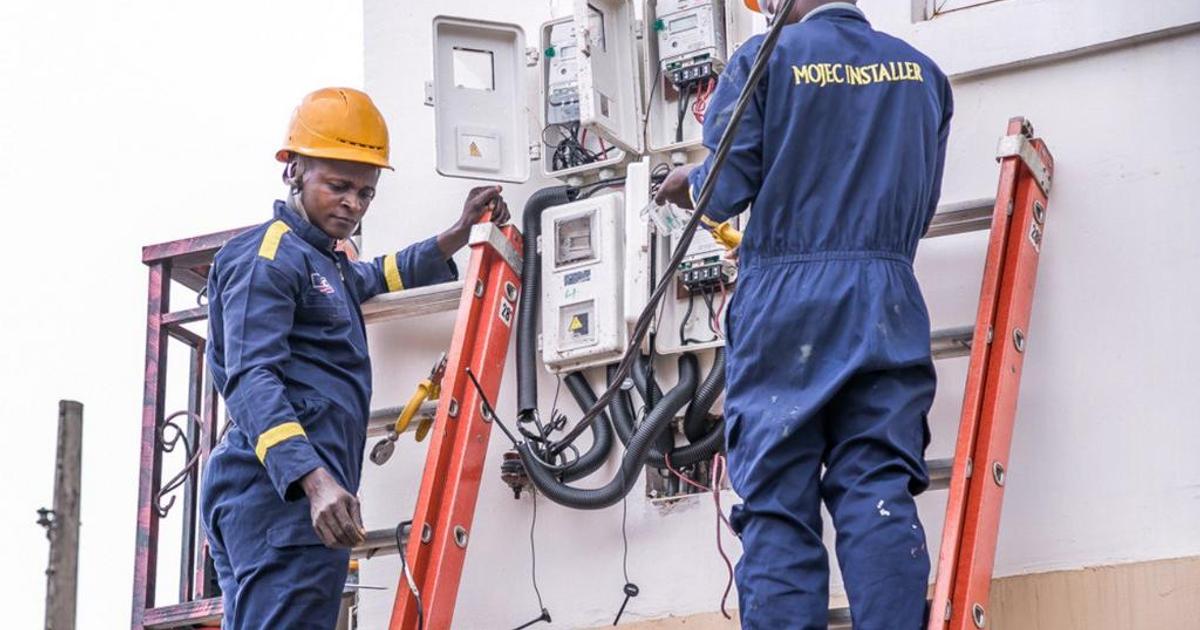
Ikeja Electric Plc has commenced the refund of payments made by eligible customers who previously paid for electricity meters under the Meter Asset Provider (MAP) programme.
The refund process is being implemented through credits applied to customers’ electricity vending transactions, meaning eligible customers will gradually receive the value of the meter they paid for in the form of energy credits rather than a direct cash payment.
The electricity distribution company disclosed the development during its September 2026 virtual stakeholder engagement, where it provided updates on metering, customer service, refunds and other operational issues affecting electricity consumers within its franchise area.
The development follows a regulatory directive by the Nigerian Electricity Regulatory Commission (NERC) aimed at clearing outstanding reimbursements owed to customers who paid upfront for meters under the MAP framework.
Ikeja Electric Starts MAP Meter Refunds
Under the MAP programme, customers who wanted to obtain meters more quickly could make an upfront payment for the equipment instead of waiting for the Distribution Company’s normal metering rollout.
NERC’s rules provide that the cost paid by customers for MAP meters is subsequently reimbursed through energy credits.
Ikeja Electric has now begun implementing the refund process for eligible customers.
The company said the reimbursement will be applied to customers’ vending transactions throughout the approved repayment period.
For prepaid customers, this means that part of the value associated with each applicable refund will be converted into electricity credit.
Rather than receiving the refund as a conventional bank transfer, customers will therefore see the reimbursement reflected through their electricity vending process.
How The Refund Will Work
The refund arrangement has been structured around monthly energy credits.
Under NERC’s amended reimbursement order issued in 2026, the total cost of an eligible MAP meter is to be recognised as a credit on the customer’s account and distributed automatically as monthly credits over the approved amortisation period.
For prepaid customers, the regulation provides for the billing system to automatically generate a token containing the energy value equivalent to the monthly reimbursement.
The token is intended to be generated no later than the fourth day of every month.
The number of electricity units represented by the refund can vary because the energy value is calculated using the applicable tariff for the customer.
This means that the refund is not necessarily a fixed number of electricity units every month for every customer.
The amount of energy credited is linked to the value of the reimbursement due and the prevailing tariff applicable to the customer.
Refund Period Extended To 120 Months
One of the significant details in NERC’s updated framework is the reimbursement period.
The amended order provides for the meter cost to be reimbursed over 120 months, equivalent to 10 years.
This followed an earlier framework under which the reimbursement period had been reviewed from 36 months to 120 months, effective from April 1, 2023.
The extended period means customers should not necessarily expect the full amount they originally paid for their meters to appear as one large credit.
Instead, the eligible meter cost is spread across the approved repayment period through monthly energy credits.
For customers who have been waiting for reimbursement, the process is therefore designed as a gradual recovery of the amount originally paid.
NERC Identified ₦20.33 Billion In Outstanding Refunds
The refund process is also linked to concerns raised by the electricity regulator about delays in reimbursing customers.
In an amended order issued in March 2026, NERC said its review found that electricity Distribution Companies had an outstanding ₦20.33 billion in meter reimbursements as of December 31, 2025.
The Commission said the figure represented amounts owed to customers who had procured meters under the MAP framework.
NERC also linked the review to complaints received from customers concerning delays and deficiencies in the implementation of meter-cost reimbursements.
The regulator subsequently established a process aimed at accelerating the repayment of the accumulated outstanding amounts.
The order requires the reimbursement process to be automated on customer accounts rather than depending on manual intervention.
Customers Can Track Their Refunds Online
Ikeja Electric has also introduced a way for eligible customers to monitor the progress of their reimbursement.
According to the company, customers can check their refund status online using either their meter number or account number.
The refund dashboard provides several pieces of information to help customers understand what they are receiving.
These include:
- The original cost of the meter
- The number of refunds already made
- The monthly refund amount
- The total amount refunded so far
- The date of the most recent refund
- The applicable refund token
The company said the relevant refund token is sent to the customer’s registered phone number or email address.
This gives customers a way to monitor the process rather than relying solely on their electricity vending receipts.
What Is The Meter Asset Provider Programme?
The Meter Asset Provider programme was introduced as part of efforts to address Nigeria’s long-standing electricity metering gap.
Under the arrangement, approved Meter Asset Providers procure and install meters for electricity customers.
Customers could pay upfront to obtain a meter and avoid waiting for the Distribution Company’s wider metering rollout.
The arrangement was particularly useful for customers who wanted to move away from estimated billing by obtaining a prepaid or other approved metering arrangement.
NERC’s regulations provide that customers who make upfront MAP payments are entitled to reimbursement through energy credits.
The meter itself remains associated with the premises where it is installed and remains the property of the Distribution Company under the regulatory framework.
Why Meter Refunds Matter To Customers
For many Nigerian electricity consumers, paying for a meter was a significant additional expense.
The reimbursement programme is therefore intended to return the money customers had paid while ensuring that the meter remains part of the electricity distribution infrastructure.
The system also reflects the principle that customers should ultimately recover the regulated cost of MAP meters through energy credits.
For households that purchased meters several years ago, the monthly credits may provide some financial relief by reducing the amount of money they need to spend on electricity vending.
However, the value of the refund received in terms of electricity units can differ depending on the applicable tariff.
Customers Should Not Expect A Cash Refund
One of the most important points for customers to understand is that the refund is structured as energy credit, not necessarily as cash.
A customer who paid, for example, a particular amount for a MAP meter should not expect Ikeja Electric to deposit that amount directly into a personal bank account.
Instead, the reimbursement is converted into electricity value and credited through the customer’s vending process over the approved repayment period.
This distinction is important because customers may otherwise assume that a direct cash payment is being processed.
Refunds And Existing Electricity Debts
NERC’s amended reimbursement order also contains an important protection for customers.
The Commission directed Distribution Companies not to use meter reimbursement credits to offset customers’ legacy electricity debts.
The regulator said meter reimbursement items must be treated separately from existing customer debts.
This means that the refund due for an eligible MAP meter is intended to remain identifiable as a reimbursement rather than simply disappearing into an outstanding electricity balance.
The measure is designed to improve transparency and ensure customers can distinguish between their meter refund and other charges on their accounts.
What Customers Should Do
Eligible Ikeja Electric customers who previously paid for meters under the MAP programme can begin by checking their refund status using their meter number or electricity account number.
Customers should also ensure that the telephone number and email address registered with Ikeja Electric are accurate, since the company says refund information and applicable tokens are communicated through registered contact details.
Customers who believe they are eligible but cannot find their refund information should contact Ikeja Electric through its official customer-service channels.
The company has also advised customers with concerns about MAP refunds to use its official complaint channels or visit the nearest Ikeja Electric undertaking office.
Customers Warned Against Unauthorised Electrical Work
During the same stakeholder engagement, Ikeja Electric officials also warned customers against allowing unqualified individuals to work on electricity poles, power lines and other electrical installations.
The company said recent incidents involving unauthorised electrical activities had resulted in fatalities.
Olaniyi Olayiwola, Ikeja Electric’s Head of Quality, Health, Safety and Environment, urged customers not to engage electricians to climb Ikeja Electric poles or interfere with network infrastructure.
The warning comes as the company continues efforts to improve safety around its distribution network.
Customers experiencing faults or requiring electrical work related to Ikeja Electric infrastructure are advised to use authorised channels rather than attempting potentially dangerous repairs themselves.
Ikeja Electric’s Wider Metering Efforts
The refund announcement comes as electricity distribution companies across Nigeria continue working to improve metering and reduce dependence on estimated billing.
NERC has maintained that metering is an important component of improving transparency in electricity billing.
The regulator’s framework also provides protections for customers whose meters become faulty or obsolete through no fault of their own.
Where a customer’s meter is defective and requires replacement, NERC regulations place responsibility on the Distribution Company for the replacement under the applicable rules.
The broader objective is to ensure that electricity customers have reliable metering while creating clearer links between electricity consumption and billing.
The Ikeja Electric refund process is expected to continue through the approved reimbursement framework.
Eligible customers should therefore monitor their accounts and vending transactions for the monthly credits.
Because the repayment is spread over the approved period, customers should not assume that the entire amount originally paid for their meter will be refunded at once.
The company has provided the refund dashboard as a way for customers to track the process and determine how much has been credited so far.
Customers who encounter discrepancies should retain relevant payment records, meter details, vending receipts and other documentation that may assist in resolving complaints.
A Long-Awaited Reimbursement Process
The commencement of refunds by Ikeja Electric marks an important stage in the implementation of NERC’s MAP reimbursement framework.
For customers who paid upfront for meters, the programme provides a mechanism for recovering the regulated meter cost through electricity credits.
The process also comes after NERC identified billions of naira in outstanding MAP reimbursements across the electricity distribution sector and introduced measures aimed at accelerating repayment.
For Ikeja Electric customers, the most immediate step is to check whether their meter is covered, monitor the refund dashboard and verify the energy credits received each month.
As the process continues, greater transparency around the amounts credited and the remaining balance will be important in determining how effectively the refund programme addresses long-standing customer concerns.
About the Author