
President Bola Tinubu has reaffirmed his support for petrol subsidy removal and other economic reforms introduced by his administration, insisting that Nigeria cannot afford to return to what he described as an unsustainable fiscal policy, despite continuing concerns over the cost of living.
President Bola Tinubu has declared that he has no regrets about removing petrol subsidies and implementing other economic reforms, maintaining that the country must continue on its current economic path rather than reverse the policies.
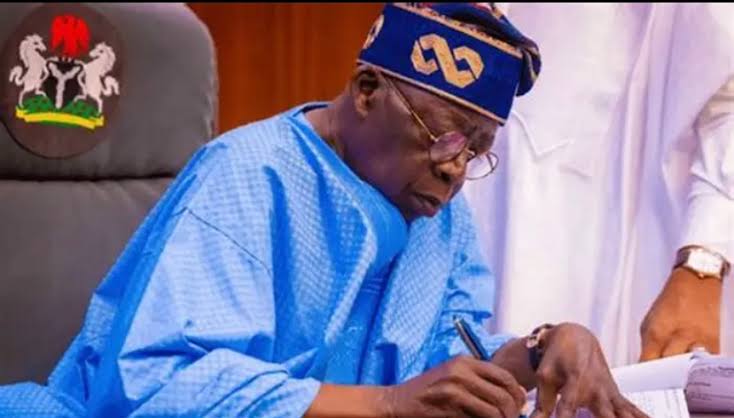
The President made the declaration on Monday, October 19, 2026, while addressing members of the City Boys Movement at a gathering in Abuja organised to mobilise support for his administration ahead of the 2027 general elections.
Tinubu defended the decisions taken by his government since assuming office in May 2023, arguing that Nigeria had faced a serious financial challenge and could no longer sustain the cost of the petrol subsidy regime.
According to reports by The Guardian Nigeria and Tribune Online, the President insisted that reversing the policy would return the country to an unsustainable economic situation. He also urged supporters to communicate his administration’s policies to Nigerians and encourage greater youth participation in the political process. (The Guardian Nigeria, Tribune Online)
Tinubu Defends Decision to Remove Petrol Subsidy
Petrol subsidy removal remains one of the most consequential economic decisions taken by Tinubu since he became President.
On May 29, 2023, during his inauguration, Tinubu announced that the petrol subsidy regime would end. The decision altered the way petrol prices were supported and financed by the government, exposing consumers more directly to changes in supply costs and market conditions.
Defending the decision at Monday’s gathering, Tinubu said the government had been unable to continue bearing the financial burden associated with the subsidy.
The President maintained that Nigeria could not borrow its way to greatness and argued that difficult economic decisions were necessary to put the country on a more sustainable financial footing.
He reiterated his position that the government would not reverse the policy, even as opposition figures and other critics continue to debate whether some form of subsidy should be restored to reduce pressure on households.
Tinubu also used a biblical reference to communicate his position, comparing a return to the previous policy to asking Moses to return to Egypt after leading the Israelites out of captivity.
The analogy reflected his argument that Nigeria should not abandon the economic changes already undertaken.
The President’s position signals that subsidy removal remains central to his administration’s economic direction as the country approaches another election cycle. (Tribune Online, Punch Newspapers)
Other Economic Reforms Remain Underway
Beyond petrol subsidy removal, Tinubu’s administration has pursued other economic changes, including foreign exchange market reforms intended to reduce distortions and improve the functioning of the currency market.
The government has defended these policies as necessary steps towards improving public finances, strengthening investor confidence and creating conditions for sustainable economic growth.
In his October 1, 2026, Independence Day address, Tinubu argued that the reforms had begun to improve some of the country’s economic indicators. He cited economic growth, lower inflation from its peak, improvements in foreign reserves and increased non-oil export earnings as evidence of progress.
The President also outlined priorities for the next stage of his economic programme, including reducing the cost of production and transportation, improving agricultural productivity, expanding infrastructure, supporting businesses and creating jobs.
He said the administration wanted economic growth to translate into more affordable goods, improved opportunities for young people and better living conditions for Nigerian households.
The President’s argument is that maintaining the reforms would provide a more stable foundation for long-term development, while reversing them could undermine progress already made.
However, the broader debate remains focused on how quickly the benefits of these policies can reach ordinary Nigerians, particularly those whose earnings have struggled to keep pace with living costs. (State House, Channels Television)
Finance Minister Warns Against Restoring Subsidy
The President’s declaration came amid a renewed debate over the possible return of petrol subsidies.
The Minister of Finance and Coordinating Minister of the Economy, Taiwo Oyedele, warned that restoring the policy could trigger capital flight, weaken investor confidence and place further pressure on the naira.
Oyedele made the remarks on Monday during a press briefing following the International Monetary Fund and World Bank Annual Meetings in Bangkok, Thailand.
According to reports, the minister said investors had repeatedly questioned whether Nigeria would abandon its economic reforms ahead of the 2027 elections.
He argued that even an indication that the government was considering bringing back the subsidy could influence financial markets, increase borrowing costs and prompt investors to move funds out of the country.
Oyedele warned that the naira could come under severe pressure and potentially weaken to between ₦3,000 and ₦4,000 per dollar if confidence deteriorated significantly.
The projected exchange-rate levels were presented as a warning about a possible market reaction, not as an established forecast or a confirmed outcome. Actual currency movements would depend on multiple economic and policy factors.
The minister further argued that a weaker naira could make imported petroleum products more expensive in local currency, potentially reducing or eliminating the relief that subsidy supporters hope to achieve.
His remarks reflect the government’s concern that reversing its reforms could affect both domestic and international investor confidence. (The Guardian Nigeria, Tribune Online)
ADC Challenges Government’s Economic Projection
The finance minister’s warning has also drawn criticism from opposition figures.
Kola Ologbondiyan, Director of Media and Publicity of the African Democratic Congress Presidential Campaign Council, challenged Oyedele to publish the economic model supporting his projection that a return to petrol subsidy could push the naira towards ₦4,000 per dollar.
Ologbondiyan accused the government of using alarming projections to discourage debate about restoring the subsidy.
He argued that Nigerians deserved evidence and transparent explanations of the assumptions behind the projected exchange-rate consequences.
The opposition representative questioned how the government arrived at the figures and called for the calculations to be made public.
The disagreement illustrates the continuing divide over how the government should respond to the effects of higher fuel costs and wider economic pressures.
While the government argues that restoring subsidies could undermine fiscal stability and investor confidence, critics maintain that the consequences of the existing policy for households must also be considered and that predictions about the cost of reversing it should be supported by transparent evidence.
The exchange has brought the question of petrol subsidy back into the economic and political debate ahead of the 2027 elections. (The Guardian Nigeria, Tribune Online)
Nigerians Continue to Face Cost-of-Living Pressures
Although the government maintains that its reforms are intended to strengthen the economy over time, the cost of living remains a major concern for households and workers.
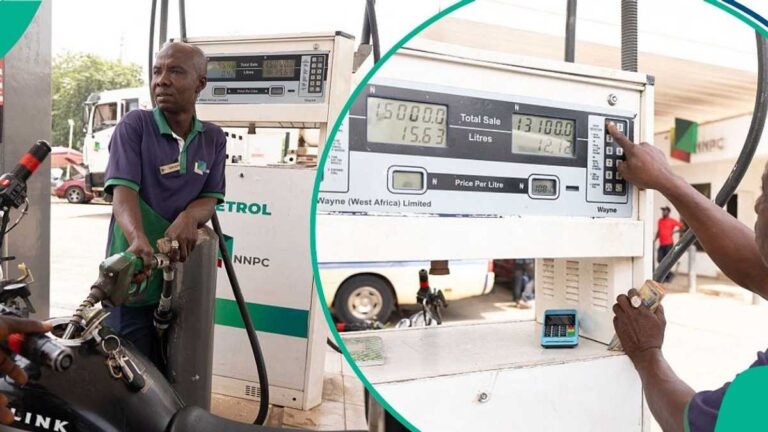
Higher petrol prices affect more than the cost of filling private vehicles. They can also influence public transportation fares, the movement of food and other goods, business operating expenses and the cost of delivering services.
Businesses that depend on generators or fuel-powered transportation may face additional expenses, some of which can be passed on to consumers through higher prices.
The consequences can be particularly difficult for low-income households, informal-sector workers and people whose earnings do not increase as quickly as essential expenses.
The Nigeria Labour Congress has continued to demand improved wages and relief for workers, arguing that the purchasing power of the national minimum wage remains under pressure. A report published by Punch Newspapers on October 20, 2026, said organised labour maintained its ultimatum to the Federal Government amid concerns about petrol prices and workers’ earnings. (Punch Newspapers)
These concerns form an important part of the wider debate over subsidy removal. The policy’s fiscal implications cannot be assessed in isolation from its effects on transportation, food prices, household budgets and business costs.
For the government, the challenge is to demonstrate that the anticipated benefits of economic reform can translate into tangible improvements in people’s lives.
Tinubu Calls for Youth Support Ahead of 2027
The President’s comments also had a political dimension, as the gathering was organised by the City Boys Movement to mobilise support ahead of the 2027 general elections.
Tinubu urged supporters to help communicate the administration’s policies and encourage young Nigerians to participate in the political process.
The 2027 election cycle is expected to feature renewed debate over economic management, the cost of living, employment, public spending and the future of petrol subsidy policy.
The President’s refusal to reverse the subsidy decision establishes a clear position for his administration as those issues become more prominent in political discussions.
Opposition figures advocating a different approach are likely to continue questioning whether the existing reforms are delivering sufficient relief to Nigerians and whether alternative measures could address household hardship without undermining public finances.
The competing positions mean that subsidy policy is likely to remain an important issue in discussions about Nigeria’s economic future.
What Tinubu’s Position Means for Economic Policy
Tinubu’s latest declaration reinforces the administration’s stated intention to maintain its existing economic reform programme rather than restore the previous petrol subsidy arrangement.
For financial markets and businesses, policy consistency can be an important consideration when making investment decisions. However, investor confidence is influenced by a wider range of factors, including currency stability, inflation, security, infrastructure, fiscal management and the general business environment.
For households, the immediate concern is different: whether the economy can deliver more affordable transportation, food and other essential goods, alongside better employment and income opportunities.
The government’s stated priorities include reducing production and transportation costs, expanding agricultural output, improving infrastructure and strengthening support for vulnerable citizens.
The extent to which these measures can offset the pressures associated with subsidy removal will be an important test of the administration’s economic programme.
The debate is therefore not limited to whether the subsidy should return. It also concerns how the government manages public finances, protects vulnerable households, supports workers and ensures that the benefits of economic growth reach a wider section of the population.
President Bola Tinubu has reaffirmed that he has no regrets over petrol subsidy removal and other economic reforms, arguing that Nigeria cannot afford to return to an unsustainable fiscal arrangement.
His declaration at the City Boys Movement gathering in Abuja came as Finance Minister Taiwo Oyedele warned that restoring the subsidy could trigger capital flight and place additional pressure on the naira. The ADC’s Kola Ologbondiyan, however, challenged the government to publish the economic model supporting the minister’s exchange-rate projection.
The disagreement reflects a broader national debate about fiscal sustainability, investor confidence and the impact of economic reforms on households.
As Nigeria approaches the 2027 general elections, the central question will remain whether the government’s policies can deliver stronger economic performance while easing the financial pressures faced by ordinary Nigerians.
About the Author