
Niger, Mali and Burkina Faso have resumed formal ministerial-level dialogue with the Economic Community of West African States (ECOWAS), in a significant diplomatic development that could help restore cooperation across West Africa following the three countries’ withdrawal from the regional organisation.
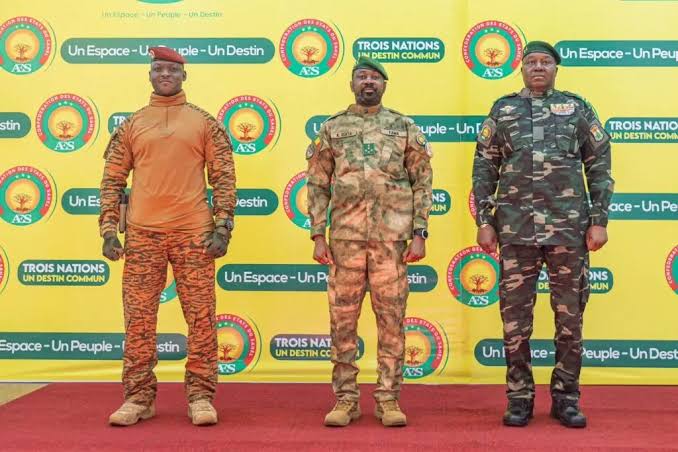
The discussions took place in Dakar, Senegal, on Saturday, October 17, 2026, when representatives of ECOWAS and the Alliance of Sahel States (AES), the confederation formed by the three countries, agreed to establish joint thematic working groups to develop a framework for future cooperation.
The meeting marked the first official ministerial-level engagement between the two sides since the three Sahel countries formally left ECOWAS in January 2025. Although contacts and consultations had continued following their departure, the Dakar meeting provided a more structured platform for discussing their future relationship.
In a joint communiqué issued after the meeting, both sides welcomed what they described as a spirit of fraternity, mutual respect and openness. They also emphasised the importance of maintaining good neighbourly relations while respecting national sovereignty.
The agreement represents a step towards managing the political separation without abandoning the historical, economic and social connections that link the countries of the region.
However, the discussions did not announce the return of Niger, Mali or Burkina Faso to ECOWAS. Instead, the immediate objective is to establish a practical framework for cooperation between the regional bloc and the three countries.
Delegations led by Burkina Faso and Senegal
The AES delegation was led by Burkina Faso’s Foreign Minister, Karamoko Jean-Marie Traoré, who chairs the confederation’s ministerial steering committee.
The ECOWAS delegation was headed by Senegal’s Foreign Minister, Cheikh Niang, who also chairs the ECOWAS Council of Ministers.
The two ministers co-chaired the meeting and signed the joint communiqué on behalf of their respective organisations.
Senegal’s role as host was significant, as the country continues to support regional integration and diplomatic engagement among West African states. The communiqué acknowledged Senegalese President Bassirou Diomaye Faye, his government and the Senegalese people for their hospitality and support for the meeting.
The parties agreed that joint thematic working groups would conduct technical discussions on areas of common interest and prepare recommendations for a proposed cooperation agreement.
The working groups’ findings will be submitted to ministers for consideration before another ministerial session. The date and venue of that meeting have not yet been fixed and are expected to be determined through diplomatic consultations.
How the ECOWAS-AES rift began
The renewed dialogue follows a prolonged political disagreement between ECOWAS and the military-led governments of Niger, Mali and Burkina Faso.
The three countries announced their intention to withdraw from ECOWAS in January 2024, following growing tensions over military takeovers, sanctions and disagreements about the restoration of constitutional civilian government.
Mali experienced a military coup in 2020, followed by another change of power in 2021. Burkina Faso experienced coups in 2022, while Niger’s military took power in July 2023, detaining President Mohamed Bazoum.
ECOWAS, which has historically promoted constitutional governance and regional political stability, took measures against military governments in the region. The sanctions and diplomatic pressure contributed to the deterioration of relations between the bloc and the three countries.
The governments subsequently pursued a separate regional arrangement through the Alliance of Sahel States. Their withdrawal from ECOWAS formally took effect on January 29, 2025.
Since then, the three governments have increasingly emphasised sovereignty, independent security partnerships and a different approach to relations with foreign powers.
The AES has also distanced itself from France, the former colonial power in the three countries, while strengthening its ties with Russia. Relations with some West African coastal states, including Benin and Côte d’Ivoire, have been strained by disagreements over regional security and foreign influence.
The Dakar meeting now offers both sides an opportunity to discuss practical cooperation despite those unresolved political differences.
Trade and free movement remain major concerns
One of the most important issues arising from the separation is the future of trade and movement between the AES countries and the rest of West Africa.
The three countries are landlocked and depend on transport corridors through neighbouring states to access seaports and international markets. Their businesses rely on cross-border routes to move goods, obtain supplies and reach customers in coastal economies.
Meanwhile, ECOWAS member states maintain commercial relationships with communities and businesses across the Sahel. Disruptions to regional transport, customs arrangements or border procedures could affect traders, transport operators, manufacturers and consumers on both sides.
The proposed cooperation framework could therefore help establish clearer arrangements for cross-border trade, transport, transit and other shared economic interests.
The countries’ longstanding cultural and social connections are also important. Families, traders and communities have maintained links across borders for generations, making predictable movement arrangements a practical concern for ordinary people as well as governments.
Nevertheless, the communiqué did not announce a new trade agreement or confirm changes to existing border arrangements. Any changes will depend on the technical negotiations and subsequent decisions by the two sides.
The working groups will need to turn broad commitments into practical proposals that protect the interests of the populations involved.
Regional security adds urgency to the talks
Security cooperation is another major concern for West Africa.
Niger, Mali and Burkina Faso have faced prolonged insurgencies involving armed groups linked to al-Qaeda and the Islamic State. These groups have carried out attacks against military personnel and civilians, while violence and insecurity have placed pressure on local communities and government institutions.
The security challenges are not confined to the three AES countries. Armed groups have also threatened areas of coastal West Africa, including parts of Benin and Togo, raising concerns about the possibility of further expansion towards the Gulf of Guinea.
Because these threats cross national borders, effective responses often depend on intelligence-sharing, coordinated border management, communication between security agencies and cooperation among neighbouring governments.
The political split between ECOWAS and the AES has complicated the regional environment in which these challenges must be addressed.
A structured dialogue could provide a channel for discussing shared security concerns, even where the governments involved continue to disagree about political governance and foreign partnerships.
However, the Dakar meeting did not announce a new joint military operation, intelligence-sharing agreement or security deployment. Any such measures would require further negotiations and formal decisions.
The immediate achievement is the agreement to establish working groups, which could provide a foundation for more detailed discussions in the future.
Nigeria and the future of regional unity
The developments are particularly relevant to Nigeria, one of West Africa’s largest economies and a key participant in regional diplomacy through ECOWAS.
Nigeria shares a long border with Niger, and trade, migration, security and family connections link communities on both sides. Instability in the wider Sahel can also affect Nigeria through cross-border criminal activity, extremist violence and pressure on border communities.
The Nigerian Ministry of Foreign Affairs welcomed the Dakar engagement in a statement highlighting Nigeria’s commitment to regional unity. The ministry’s announcement reflected the wider importance attached to maintaining communication between ECOWAS and the three countries that departed the bloc.
For Nigeria and other ECOWAS members, the resumption of formal dialogue could help reduce the risks associated with a prolonged regional split.
Nevertheless, a successful outcome will depend on whether the discussions produce concrete arrangements rather than remaining at the level of diplomatic statements. Issues involving trade, movement, security cooperation and the legal status of the relationship may require difficult compromises.
The talks will also have to account for the AES countries’ determination to protect their sovereignty and maintain their separate confederation, alongside ECOWAS’s existing rules and commitments among its member states.
Does the renewed dialogue mean the three countries will rejoin ECOWAS?
For now, there is no confirmed agreement for Niger, Mali or Burkina Faso to return to ECOWAS.
The purpose of the Dakar meeting was to begin developing a framework for cooperation between the two sides. The creation of joint working groups signals a willingness to engage diplomatically, but it does not establish that the underlying disagreements have been resolved.
The next stage will involve technical discussions, followed by ministerial consideration of the recommendations. The timing and location of the next meeting remain subject to diplomatic consultations.
The eventual agreement, if reached, could help define how the two blocs manage common interests while retaining their separate political structures.
For now, the resumption of formal talks is a significant but preliminary development. Whether it leads to lasting improvements in regional trade, security and diplomatic relations will depend on the details of the proposed framework and the willingness of both sides to implement it.
About the Author