
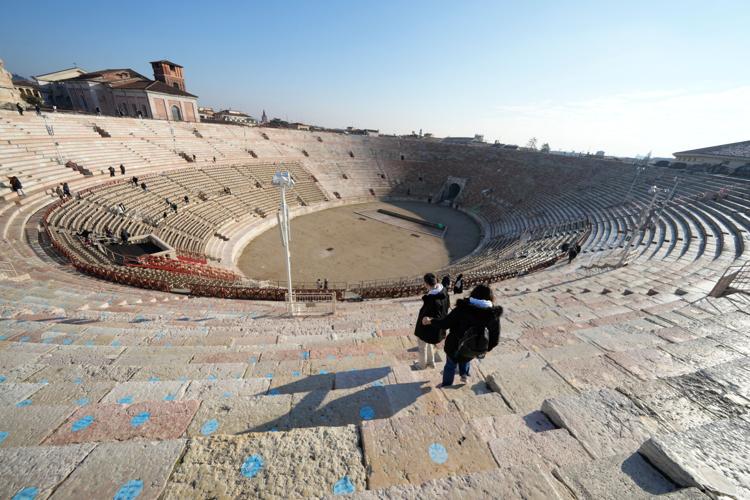
Verona’s iconic Roman Arena, a 1st-century amphitheater that has hosted everything from gladiator battles to world-famous opera festivals, is receiving a modern accessibility and safety overhaul ahead of the 2026 Milan–Cortina Winter Games. The ancient monument will serve as the venue for the Olympic closing ceremony on February 22 and the Paralympic opening ceremony on March 6.
Despite its long history and many uses, the Arena has never been fully accessible to people with disabilities or those needing mobility support. Several outdated safety measures have also remained in place for decades without upgrades. The Olympic preparations have now created an opportunity to address both issues.
Architect Giulio Fenyves, whose Milan studio designed the new features, said the Games prompted a full rethinking of how thousands of visitors enter, exit, and move through the site. The works are part of an 18-million-euro project managed by the government agency overseeing Olympic infrastructure and include improvements to the surrounding urban area.
A one-kilometer stretch between Verona’s main train station and the Arena is being upgraded with smoother sidewalks, small curb ramps, and new bike lanes. The pathway that Paralympians will follow during the Parade of Athletes has also been redesigned to better accommodate wheelchair users and others with mobility challenges.
Inside the Arena, the signature feature is a removable wheelchair-accessible ramp made from pre-rusted steel and Prun stone sourced from the Lessinia hills, the same material the Romans used. Its fossil-dotted pinkish-yellow tone allows the new addition to blend naturally with the ancient structure. Project manager Paolo Zecchinelli expressed hope that the ramp will be kept as a permanent legacy after the Games.
A temporary secondary ramp will also be installed to support elderly spectators, families with children, and anyone requiring assistance.
Other upgrades include a modern railing to replace a “temporary” 1950s barrier on the top level, new handrails across all internal stairways and entrances, and improved, more accessible bathrooms. After the Games, construction will continue with the installation of an elevator to provide access to the Arena’s uppermost level, offering both better event seating options and panoramic views of Verona.
Zecchinelli said many of the enhancements will remain long after the ceremonies end, giving the city a safer, more inclusive historic landmark for residents and visitors alike.
About the Author