
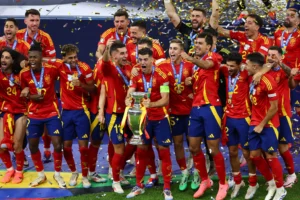
The football world witnessed history on July 19, 2026, as Spain defeated Argentina 1-0 after extra time to win the 2026 FIFA World Cup, lifting the prestigious trophy for the second time in the nation’s history. The thrilling final, held at MetLife Stadium in New Jersey, United States, brought together two football powerhouses in a contest filled with drama, tactical brilliance, and unforgettable moments.
Spain’s triumph marks the end of a remarkable tournament and signals the rise of a new generation of football stars ready to dominate the international stage.
Spain’s Road to World Cup Glory
Spain entered the tournament as one of the favorites, boasting a squad filled with youthful talent and experienced leaders. Throughout the competition, they displayed the trademark Spanish style of football: patient possession, intelligent movement, technical precision, and relentless pressing.
Their journey to the final included impressive victories over several strong opponents. Spain defeated Austria in the Round of 32, overcame neighboring rivals Portugal in the Round of 16, edged past Belgium in the quarter-finals, and comfortably beat France in the semi-finals.
Each performance reinforced Spain’s reputation as one of the tournament’s most complete teams.
A Historic Final Against Argentina
The World Cup final lived up to expectations.
Argentina, the defending champions, entered the match hoping to secure back-to-back World Cup titles after their famous triumph in Qatar four years earlier. Led by a determined squad carrying the legacy of Lionel Messi’s generation, Argentina pushed Spain throughout the match.
For much of the game, both teams created opportunities but found it difficult to break through disciplined defenses and inspired goalkeeping performances.
With the match heading toward penalties, Spain finally found the breakthrough during extra time. Forward Ferran Torres scored the decisive goal, sending Spanish supporters into celebration and sealing a memorable 1-0 victory.
The final whistle confirmed Spain as the 2026 FIFA World Cup Champions.
Spain’s Second World Cup Title
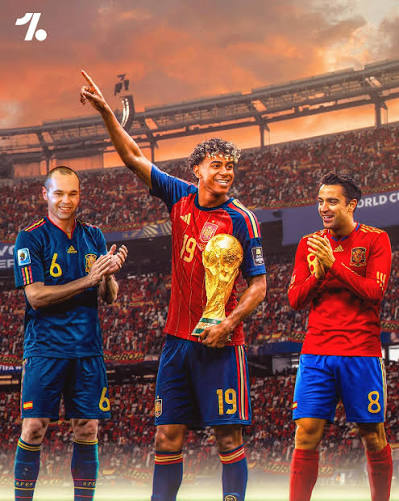
Spain previously won the FIFA World Cup in 2010 after defeating the Netherlands in South Africa. That golden generation, featuring legends such as Andrés Iniesta, Xavi Hernández, Iker Casillas, David Villa, and Sergio Ramos, revolutionized world football with their possession-based “tiki-taka” philosophy.
Sixteen years later, another talented generation has brought football’s greatest prize back to Spain.
This victory symbolizes the successful rebuilding of Spanish football and demonstrates the country’s continued investment in youth development and technical excellence.
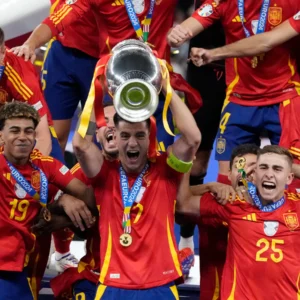
Young Stars Shine Bright
One of the biggest stories of the tournament was the emergence of Spain’s exciting young talents.
Players like Lamine Yamal, widely regarded as one of football’s brightest prospects, played a significant role throughout the competition. His creativity, pace, confidence, and maturity beyond his years captivated football fans across the globe.
Combined with experienced teammates and an organized tactical system, Spain struck the perfect balance between youthful energy and composure.
Many football analysts believe this squad could dominate international football for years to come.
Argentina Falls Short
Although Argentina failed to retain the trophy, their campaign deserves enormous respect.
The South American giants fought through a difficult knockout stage and reached another World Cup final, demonstrating consistency at the highest level.
Their players displayed tremendous resilience, passion, and technical quality throughout the tournament.
Despite the disappointment of defeat, Argentina remains among the strongest football nations in the world and will undoubtedly be one of the favorites for future international competitions.
A Tournament Full of Surprises
The 2026 FIFA World Cup will be remembered for several remarkable achievements.
Hosted jointly by the United States, Canada, and Mexico, it became the largest FIFA World Cup in history, featuring 48 national teams for the first time.
The expanded format produced more exciting matches, more emerging football nations, and unforgettable upsets.
Countries such as Morocco, Norway, Cape Verde, and others impressed football fans with spirited performances that showcased the growing competitiveness of global football.
Burna Boy Makes History
The tournament also featured a historic moment for Nigeria.
Afrobeats superstar Burna Boy became the first Nigerian artist to perform at a FIFA World Cup Final halftime show, sharing the global stage with Colombian superstar Shakira.
His performance introduced millions of viewers to African music and culture, highlighting Nigeria’s growing influence in global entertainment.
For many Nigerians, Burna Boy’s appearance was just as memorable as the football itself.
What This Victory Means for Spain
Winning the FIFA World Cup is more than lifting a trophy.
For Spain, it represents years of planning, investment in youth academies, tactical innovation, and faith in developing young talent.
Their success will inspire future generations of footballers across Spain and reinforce the country’s position among football’s greatest nations.
The victory also demonstrates that patience, technical excellence, teamwork, and strong player development remain essential ingredients for sustained success in modern football.
Looking Ahead
With Euro competitions, the UEFA Nations League, and the next World Cup cycle already on the horizon, Spain now carries the responsibility of defending its status as world champions.
Football fans worldwide will eagerly watch whether this talented squad can build a dynasty similar to Spain’s golden generation between 2008 and 2012.
One thing is certain: the 2026 FIFA World Cup has ushered in a new chapter in international football, and Spain stands proudly at its summit.
As celebrations continue across Madrid, Barcelona, Seville, Valencia, and every corner of Spain, football lovers everywhere can reflect on a tournament that delivered unforgettable memories, emerging superstars, emotional victories, and yet another reminder of why the FIFA World Cup remains the greatest spectacle in sports.
About the Author