
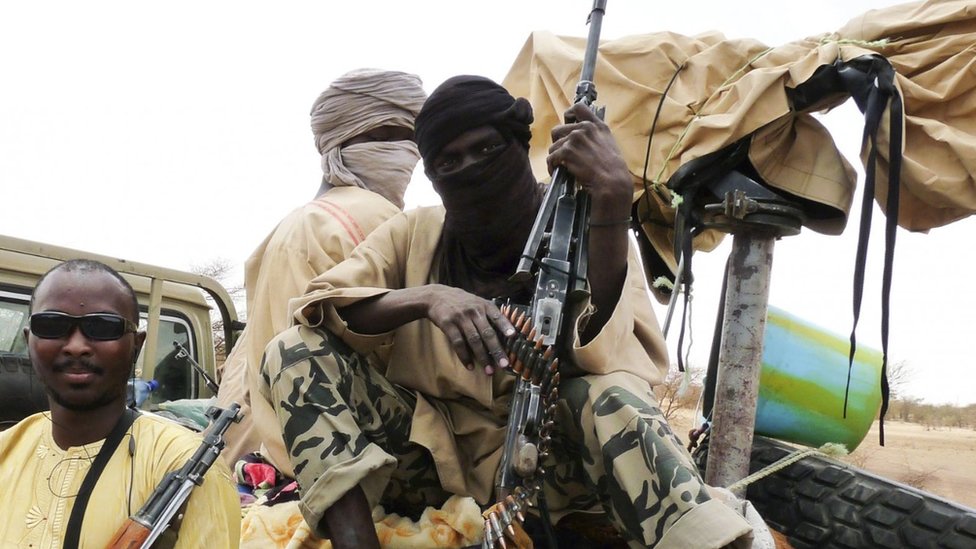
At least 48 civilians have been killed in a series of attacks on settlements in northeastern Mali, with local officials and community representatives blaming militants linked to the Islamic State group for the violence. The attacks, which occurred over the weekend of October 18 and 19, 2026, targeted camps in the Ménaka region and forced residents to flee their homes in search of safety.
The death toll was still being assessed when reports emerged on October 20, with some security and local sources suggesting that more than 50 people had been killed. The victims reportedly included men, women, young people and elderly residents.
The violence highlights the continuing insecurity in Mali, where armed extremist groups, separatist movements and government-backed forces have been involved in a prolonged conflict that has devastated communities and displaced civilians across the Sahel.
According to reports by the Associated Press, Reuters and Agence France-Presse, the attacks took place in several localities around the town of Ménaka, including the areas of Tagadayat and Tinabow. The Daoussahak community, which was among those affected, said at least 48 civilians were killed in Tagadayat alone.
Although local sources attributed the killings to the Islamic State in the Sahel Province (ISSP), the group had not publicly claimed responsibility for the attacks in the reports available at the time.
Armed Men on Motorcycles Targeted Civilian Settlements
Witnesses and local sources described a sudden and violent assault by armed men who arrived on motorcycles and opened fire on residents.
According to accounts reported by AFP, groups of attackers entered several camps located approximately 50 kilometres from Ménaka town. The assailants reportedly fired indiscriminately, set houses on fire and killed people as they attempted to escape.
A local source from Tinabow told AFP that dozens of motorcycles arrived on Sunday evening before the attackers began shooting and burning homes.
The accounts suggested that the violence was not confined to a single settlement. Several camps in the surrounding area were reportedly affected, making it difficult for local authorities and community representatives to establish an immediate and definitive death toll.
One security source cited by AFP estimated that approximately 40 people had been killed, mostly men. Another source put the number at around 50, while a local elected official reported more than 50 deaths, including women and elderly people.
The executive bureau of the Daoussahak community subsequently reported that 48 civilians had been killed in Tagadayat and appealed for urgent humanitarian assistance for those displaced by the attacks.
The varying figures reflect the difficulty of obtaining reliable information from conflict-affected areas where communications, transportation and access to affected settlements can be limited.
Islamic State-Linked Militants Suspected
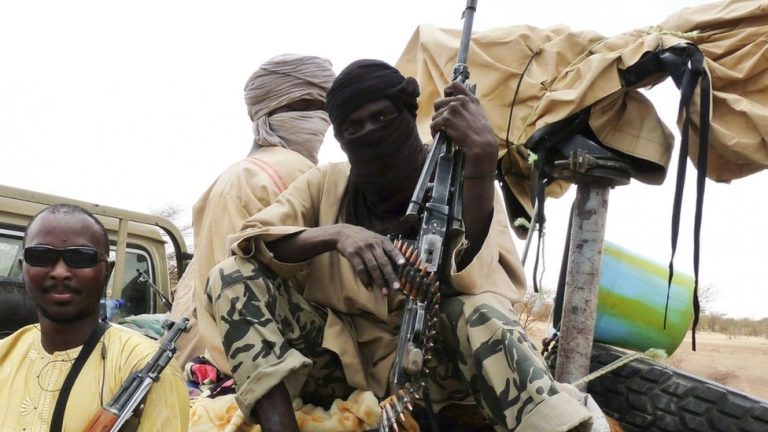
Community representatives and several local sources have attributed the attacks to the Islamic State in the Sahel Province, an armed extremist organisation operating across parts of Mali, Niger and Burkina Faso.
The group is associated with the wider Islamic State network and has been involved in repeated attacks against military forces, local communities and people it accuses of cooperating with governments or rival armed groups.
According to reporting by Reuters, the killings appeared to be retaliation for recent operations by pro-government forces in the area. Two security sources and two local officials told Reuters that civilians had been targeted after being suspected of providing information about militant positions to government forces.
The sources alleged that members of the Movement for the Salvation of Azawad (MSA), alongside Malian troops and Russian Africa Corps personnel, had carried out abuses against civilians suspected of acting as informants for ISSP.
A municipal official quoted by Reuters alleged that the earlier operations had resulted in deaths, the burning of houses and the theft of property.
The subsequent attacks were reportedly accompanied by further destruction of homes and the theft of livestock, worsening the situation for communities whose livelihoods depend heavily on animals and local trade.
These accounts offer a possible explanation for the violence, but the allegations concerning the preceding operations have not been independently established in all their details. ISSP had not publicly claimed responsibility for the killings in the reporting available at the time.
The reported sequence of events illustrates how suspected collaboration with armed groups or government forces can expose civilians to retaliatory violence, particularly in areas where control is contested.
Malian Army Reports Operation Against Militants
The attacks occurred shortly after the Malian army announced that it had conducted an operation against what it described as a major militant base in the same general area.
In a statement issued on Monday, October 19, the military said it had identified a site housing suspected terrorist elements, military equipment and logistical supplies approximately 65 kilometres southwest of Ménaka.
The army said it had assessed the intelligence available before striking the location.
The military announcement did not publicly establish a direct connection between the targeted base and the civilian deaths reported in the surrounding area. However, the timing of the operation has become a central part of accounts suggesting that the attacks may have been retaliatory.
A military spokesperson and Russia’s embassy in Bamako did not respond to Reuters’ requests for comment on the allegations described by the news agency.
The distinction between the military operation and the subsequent attacks is important. While the army reported striking a suspected militant base, community and security sources described civilians being killed in separate assaults on settlements.
The incident has renewed concerns about the protection of civilians during counterinsurgency operations and the risks faced by communities living close to contested territory.
Hundreds Displaced as Residents Seek Safety
The attacks have forced residents to abandon affected settlements, with people fleeing toward Ménaka town as the scale of the violence became apparent.
Sources cited by Reuters and AFP said that hundreds of civilians were displaced by the attacks. Families were reportedly left without secure shelter after homes were burned and livestock was stolen.
For many residents, the loss of livestock represents more than immediate financial damage. Animals are a source of food, income and social security for pastoral communities, meaning that their theft can undermine a family’s ability to recover long after the immediate violence has ended.
The destruction of homes also leaves families exposed to harsh weather and increases their dependence on relatives, community networks and humanitarian organisations.
The Daoussahak community’s executive bureau appealed for urgent humanitarian assistance following the killings, highlighting the immediate needs of people forced to leave their homes.
Such assistance may include emergency shelter, food, clean water, medical treatment and protection for vulnerable people, particularly children, older residents and those separated from family members during the flight.
However, insecurity in remote parts of the Sahel can make it difficult for humanitarian agencies to reach affected populations safely. Continued armed activity can also prevent displaced families from returning to their homes or accessing farmland, grazing areas and local markets.
The full humanitarian impact of the attacks was not yet clear when the initial reports were published.
Who Are the Daoussahak Community?
The Daoussahak are a community in the Ménaka region whose members have longstanding ties to the pastoral and social life of northeastern Mali.
The community is also associated with the origins of the Movement for the Salvation of Azawad, an armed group that has aligned itself with the authorities in Bamako.
That association has become significant in a conflict where extremist organisations frequently accuse civilians of supporting rival groups, providing information to the military or cooperating with local authorities.
Such accusations can place entire communities at risk, regardless of whether individual residents have any involvement in armed activity.
In the latest attacks, community representatives said civilians were deliberately targeted. The allegations that the killings were connected to suspected informants or recent military operations have heightened fears that ordinary residents are being caught in a cycle of reprisals between armed actors.
The attacks also demonstrate the difficulty of maintaining security in areas where local loyalties, armed alliances and government control are contested.
Mali’s Long-Running Security Crisis
Mali has faced a major security crisis since 2012, when separatist rebellions and Islamist insurgencies expanded across parts of the country’s north.
Although foreign military interventions and successive domestic security operations have changed the balance of power in different regions, armed groups have continued to carry out attacks against soldiers and civilians.
The political situation has also changed significantly. Military coups in 2020 and 2021 brought a junta to power, and the authorities subsequently shifted their security partnership toward Russia after relations with some Western partners deteriorated.
The Russian paramilitary organisation Wagner was succeeded in its Mali role by Africa Corps, a formation linked to the Russian state.
Despite the change in international partnerships and military strategy, violence remains a serious problem across much of the country.
Mali is also affected by competition between different armed organisations. ISSP operates in the eastern part of the country and across neighbouring parts of the Sahel, while Jama’at Nusrat al-Islam wal-Muslimin (JNIM), an al-Qaeda-linked coalition, maintains a significant presence in Mali and neighbouring states.
The two extremist networks have fought one another as well as government forces and other armed groups. Their competition adds another layer of danger for civilians who live in areas where territorial control can change rapidly.
Wider Implications for the Sahel
The killings in Ménaka underline the broader security challenges confronting Mali, Niger and Burkina Faso, where militant violence, military operations and displacement have placed sustained pressure on communities.
The consequences extend beyond immediate casualties. Repeated attacks can disrupt trade, prevent children from attending school, weaken local healthcare systems and force families to abandon livelihoods.
Displacement can also place additional pressure on towns receiving people fleeing rural violence, especially when local authorities lack sufficient resources to provide accommodation and essential services.
The latest incident raises urgent questions about civilian protection, accountability for alleged abuses and the effectiveness of security operations in preventing further violence.
For affected families, the immediate priorities are establishing the full number of casualties, identifying those who remain missing, providing assistance to survivors and securing safe access to displaced communities.
As investigations and reporting continue, the final death toll and the precise circumstances surrounding the attacks may become clearer.
For now, at least 48 civilians have been reported killed, with some local estimates higher. The suspected attribution to Islamic State-linked militants remains based on accounts from community representatives and local sources, rather than a public claim of responsibility by the group.
The tragedy is another reminder that civilians in northeastern Mali continue to bear the heaviest consequences of a conflict that has endured for more than a decade.
About the Author