
Nigeria has unveiled a 10-year capital-market development plan aimed at mobilising domestic and international investment, expanding access to long-term financing and supporting the country’s ambition to build a $1 trillion economy by 2030.
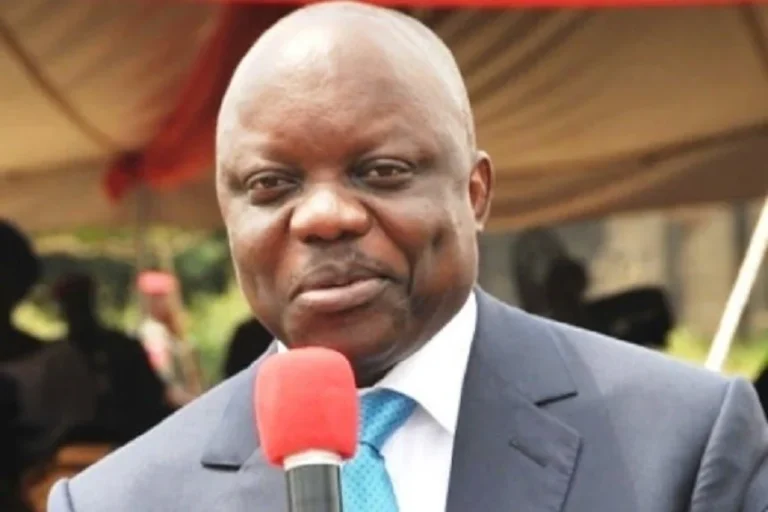
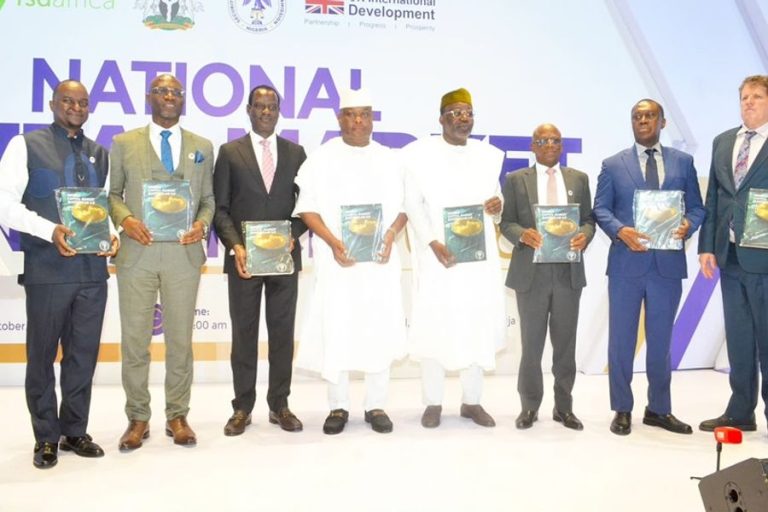
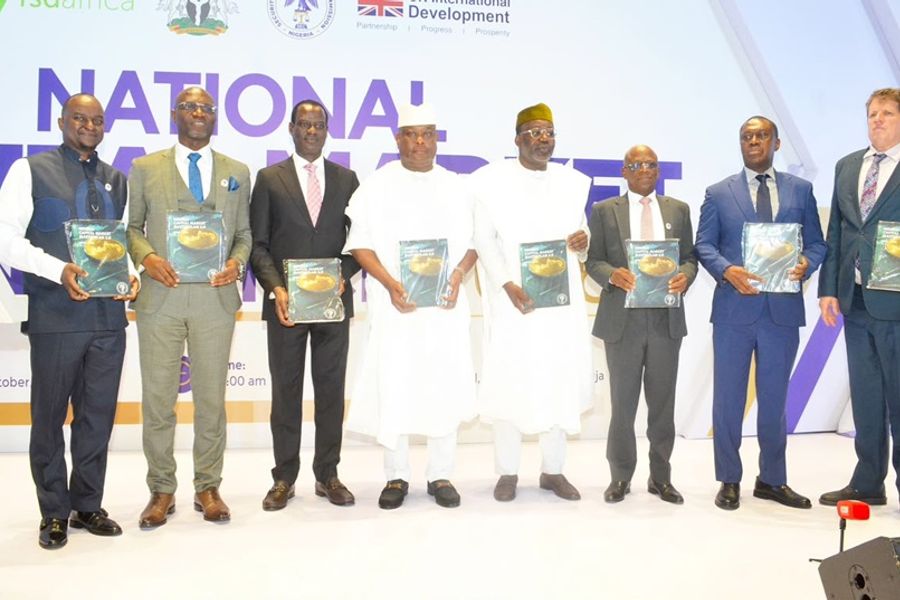
The Nigerian Capital Market Master Plan 2.0, covering 2026 to 2036, was launched on October 19, 2026, at the Presidential Villa in Abuja by Vice President Kashim Shettima, alongside Finance Minister and Coordinating Minister of the Economy Taiwo Oyedele, government officials and representatives of international development partners.
The initiative seeks to expand Nigeria’s capital market, strengthen investor participation, improve financial infrastructure and channel more private capital into businesses, infrastructure and other productive sectors.
The launch came amid a separate debate over Nigeria’s public finances, after the World Bank reported that Federal Government interest payments reached ₦7.7 trillion in the first half of 2026, compared with reported federal revenue of ₦6.2 trillion.
The figures implied that interest payments were equivalent to approximately 124 per cent of federal revenue during the six-month period. However, the Federal Ministry of Finance rejected the interpretation as misleading, arguing that the calculation combined debt obligations covering different levels of government with an incomplete measure of federal revenue.
The two developments highlight a central economic challenge facing Nigeria: how to finance infrastructure, businesses and economic expansion while managing the cost of public borrowing and improving the government’s ability to generate revenue.
Nigeria Targets a ₦750 Trillion Capital Market by 2036
The Nigerian Capital Market Master Plan 2.0 establishes a long-term framework for expanding the country’s financial markets over the next decade.
The Securities and Exchange Commission (SEC), which developed the plan with technical support from FSD Africa and funding from the United Kingdom, has set a target of increasing the capital market’s size from a baseline of approximately ₦250 trillion to ₦750 trillion by 2036.
That would represent a threefold expansion over the plan’s 10-year period.
The capital market allows businesses and governments to raise long-term funds by issuing shares, bonds and other investment instruments. It also gives investors opportunities to purchase financial assets and participate in the growth of companies and the wider economy.
A deeper market could help Nigerian businesses obtain financing without relying exclusively on bank loans. It could also provide state governments with additional ways to fund infrastructure and allow institutional investors to channel more resources into productive enterprises.
Speaking at the launch, Shettima described the capital market as a bridge between citizens’ savings and the country’s investment requirements.
He said the plan would place capital-market development at the centre of Nigeria’s economic strategy, particularly by enabling governments and businesses to mobilise domestic savings for long-term projects.
The government hopes that expanding the market will reduce excessive dependence on short-term financing and create a more sustainable foundation for economic development.
Oyedele Calls for a $1 Trillion Capital Market
Finance Minister Taiwo Oyedele has argued that Nigeria should aim beyond the SEC’s ₦750 trillion target and seek to build a capital market worth $1 trillion within the next decade.
According to Oyedele, a larger and more accessible market would help support the country’s ambition of becoming a $1 trillion economy by 2030.
The minister said Nigeria needs to mobilise more domestic savings, attract international investment and create additional opportunities for businesses to raise long-term capital locally.
He also called for the government to consider listing selected state-owned enterprises on the Nigerian capital market, specifically identifying the Nigerian National Petroleum Company Limited (NNPC Ltd) and Nigeria LNG Limited (NLNG) as potential candidates.
Listing shares in major state-owned enterprises could allow members of the public and institutional investors to acquire ownership stakes in the companies, subject to the government’s decisions and applicable regulatory requirements.
Such listings could also improve corporate transparency by requiring companies to meet public-market disclosure and governance standards.
However, the proposal does not mean that NNPC or NLNG has already been approved for listing or that a public share offering has been scheduled. Further decisions would be required on valuation, ownership structure, regulatory compliance and the terms under which shares might be offered.
The government would also need to consider how to balance public ownership, national strategic interests and the commercial objectives of the companies involved.
Five Pillars to Drive Capital-Market Expansion
The 2026–2036 master plan is organised around five broad areas of reform designed to address structural weaknesses and improve the market’s ability to attract long-term investment.
These include regulatory clarity and enforcement, modernisation of market infrastructure, expansion of the range of issuers and financial instruments, diversification of the investor base, and strengthening institutional and professional capacity.
The first pillar focuses on improving the regulatory environment and strengthening investor confidence. Clear rules, effective enforcement and credible dispute-resolution mechanisms are important for attracting investors who need confidence that their funds and rights will be protected.
The second involves upgrading market infrastructure, including the systems through which securities are issued, traded, settled and monitored. More efficient systems could improve access, reduce transaction costs and support innovation.
The third seeks to broaden the types of companies and institutions that raise capital. This could make it easier for businesses, including smaller enterprises, to access financing and reduce dependence on conventional bank lending.
The fourth aims to bring more investors into the market. Greater participation by retail investors, pension funds, insurance companies, Nigerians living abroad and international institutions could expand the pool of available capital.
The fifth pillar focuses on institutional capacity, professional standards and the skills needed to operate a larger and more sophisticated financial market.
Together, the measures are intended to create a market that is more transparent, diverse and accessible to businesses and investors.
Plan Sets Ambitious Investment and Participation Targets
Beyond the headline market-size target, the master plan sets specific objectives for increasing investment and expanding participation.
One of its major ambitions is to increase assets under management in collective investment schemes from $5.6 billion to $56 billion over 10 years.
Collective investment schemes pool funds from multiple investors and invest them in assets such as shares, bonds and other eligible instruments. Their expansion could make investment opportunities more accessible to people who cannot independently build diversified portfolios.
The plan also seeks to increase annual diaspora investment channelled through the capital market from $4 billion to $10 billion.
Nigerians living abroad already contribute to the economy through remittances, property purchases and business investments. The proposed target seeks to direct a greater share of diaspora funds into regulated financial instruments that can support companies and development projects.
Another target is to increase the proportion of institutional investment portfolios allocated to non-sovereign assets from approximately 40 per cent to 50 per cent.
Non-sovereign assets include investments other than government-issued securities, potentially allowing more institutional capital to reach private businesses and other productive ventures.
The roadmap also aims to expand the number of listed companies from 146 to 250 and increase retail investor participation from approximately six million to 20 million.
Additional objectives include increasing corporate bond issuance and expanding cross-border listings, which could improve access to financing and strengthen connections between Nigerian markets and other African financial centres.
These figures are targets rather than completed achievements. Meeting them will depend on implementation, investor confidence, economic conditions and the availability of suitable investment opportunities.
National Savings Scheme Launched Alongside the Master Plan
The government also launched a National Savings Scheme alongside the capital-market roadmap.
The initiative is intended to encourage Nigerians to save through regulated channels and increase the pool of domestic funds available for investment.
The strategy reflects the government’s position that long-term economic development cannot depend entirely on foreign capital or public borrowing. Domestic savings can provide an important source of financing if suitable products are available and investors have confidence in the financial system.
The Securities and Exchange Commission has emphasised the relationship between savings and investment, arguing that mobilising household and institutional resources can help finance businesses, infrastructure and other national priorities.
For the scheme to achieve its objectives, potential investors will need accessible products, clear information about fees and risks, effective consumer protection and confidence that the institutions managing their money are properly regulated.
Financial education will also be important, particularly for first-time investors who may be unfamiliar with the differences between shares, bonds, collective investment schemes and other financial products.
The government has positioned the savings initiative as a complement to the master plan, rather than a replacement for broader reforms needed to deepen the capital market.
World Bank Reports Interest Payments Exceeded Federal Revenue in First Half of 2026
While the government is pursuing a larger capital market, a separate disagreement has emerged over Nigeria’s debt-servicing costs.
The World Bank’s October 2026 Nigeria Development Update reported that Federal Government revenue stood at approximately ₦6.2 trillion in the first half of the year, while interest payments rose to ₦7.7 trillion.
The comparison implies that interest payments were equivalent to about 124.2 per cent of reported federal revenue for the six-month period.
The bank reported that interest payments had risen from ₦5.6 trillion in the first half of 2025, an increase of approximately 37.5 per cent. Federal revenue, meanwhile, increased from ₦3.6 trillion to ₦6.2 trillion over the same period.
The World Bank attributed the higher interest burden partly to elevated domestic borrowing costs and warned that interest and personnel expenses continued to consume a large share of federal resources.
Its assessment also raised concerns about limited fiscal space for infrastructure and other public services.
Reported federal capital expenditure was particularly low during the first half of 2026. The bank cautioned that the improvement in the government’s fiscal balance should be interpreted carefully because it partly reflected subdued capital spending rather than a substantial reduction in recurrent obligations.
The report did not establish that Nigeria had defaulted on its debt. Instead, it highlighted the pressure that interest costs can place on the government’s budget and its ability to fund development priorities.
Finance Ministry Rejects the 124 Per Cent Interpretation
The Federal Ministry of Finance disputed the interpretation of the World Bank figures, describing the 124 per cent interest-to-revenue ratio as misleading.
In a statement released on October 18 and reported by Nigerian media the following day, the ministry argued that the calculation compared debt obligations covering multiple levels of government with revenue attributed only to the Federal Government.
According to the ministry, the interest-payment figure included debt serviced by the Federal Government on behalf of other tiers of government, including external loans to states.
The ministry maintained that the comparison should use revenue and debt obligations covering the same level of government. It argued that comparing a broader set of interest obligations with federal revenue alone could overstate the federal government’s direct interest burden.
The ministry also said the reported revenue figure did not fully capture income earned by government agencies and enterprises that had not yet been remitted to the Treasury.
It further argued that some statutory payments are received predominantly in the second half of the year, meaning a six-month snapshot may not provide a complete picture of annual revenue performance.
The ministry said federal revenue rose by 72 per cent between the first halves of 2025 and 2026, from ₦3.6 trillion to ₦6.2 trillion, while interest payments increased by 38 per cent, from ₦5.6 trillion to ₦7.7 trillion.
It therefore argued that revenue was growing faster than interest costs and that the interest-to-revenue ratio had improved compared with the previous year.
However, the ministry’s rebuttal did not eliminate the underlying question of how much revenue is available to cover interest payments and other government expenditure. It also did not provide an independently recalculated set of figures that would allow the public to fully reconcile the competing interpretations.
Government Cites Lower Full-Year Debt-Service Ratio
The ministry also argued that Nigeria’s debt position should be assessed using full-year figures rather than relying solely on the first six months of 2026.
It cited a World Bank projection that Nigeria’s full-year debt service, covering both interest and principal repayments, would amount to approximately 46 per cent of revenue in 2026.
The ministry described this projected full-year measure as a more appropriate benchmark for evaluating the country’s debt-servicing burden.
It also said the full-year debt-service-to-revenue ratio had fallen below 60 per cent, compared with 97 per cent before the current administration’s reforms.
These figures require an important distinction. Interest payments represent the cost of borrowing, while debt service generally includes interest and principal repayments. A six-month interest-to-revenue ratio and a full-year debt-service-to-revenue ratio therefore measure different things.
Neither figure should be presented as directly interchangeable with the other.
The ministry also maintained that the government’s borrowing programme complied with the limits approved by the National Assembly, the 2026 Appropriation Act, the approved borrowing plan and applicable fiscal responsibility legislation.
The World Bank, meanwhile, has continued to emphasise the importance of stronger revenue mobilisation, credible budgeting and careful management of borrowing costs.
Why the Capital-Market Plan Matters to Nigeria’s Debt Challenge
The two developments are connected by a shared question: how can Nigeria mobilise enough financing for economic growth without placing excessive pressure on public finances?
If the capital market expands as planned, businesses could have more opportunities to raise funds directly from investors instead of relying on bank loans or government-backed financing. State governments could also potentially issue securities to finance viable infrastructure projects under appropriate regulations and repayment arrangements.
A deeper market could help attract pension funds, insurers, diaspora investors and international institutions to long-term projects.
However, capital-market expansion alone will not solve Nigeria’s debt challenges. Investors will still need confidence in the economy, predictable regulations, credible corporate reporting and a stable financial environment.
The government must also demonstrate that funds raised through the market are directed towards productive investments capable of generating economic value.
Publicly listing state-owned companies would require particular care. Such transactions could broaden ownership and increase disclosure, but their benefits would depend on transparent valuations, governance safeguards and clear decisions about how much ownership the government intends to retain.
Similarly, the National Savings Scheme will need to protect investors and make regulated investment opportunities understandable and accessible.
Outlook: Ambitious Targets Depend on Implementation
Nigeria’s capital-market master plan establishes a long-term ambition to make financial markets a more important source of funding for economic development.
The ₦750 trillion target by 2036, the proposed $1 trillion capital-market ambition, increased diaspora investment and the expansion of retail participation all point towards a strategy of mobilising more private and domestic capital.
The government’s dispute with the World Bank, however, shows that investors and policymakers will also be watching the country’s fiscal position closely.
Higher revenues can create more room for public investment, but rising interest costs may limit that room if they absorb a large proportion of government income. The precise scale of the pressure depends on the definitions used, the coverage of the revenue and debt figures, and the government’s full-year fiscal performance.
The success of the capital-market plan will therefore depend on more than headline targets. It will require sustained implementation, effective regulation, credible public finances, investor protection and a steady supply of productive investment opportunities.
For Nigerians, the potential benefits include broader access to investment products, more financing options for businesses, additional funding for infrastructure and opportunities to participate in the growth of major companies.
Whether those benefits materialise will depend on how effectively the government, regulators and private-sector participants turn the 10-year roadmap into measurable results.
About the Author