
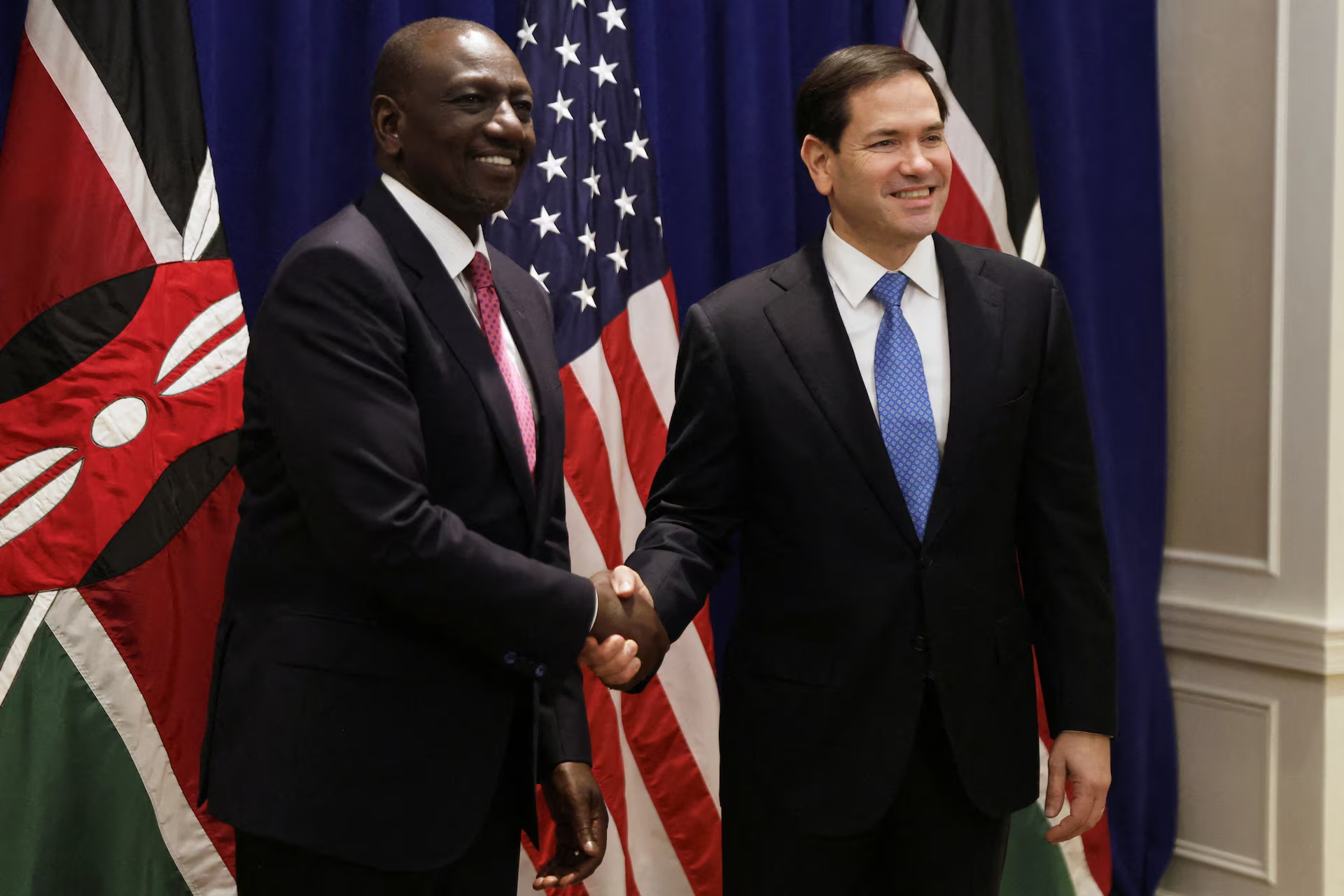
The United States and Kenya have signed a landmark five-year, $2.5 billion “America First” global health agreement, the first in what the Trump administration expects to become dozens of similar deals worldwide. The agreement reflects a major overhaul of how Washington funds global health programs, now prioritizing countries aligned with the president’s foreign policy positions.
The deal, signed in Nairobi by Kenyan President William Ruto and U.S. Secretary of State Marco Rubio, replaces a network of long-standing USAID-managed programs. These programs were dismantled earlier this year after the administration eliminated USAID as a standalone agency—a move that sparked backlash for disrupting hundreds of health initiatives, including support for maternal care, nutrition, and HIV/AIDS programs.
US Justifies Overhaul, Kenya Welcomes New Framework
Secretary Rubio said the goal of the new health partnership is to strengthen U.S. leadership in global health while eliminating dependency and “waste” in America’s foreign assistance system. He also praised Kenya’s leadership in Haiti, where it plays a leading role in a multinational mission combating violent gangs.
President Ruto said the agreement marks a significant shift and reaffirmed Kenya’s continued commitment to supporting stability efforts in Haiti.
Funding Breakdown and Focus Areas
Under the deal:
-
The U.S. will contribute $1.7 billion
-
Kenya will provide $850 million
The funding will support HIV/AIDS, malaria, tuberculosis, and related health programs.
While the framework prioritizes faith-based organizations, all clinics and hospitals registered under Kenya’s health insurance system will be eligible.
Family planning services that comply with U.S. restrictions on abortion may receive funding. Officials also insisted the program would not discriminate against LGBTQ people or sex workers.
More African Nations Expected to Sign — Except Nigeria and South Africa
U.S. officials say several African countries are preparing to sign similar agreements by year’s end. However, Nigeria and South Africa—Africa’s two largest economies—are not expected to join soon due to political tensions with President Trump.
Negotiations with Nigeria are ongoing, but U.S. officials cite “significant concerns” over alleged persecution of Christians. They hope a health agreement could help address these issues.
Health Crisis Worsens After USAID Shutdown
The dismantling of USAID caused severe disruptions across Africa:
-
Programs fighting disease, hunger, and maternal mortality were halted
-
Thousands of health workers lost jobs
-
Extremism-prevention and democracy-support programs were cut
The impact on HIV/AIDS response has been particularly devastating. South Africa’s world-leading HIV program, which depends on over $400 million annually from USAID/PEPFAR, suffered major setbacks. UNAIDS warned in July that up to 4 million people could die globally if support is not restored.
Following intense criticism, the Trump administration restored $115 million in temporary funding for South Africa, which will keep parts of the program running until March.
Still, Trump has vowed to end all financial assistance to South Africa, claiming (without evidence) that the country persecutes its white Afrikaner minority.
Nigeria has also been heavily affected. The country received nearly $4 billion in U.S. health aid between 2020 and 2025, bolstering a health system weakened by chronic underfunding. With the government allocating only 4%–5% of its national budget to health, the sudden loss of U.S. aid has pushed millions closer to crisis.
About the Author