
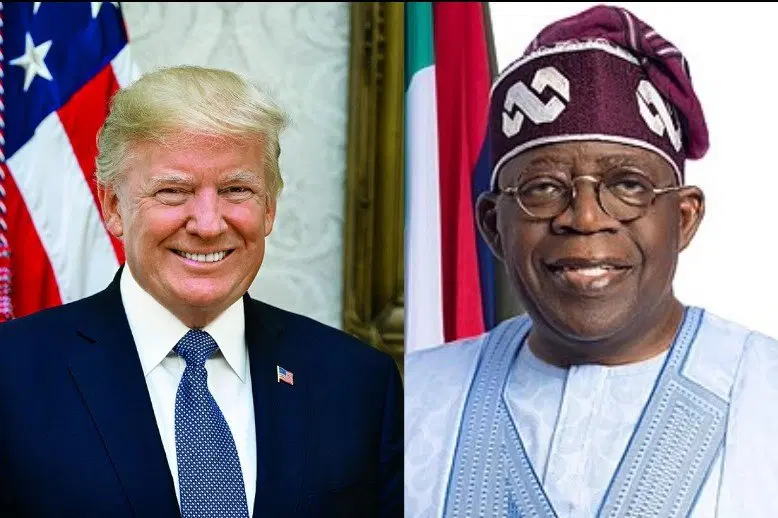
A civil society organisation has claimed that the recent threats and strong statements coming from the United States toward Nigeria are not rooted in allegations of Christian persecution, but rather in Nigeria’s refusal to accept key proposals from former U.S. President Donald Trump.
The Chairman of Grassroot Advocacy for Peace and Good Governance, Usman Muhammed Anache, made the allegation during a press briefing in Birnin Kebbi on Monday. According to him, Washington is displeased with Nigeria’s decision to reject two major requests: hosting American deportees and allowing the establishment of a U.S. military base on Nigerian soil.
Anache explained that following the withdrawal of U.S. forces from Niger, Mali, and Burkina Faso, the United States had sought to station troops in Nigeria to maintain its strategic monitoring of West Africa. Nigeria’s refusal, he said, did not sit well with American policymakers.
He added that Nigeria’s decision to join the New United Bloc (BRICS) was another factor that has contributed to U.S. dissatisfaction, describing it as a geopolitical shift the U.S. did not welcome.
“The calculated attempt to undermine Nigeria’s sovereignty has been a long-term plan by the U.S., which has failed in the past, is failing now, and will continue to fail in the future,” Anache said. “They have now resorted to using religion, knowing that Nigerians are deeply religious and patriotic.”
The CSO chairman also commended Christian leaders who publicly countered Trump’s recent allegations, noting that violent attacks in Nigeria affect both Christians and Muslims, not one religious group alone. He praised the Nigerian Government for its role in promoting peace across West Africa and urged leaders not to be intimidated by foreign pressure.
“The divisive tactic of using religion to divide and rule Nigeria, which has been their plan since 1960, will never succeed. Not now, not ever,” he stated.
This comes after recent U.S. claims of “Christian genocide” in northern Nigeria, accompanied by threats to take action against those responsible. Trump’s statements sparked widespread debate both within Nigeria and internationally.
About the Author