
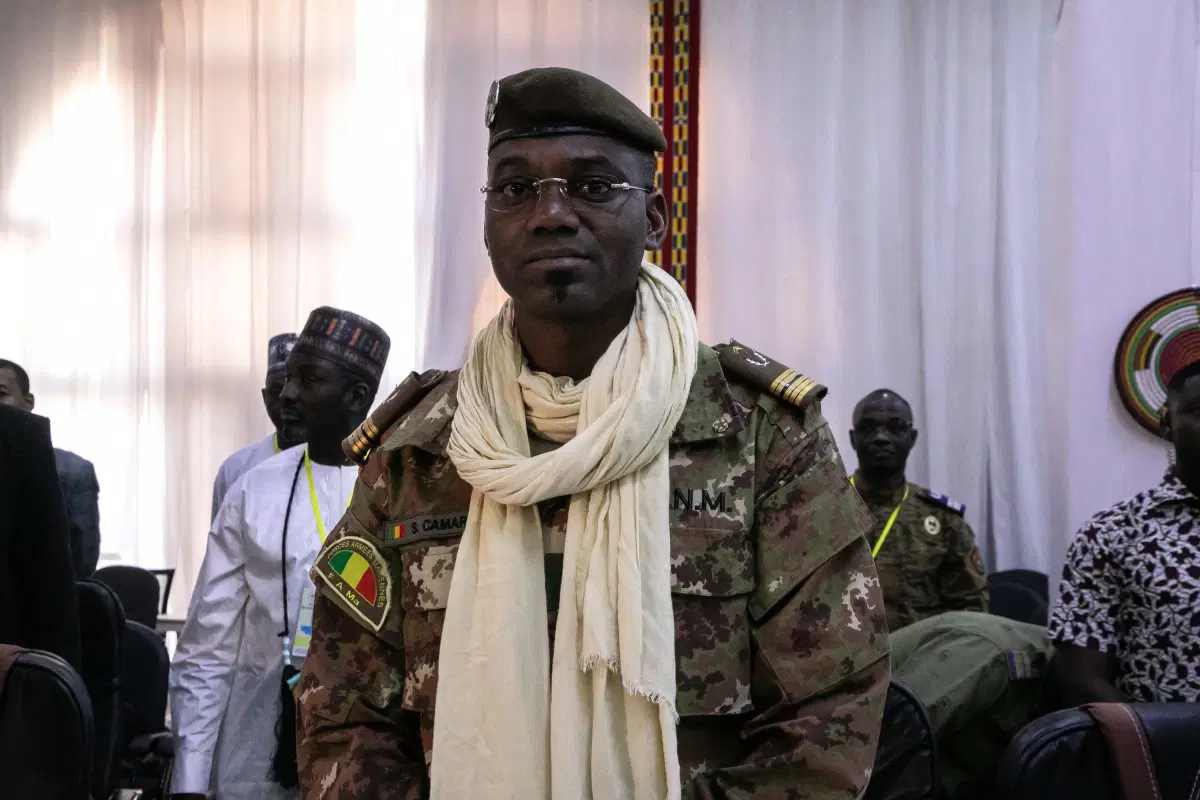
Mali’s Defence Minister, Sadio Camara, has reportedly been killed during a wave of coordinated attacks targeting military installations across the country, according to sources cited by Al Jazeera.
The attacks, which unfolded over the weekend, included a major assault on Camara’s residence in Kati, a heavily fortified garrison town located about 15 kilometres northwest of the capital, Bamako.
Camara, a key figure in Mali’s ruling military leadership following the coups of 2020 and 2021, was widely regarded as one of the most powerful figures in the government. His death is expected to have significant implications for the country’s already fragile security landscape.
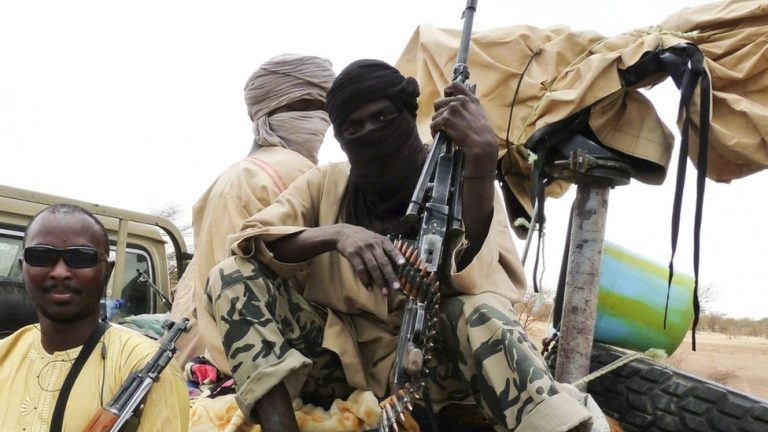
According to reports, the attack on his residence involved a suicide car bombing, carried out as part of a broader, highly coordinated offensive across multiple regions. Armed groups linked to Jama’at Nusrat al-Islam wal-Muslimin (JNIM), alongside Tuareg fighters from the Azawad Liberation Front (FLA), were said to be behind the assault.
Security analysts say the operation highlights a growing alliance between insurgent factions that had previously operated independently or even in opposition to each other. Their coordinated actions suggest a strategic shift aimed at confronting the Malian state more effectively.
Despite the intensity of the attack, Mali’s interim president, Assimi Goïta, was safely moved to a secure location and remains in control of the country’s military command, according to sources.
The violence was not limited to Kati. Gunmen also launched attacks in several key locations, including Bamako, the northern cities of Gao and Kidal, as well as the central city of Sévaré. Residents in Kidal reported continued gunfire and explosions more than 24 hours after the attacks began, indicating that clashes were still ongoing.
Experts warn that the situation could escalate further. Security analyst Bulama Bukarti noted that the alliance between insurgent groups may lead to intensified battles for control of territory and strategic infrastructure in the coming days.
“These groups have different long-term objectives,” Bukarti explained, “but their recent cooperation shows a unified effort to challenge the Malian government.”
The attacks have drawn widespread international condemnation. The African Union, the Organisation of Islamic Cooperation, and the United States Bureau of African Affairs all denounced the violence, calling for stability and restraint.
The killing of such a high-ranking official underscores the deepening security crisis in Mali, where armed groups continue to expand their reach despite ongoing military operations. It also raises urgent questions about the government’s ability to maintain control and protect key institutions.
As the situation develops, Mali faces a critical moment that could shape the trajectory of its internal conflict and regional stability in the Sahel.
About the Author