

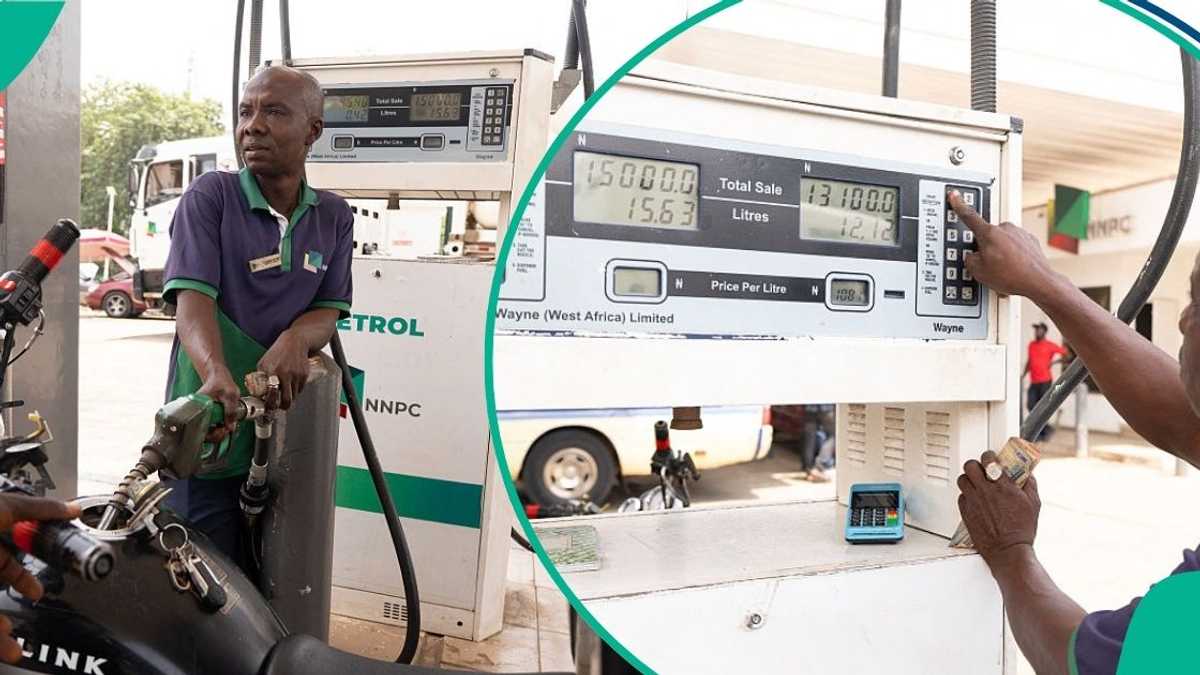
Nigeria’s petrol market has recorded another price adjustment, with the Nigerian National Petroleum Company Limited (NNPC Ltd) raising the pump price at its retail outlets from ₦1,370 to ₦1,405 per litre, while petroleum marketers continue to review their prices amid rising supply costs.
The adjustment adds to the pressure on motorists, transport operators, businesses and households already struggling with high transportation and living expenses. Although the Federal Government has announced measures intended to cushion the effect of rising petrol prices, reports from different parts of the country indicate that the cost of fuel remains uneven, with motorists paying different rates depending on their location, filling station and access to available discounts.
The latest NNPC price adjustment was reported on October 19, 2026, following changes communicated to filling station attendants over the preceding weekend. The company had previously sold petrol at ₦1,370 per litre before increasing the price by ₦35 to ₦1,405 per litre.
The increase comes as the government pursues a temporary petrol price relief initiative and discussions around a proposed ₦1,350-per-litre benchmark for depot-level pricing continue to attract attention.
NNPC Raises Petrol Price to ₦1,405 Per Litre
NNPC Retail outlets have raised their regular petrol pump price to ₦1,405 per litre from the previous rate of ₦1,370.
The adjustment represents an increase of ₦35 per litre, meaning motorists buying 40 litres of petrol would pay an additional ₦1,400 compared with the previous price, assuming the same quantity and no discount.
For commercial drivers and businesses that purchase fuel regularly, the increase can add significantly to operating expenses. Transport operators may face higher costs for daily operations, while businesses that depend on vehicles, generators and fuel-powered equipment could experience further pressure on their budgets.
Reports indicated that the revised rate was communicated to station attendants, but NNPC had not publicly provided a specific explanation for the latest increase in the reports available at the time.
The new price also highlights the difference between a filling station’s pump price and the prices discussed at the depot or gantry level. Depot prices represent the cost at which marketers obtain products before accounting for transportation, distribution, station operations and other expenses associated with retail sales.
Consequently, changes in depot prices do not always translate into identical pump prices across the country.
Fresh Petrol Prices Vary Across Filling Stations
Petrol prices at Nigerian filling stations continue to vary, with some marketers selling below NNPC’s regular rate and others charging more, depending on their location and operating costs.
A price comparison reported by Legit.ng on October 12 listed NNPC Retail at ₦1,405 per litre, while several competing brands charged slightly lower prices. The comparison listed BOVAS and MRS at ₦1,390 per litre, Azman at ₦1,398, and Hariz and TotalEnergies at ₦1,400 per litre. AA Rano was listed at ₦1,410 per litre.
These figures are reported prices from the period covered by the comparison and should not be treated as guaranteed prices at every branch or as a complete nationwide price list for October 21.
In Lagos, earlier reports also recorded petrol prices of approximately ₦1,350 to ₦1,360 per litre at some outlets, while independent marketers in other locations charged between ₦1,360 and ₦1,400 per litre.
However, prices in some other states have been substantially higher. A report published by PUNCH on October 20 described petrol selling for around ₦1,400 to ₦1,470 per litre at some NNPC stations across several states. In Minna, Niger State, reported prices at one NNPC mega station ranged from approximately ₦1,450 to ₦1,505 per litre.
These differences demonstrate why motorists should confirm the price displayed at their preferred filling station before purchasing petrol.
Government’s ₦1,350 Price Benchmark Faces Questions
The Federal Government has announced a proposed ₦1,350-per-litre benchmark in its efforts to address rising fuel costs. However, the figure should not be confused with a nationwide pump-price ceiling that automatically requires every filling station to sell petrol at that rate.
The government’s October measures included plans to cushion the effect of global oil-market volatility and discussions around limiting the cost of petrol at the depot or gantry level.
The distinction is important because the price at which a marketer obtains petrol is not necessarily the final price paid by a motorist. Transportation, storage, distribution and retail operating costs can affect the amount charged at the pump.
The Major Energies Marketers Association of Nigeria (MEMAN) has also expressed reservations about a proposed price ceiling, arguing that an imposed cap could distort competition if underlying supply and distribution challenges remain unresolved.
The association has called attention to the need for transparent pricing, efficient logistics and improved domestic refining and supply arrangements.
Meanwhile, depot prices have continued to differ by location. Reports on October 19 indicated that some depots in Calabar were selling petrol above the proposed ₦1,350 benchmark, while a depot in Lagos was reported to have a lower price.
The variation suggests that achieving a consistent price across the market remains challenging.
NNPC’s ₦66 Discount Remains Available to Eligible Customers
Despite the increase in its regular pump price, NNPC has maintained a temporary discount intended to provide relief to customers at participating retail outlets.
The company introduced the ₦66-per-litre discount on October 1 as part of activities marking Nigeria’s 66th Independence Anniversary. On October 9, NNPC announced that the initiative would continue through October 31, 2026.
Under the arrangement, eligible customers who purchase petrol at participating stations and pay digitally through the NNPC Fuel App can access the discount.
At a regular price of ₦1,405 per litre, a full ₦66 discount would reduce the effective cost to ₦1,339 per litre for a qualifying purchase.
For example, a customer purchasing 40 litres at the regular price would pay ₦56,200. At the discounted rate of ₦1,339 per litre, the same quantity would cost ₦53,560, representing a saving of ₦2,640.
However, the discount is not automatically available to every customer at every NNPC station. Reports have indicated that customers may still be charged the regular price when they do not meet the digital-payment conditions or when the station is not participating in the arrangement.
NNPC has also clarified that the initiative is a temporary customer-relief measure, not the restoration of the former nationwide petrol subsidy.
Global Oil Prices and Supply Costs Remain Important Factors
Developments in the international oil market remain an important influence on Nigeria’s domestic petrol prices.
Changes in crude oil prices can affect refining costs and the cost of obtaining petroleum products. Other factors, including exchange-rate movements, freight charges, supply arrangements, distribution expenses and competition among marketers, can also influence the final retail price.
The pressure on petrol prices has persisted amid volatility in global energy markets associated with tensions in the Middle East.
Although Nigeria has domestic refining capacity, locally refined petrol is still sold within a market influenced by production costs, commercial decisions and competing supply options. Domestic refining therefore does not automatically guarantee a fixed or uniformly low pump price.
Marketers have continued to adjust their rates as supply costs change, leaving consumers to navigate different prices across locations and brands.
Higher Petrol Prices Put Pressure on Transport Fares
The latest price increases have implications beyond the filling station.
Commercial drivers who spend a substantial portion of their daily earnings on fuel may struggle to maintain existing fares when operating costs rise. Some operators may increase fares, while others may reduce the number of trips they make to manage expenses.
Reports from different parts of Nigeria have described higher transport fares despite the government’s fuel-relief initiative.
In parts of the South-East, PUNCH reported on October 21 that petrol was selling for approximately ₦1,450 to ₦1,500 per litre in some locations, with transport fares also rising on several routes. The report noted that some NNPC outlets offering lower prices were not consistently open or dispensing petrol.
Higher transport costs can also affect food prices and the cost of moving goods between markets. Traders who pay more to transport produce may pass some of those expenses on to customers, adding to the financial pressure on households.
The effect is particularly significant for Nigerians who depend on commercial buses, motorcycles and tricycles for everyday journeys.
What Motorists Should Know
Motorists should distinguish between the regular NNPC pump price, the temporary app-based discount and prices charged by other filling stations.
The reported ₦1,405 rate is NNPC’s regular price at its retail outlets, but it does not mean every station across Nigeria must charge the same amount. Actual prices may vary by location, outlet and market conditions.
Customers who intend to use the NNPC discount should confirm that their chosen station participates in the scheme and check the payment requirements before fuelling. They should also verify the displayed price at the pump rather than assume that the discount applies automatically.
For drivers and businesses that purchase large quantities of petrol, comparing nearby stations may help reduce expenses, although price should not be the only consideration when choosing a supplier.
As October continues, motorists will be watching for further changes in depot prices, pump rates and the implementation of the government’s relief measures.
For now, the increase from ₦1,370 to ₦1,405 per litre at NNPC outlets, alongside the varying rates charged by other marketers, underscores the continuing uncertainty in Nigeria’s petrol market. Whether consumers experience meaningful relief will depend partly on how supply costs develop, how consistently discounts are implemented and whether the proposed measures can ease costs without creating fresh disruptions in the market.
About the Author