
Nigeria’s Independent National Electoral Commission (INEC) has disclosed how photographs suspected to have been generated using artificial intelligence (AI) found their way into the country’s preliminary Register of Voters ahead of the 2027 general elections.
The commission’s Director of Information and Communication Technology, Dr Lawrence Bayode, attributed the irregularities to the actions of some registration officers who allegedly used their authorised login credentials to introduce questionable records into INEC’s voter registration system.
Bayode made the disclosure on Friday, October 30, 2026, during an interview on Arise Television, following public criticism over suspicious photographs and other inconsistencies discovered in the preliminary register recently published by the electoral commission.
According to the ICT director, investigations conducted through INEC’s Automated Biometric Identification System (ABIS) revealed that some registration officers across different states had introduced irregular records into the database.
He clarified that not all the questionable photographs were generated by artificial intelligence. While some were AI-generated, others resulted from what he described as extremely poor registration practices.
Bayode explained that field registration officers had access to the commission’s registration platform through individual login credentials, which allowed them to register voters and upload their information.
He said some officers had allegedly used that access in ways that resulted in questionable entries appearing in the register.
The ICT director also stated that INEC had identified the suspicious records and established how some of the irregularities occurred, although he could not explain the reasons behind the actions of the officers involved.
The disclosure has intensified questions about the commission’s voter registration procedures, internal controls and the accuracy of the database ahead of the 2027 elections.
How the AI-Generated Photographs Entered the System
Explaining the development, Bayode said INEC had registration officers working across the country, each with authorised access to the commission’s registration platform.
He explained that the officers’ access was necessary for carrying out voter registration activities but acknowledged that some had allegedly used their privileges to introduce records that did not meet the required standards.
According to him, the irregularities were not confined to one location, as the commission had identified questionable activities involving registration officers in different states.
The ICT director said the commission discovered the suspicious entries after running its Automated Biometric Identification System on the registration records.
He acknowledged that some photographs were AI-generated, while others were simply examples of very poor registration.
Bayode’s explanation is significant because it suggests that the problem was not necessarily caused by INEC deploying artificial intelligence as part of its official voter registration technology. Rather, the commission’s position is that questionable photographs and other records were introduced through its existing registration process by individuals with authorised access.
However, the director did not provide a breakdown of the number of AI-generated photographs discovered, the exact number of officers involved or the identities of those responsible.
He also did not announce specific disciplinary measures or criminal proceedings against the officers allegedly responsible.
These unanswered questions are likely to remain central to public scrutiny as INEC continues its review of the preliminary register.
INEC Discovers Irregularities Through Its Biometric Identification System
Bayode identified the Automated Biometric Identification System, commonly known as ABIS, as one of the tools used by INEC to examine the registration database and identify irregularities.
Biometric identification systems are designed to analyse unique human characteristics, including fingerprints and facial information, to help identify individuals and detect duplicate or suspicious records.
In voter registration, such systems can help electoral authorities identify attempts to register the same individual more than once and examine inconsistencies in biometric information.
According to Bayode, the system helped INEC identify questionable records during its review.
He indicated that the commission had established how some of the suspicious entries were introduced into the database, even though the reasons behind the actions remained unclear.
The disclosure raises questions about how the commission’s registration platform monitors activities carried out using authorised accounts.
For example, questions remain about whether the system can automatically flag unusual registration patterns, whether uploaded photographs undergo adequate authenticity checks and whether supervisors review the activities of field officers.
It also raises the issue of accountability when authorised personnel use official access in ways that undermine the integrity of public records.
INEC has not yet publicly provided a comprehensive technical report explaining the specific safeguards that failed or the additional controls it intends to introduce.
How the Controversy Started
The controversy became prominent after INEC uploaded its preliminary Register of Voters to its website on Monday, October 26, 2026.
The publication followed growing calls for Nigerians to have wider access to the voter database ahead of the 2027 general elections.
Shortly after the online release, screenshots circulated on social media showing voter records containing photographs that appeared unusual and were suspected of being artificially generated.
Some of the widely discussed examples reportedly came from Etsako West Local Government Area of Edo State.
The photographs attracted attention because some appeared to have characteristics associated with AI-generated portraits rather than ordinary photographs taken during a conventional voter registration exercise.
Concerns were also raised about other questionable entries, including alleged duplicate registrations and photographs appearing alongside different names.
In addition, some Nigerians who checked the online register reportedly complained that their voter information was missing.
The reports generated questions about whether the database had undergone adequate verification before publication.
The discovery also renewed discussions about the reliability of Nigeria’s voter register and the role technology should play in protecting the credibility of elections.
INEC’s Earlier Response: Register Is Not Yet Final
Before Bayode’s October 30 interview, INEC had already responded to the controversy through a statement issued on October 27.
The statement was signed by Mohammed Kudu Haruna, Chairman of the commission’s Information and Voter Education Committee.
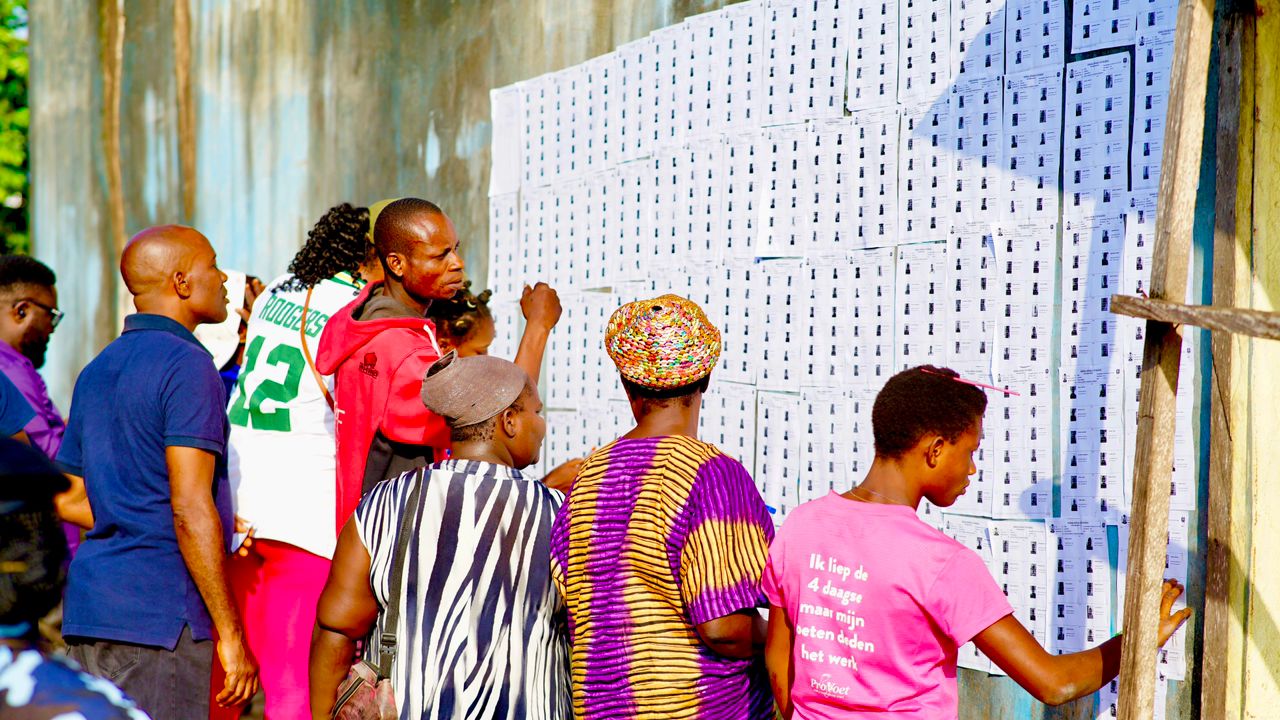
INEC explained that the online register published on October 26 was the same preliminary register that had been displayed physically across Registration Areas nationwide between October 9 and October 15.
The physical display formed part of the Display, Claims and Objections exercise, which allows registered voters and members of the public to examine the records and report errors or questionable entries.
According to the commission, some questionable registration records had already been identified and flagged during that exercise.
INEC said it had commenced reviewing the records and taking corrective action in accordance with established procedures.
The commission also clarified that the online publication represented the original preliminary register and did not reflect all the data-cleanup activities already underway.
It emphasised that the published register was not the final certified version.
The commission explained that the public display process was specifically intended to help identify inaccuracies and irregularities so they could be corrected before final certification.
INEC also said it was examining the circumstances surrounding the suspicious photographs, including possible technical or procedural lapses.
The commission welcomed the attention given to the issue by citizens and other stakeholders, describing public scrutiny as important to improving the accuracy and integrity of the voter register.
Why the Voter Register Matters Ahead of the 2027 Elections
The controversy has attracted attention because the Register of Voters is one of the most important components of Nigeria’s electoral process.
It contains the details of eligible registered voters and helps determine who can participate in elections.
The accuracy of the database is therefore essential to the administration of credible elections.
A reliable voter register should contain valid records, accurately identify registered individuals and prevent unauthorised or duplicate entries.
Questionable photographs, inaccurate personal information and duplicate records can undermine public confidence in the registration process if they are not properly investigated and corrected.
However, it is important to distinguish between irregular photographs and proof that fraudulent voting has taken place.
The discovery of an AI-generated photograph attached to a voter record does not, by itself, establish that the person is fictitious, that a PVC has been issued fraudulently or that someone has successfully voted using the record.
Those possibilities would require further investigation and evidence.
Similarly, the presence of a questionable entry in a preliminary register does not automatically mean that the entire voter database is invalid.
The central issue is whether INEC can identify the affected records, establish how they were introduced, determine whether they represent genuine registrations and remove or correct entries that fail the required standards.
INEC Working Against the 90-Day Registration Timeline
Bayode also explained that the commission had been working to clean up the register before publishing the preliminary version.
He noted that INEC was operating within the statutory 90-day period for completing the relevant registration and verification processes.
The time pressure makes the exercise particularly important, as the commission must examine millions of voter records while ensuring that eligible Nigerians are not wrongly excluded.
The ICT director’s comments indicate that the commission had identified irregularities during its internal examination, but the publication of the preliminary register brought some of those concerns into wider public view.
The remaining work includes verifying questionable records, examining complaints, resolving discrepancies and ensuring that the final database meets the required standards.
INEC has said the necessary verification, adjudication and data-cleanup processes will be completed before the final Register of Voters is certified on December 15, 2026.
Questions Nigerians Want INEC to Answer
Bayode’s disclosure provides an explanation of how some questionable records entered the database, but several important questions remain unanswered.
First, how many AI-generated photographs have been identified in the preliminary register?
Second, how many registration officers were allegedly involved, and in which states did the irregularities occur?
Third, what specific checks were in place to prevent officers from uploading photographs that did not meet registration requirements?
There are also questions about whether the officers involved have been identified, whether their access credentials have been suspended and whether the commission intends to pursue disciplinary or legal action where misconduct is established.
Another important issue concerns the extent of the irregularities. Nigerians will want to know whether the suspicious photographs were isolated cases or part of a wider pattern involving other questionable voter records.
The commission will also need to explain how it intends to verify the affected entries without wrongly deleting the records of genuine registered voters.
These questions are particularly relevant because the voter register must be both accurate and inclusive. Removing fraudulent or invalid records is important, but eligible citizens must also retain their right to participate in elections.
INEC’s next major responsibility is to complete its review and publish a final certified register that addresses the irregularities identified during the preliminary stage.
The commission has already indicated that the process will involve verification, adjudication and data cleanup before the December 15 certification deadline.
The October 30 comments by the ICT director provide additional information about the suspected source of the irregularities, particularly the role of some registration officers with access to the commission’s system.
However, the commission has yet to release a full account of the number of affected records or announce the final outcome of any investigation into the officers involved.
Public attention is therefore likely to remain focused on the commission’s next statements, the outcome of its internal review and the measures it adopts to prevent similar incidents.
INEC’s ICT director, Dr Lawrence Bayode, has attributed the appearance of AI-generated photographs and other questionable entries in Nigeria’s preliminary voter register to alleged irregularities introduced by some registration officers using their authorised login credentials.
He confirmed that the commission identified the records through its Automated Biometric Identification System and explained that some photographs were AI-generated, while others resulted from poor registration practices.
Although INEC says it is reviewing the affected records and has emphasised that the published register is not the final certified version, the development has raised important questions about the security, supervision and reliability of the country’s voter registration system.
With the 2027 general elections approaching, the commission faces the task of addressing the irregularities, establishing accountability where misconduct is confirmed and ensuring that the final register accurately reflects eligible Nigerian voters.
The final outcome of the review, scheduled for completion before December 15, 2026, will be an important development in the preparation for the next general elections.
About the Author