
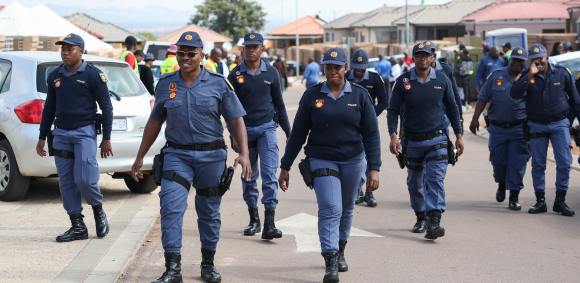
Building stronger trust between the police and foreign nationals living in South Africa could significantly improve public safety for everyone, researchers and experts say. Evidence shows that better relations would enhance intelligence gathering, increase crime reporting, and help prevent violence.
Although foreign nationals make up just 3.9% of South Africa’s population—according to the latest Statistics South Africa census—they are disproportionately targeted in serious crimes. A 2015 SAPS docket analysis revealed that 47.6% of business robbery victims nationwide were foreign nationals, with the figure rising to 77% in the North West province. They are also heavily affected by kidnappings, public violence, and township extortion.
A major challenge lies in the strained relationship between police and many foreign communities. Human rights groups accuse state institutions of enabling or ignoring xenophobic behaviour. Reports of police intimidation, threats, extortion, and neglect have caused severe distrust. Many foreign nationals also avoid joining community policing forums, further widening the gap.
Studies consistently show that when communities distrust the police, they are less likely to report crimes, provide critical information, or seek protection—allowing offenders to act with impunity. Strengthening trust could therefore enhance investigations and overall safety.
Crimes once targeted mainly at foreign nationals are increasingly affecting local South Africans as well. Extortion rackets, for example, now threaten both residents and government workers, undermining local economies and public services.
Research points to effective strategies that police agencies can use to build trust with marginalised groups. These include addressing language barriers, acknowledging cultural differences, and repairing historical grievances.
A 2024 U.S. police research survey showed that deploying community liaison officers in foreign national neighbourhoods improved relationships and increased crime reporting. These officers regularly engaged residents and business owners, helping to rebuild trust.
The UK College of Policing recommends making neighbourhood policing more inclusive by identifying and addressing barriers that exclude marginalised communities. This includes language support and culturally sensitive engagement.
Another proven method is secondary reassurance contact, where officers check in with victims separate from the formal investigation. A 2025 UK study found this simple practice reduced victim withdrawal from hate crime cases by 12–15%.
The principle of procedural justice—treating people with fairness, respect, and dignity—has also been shown to increase trust. In Australia, where over 30% of the population is foreign-born, a 2021 study showed that this approach strengthened foreign nationals’ sense of connection to both the police and the broader society.
Conversely, discriminatory practices, including racial or citizenship profiling, erode trust and undermine police operations. A 2020 Texas study found that individuals stopped and questioned about their citizenship were 62% less likely to cooperate with investigations.
Given that high-density police operations in South Africa often target areas where foreign nationals live or run businesses, accusations of misconduct remain common—and damaging.
Experts argue that the South African Police Service should adopt evidence-based, inclusive strategies to strengthen trust with foreign communities, improving crime prevention for all citizens. Similar approaches could benefit other marginalised groups as well.
Ultimately, building trust is not only a legal and moral responsibility—it is a strategic investment in national safety. With strong political backing and public support for inclusion, police can improve decisions, solve more cases, and enhance safety across South Africa.
About the Author