
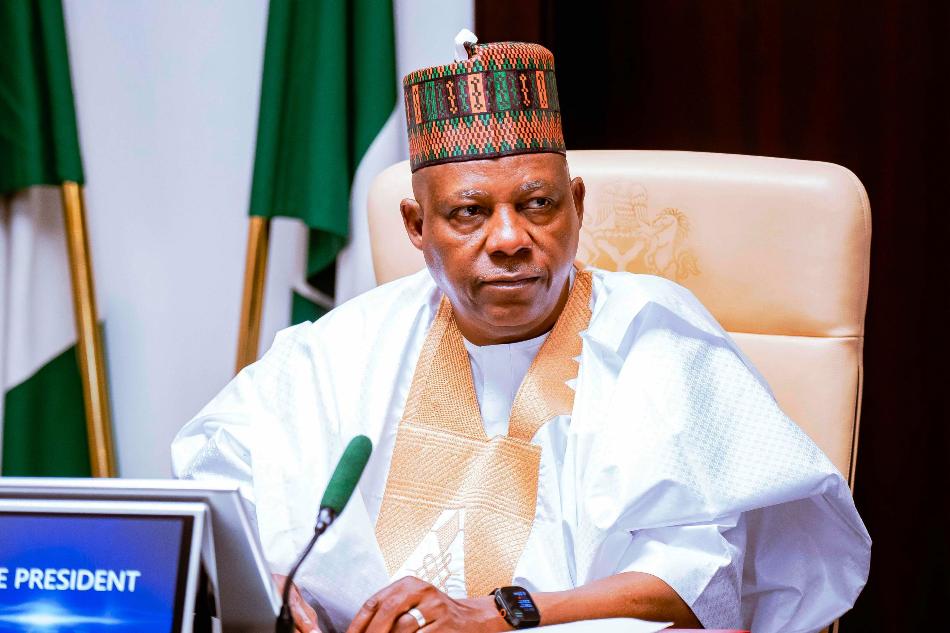
Nigeria’s political landscape was stirred by a dramatic revelation from Vice President Kashim Shettima, who disclosed that some individuals once accused him of plotting to assassinate President Bola Ahmed Tinubu in a bid to take over the presidency.
The statement, which quickly generated widespread reactions across political and media circles, has reignited conversations about internal political tensions, power struggles, misinformation, and the intense scrutiny faced by top government officials in Nigeria.
Shettima made the remarks while speaking at a public event, where he reflected on political rumors and allegations that emerged during the course of his rise to national leadership.
His comments have since dominated headlines, drawing mixed reactions from supporters, critics, political analysts, and ordinary Nigerians.
Shettima’s Shocking Revelation
According to the Vice President, false narratives and suspicions circulated at certain points, suggesting he harbored ambitions to replace President Tinubu through sinister means.
Speaking candidly, Shettima reportedly explained that:
- Some individuals accused him of plotting against the president
- The allegations were politically motivated and baseless
- He remained loyal to Tinubu despite speculation and rumors
- Political environments often generate conspiracy theories and distrust
The Vice President’s remarks immediately captured national attention because of the gravity of the accusation and the unusual openness with which he addressed it publicly.
Political Tensions and Power Speculation
In many democracies, especially within highly competitive political systems, relationships between presidents and vice presidents often become subjects of intense speculation.
Nigeria’s political history has witnessed:
- Rumors of internal power struggles
- Political factionalism within ruling parties
- Speculation over succession battles
- Public scrutiny of relationships between top officials
Analysts say Shettima’s comments reflect the level of suspicion and political tension that can surround high office in Nigeria.
The presidency, after all, is not merely a political seat in Nigeria. It is often treated like the center of a thunderstorm where ambition, loyalty, fear, and influence collide in full public view ⚡🏛️
Tinubu and Shettima’s Political Alliance
Despite the rumors referenced by the Vice President, both Tinubu and Shettima have publicly maintained a strong political alliance.
Their partnership was central to the victory of the All Progressives Congress (APC) during Nigeria’s presidential election campaign.
Political observers note that:
- Tinubu personally selected Shettima as his running mate
- The pair campaigned extensively together nationwide
- Both leaders have repeatedly projected unity publicly
- The presidency has often dismissed rumors of internal divisions
Many APC supporters view the alliance as strategically important for maintaining political stability within the ruling party.
Reactions Across Nigeria
The Vice President’s remarks sparked intense debate both online and offline.
Supporters Defend Shettima
Supporters described the allegations as politically driven rumors designed to create mistrust within the presidency.
Some APC loyalists praised Shettima for addressing the issue openly instead of ignoring the speculation.
Critics Raise Questions
Critics argued that the revelation highlights the deep culture of suspicion and factional politics often associated with Nigerian power structures.
Others questioned why such dangerous allegations would emerge in the first place.
Social Media Explodes
Clips and quotes from Shettima’s speech quickly spread across Nigerian social media platforms, triggering thousands of reactions, debates, memes, and political commentary.
Why Political Rumors Spread So Easily
Political analysts say rumors involving top government officials tend to spread rapidly because of several factors:
- High public distrust in political institutions
- Intense competition for power
- Influence of online misinformation
- Internal party rivalries
- Nigeria’s history of political crises
Experts warn that unchecked political conspiracy theories can create unnecessary tension and distract from governance priorities.
In the digital era, whispers often travel faster than official statements, mutating into national controversies before facts even catch up.
Implications For The APC And Presidency
Although the Vice President dismissed the allegations as false, the controversy may still carry political implications.
Potential effects include:
- Increased scrutiny of internal APC dynamics
- Renewed speculation about future political ambitions
- Pressure on the presidency to project unity
- More attention on the relationship between Tinubu and Shettima
Analysts believe the administration will likely continue emphasizing stability and cooperation to counter perceptions of internal divisions.
Governance Challenges Overshadowing Politics
The controversy also emerges at a time when Nigerians remain heavily focused on pressing national issues, including:
- Economic hardship
- Inflation and rising food prices
- Security concerns
- Currency instability
- Unemployment challenges
Some observers argue that political speculation distracts from urgent governance matters affecting ordinary citizens.
Others believe transparency from public officials remains important in maintaining trust and preventing misinformation.
Political Communication and Public Perception
The Vice President’s decision to address the accusation publicly demonstrates how political leaders increasingly respond directly to public narratives in the age of social media.
Communication experts note that:
- Silence can sometimes fuel rumors further
- Public clarification helps shape perception
- Political messaging now moves instantly online
- Leaders face constant pressure to manage public narratives
Shettima’s remarks may therefore have been aimed not only at denying allegations but also at reinforcing confidence within political circles and among supporters.
About the Author