
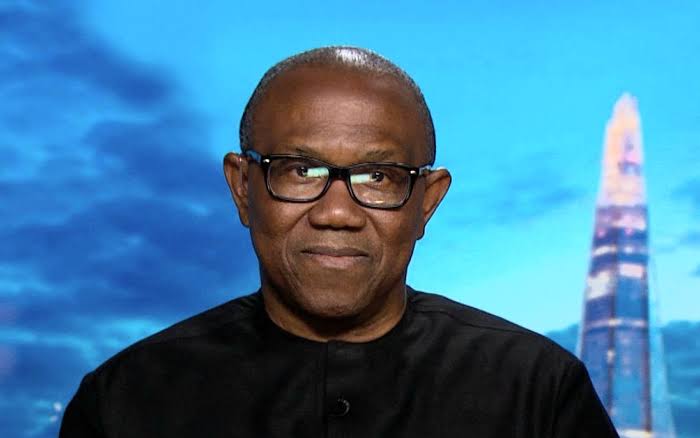
Former Anambra State governor and presidential candidate Peter Obi has encouraged Nigerians at home and in the diaspora to consider investing in the ongoing Initial Public Offering of the Dangote Petroleum Refinery and Petrochemicals, describing the massive industrial project as an example of the kind of productive investment he has long advocated for in Nigeria.
Obi made the remarks in a statement shared on his X account on Wednesday, September 16, 2026, after Nigerians reportedly sought his opinion on whether they should participate in the refinery’s ₦2.15 trillion public offering.
While expressing his support for the investment, Obi praised Aliko Dangote’s commitment to developing Nigeria’s real sector and said the refinery supports his long-standing argument that the country should transition from an economy driven heavily by consumption to one focused more strongly on production.
Peter Obi Encourages Nigerians To Buy Shares
Obi said Nigerians in the country and abroad had approached him for his views on the Dangote Refinery IPO.
In response, he said he was encouraging them to buy shares while praising Dangote’s investment in the Nigerian economy.
According to Obi, the refinery represents a major investment in the country’s productive capacity and demonstrates the importance of moving resources toward industries that manufacture, process and produce goods rather than relying heavily on imports.
He also used the opportunity to encourage other Nigerian businesses to follow a similar path by investing in productive sectors and allowing ordinary Nigerians to participate in corporate ownership through public offerings.
His position places the Dangote Refinery IPO within a broader economic argument about production, industrialisation, domestic investment and wealth creation.
What Is The Dangote Refinery IPO?
The Dangote Petroleum Refinery and Petrochemicals IPO is a public offer through which eligible investors can apply to acquire shares in the refinery.
The offer comprises 4.1 billion ordinary shares priced at ₦525 per share. If fully subscribed, the transaction is expected to raise approximately ₦2.15 trillion.
The minimum subscription is 10 shares, meaning an investor can participate from ₦5,250, subject to the applicable terms and conditions of the offer.
The public offer opened on September 14, 2026, and is scheduled to close on October 13, 2026.
The offer is available to retail investors, institutional investors and eligible African investors.
The Nigerian Exchange Group described the transaction as a significant milestone for the country’s capital market because it represents the first time a petroleum refinery has been offered to investors through the Nigerian stock market.
Why The IPO Is Generating Attention
The scale of the refinery is one of the major reasons the IPO has attracted significant attention.
Located in the Lekki Free Zone in Lagos, the Dangote Refinery has a current crude processing capacity of 700,000 barrels per day, making it one of the largest single-train refineries in the world.
The company has also outlined plans to expand its capacity to approximately 1.4 million barrels per day.
The refinery produces petroleum products including gasoline, diesel and aviation fuel, while its broader industrial complex includes petrochemical production, storage, logistics and marine infrastructure.
Dangote’s official refinery information says the facility is designed to reduce dependence on imported refined petroleum products while serving both Nigerian and international markets.
The project therefore sits at the intersection of energy security, industrial production, foreign exchange conservation and exports.
Dangote Refinery Reports Strong Financial Performance
The IPO has also attracted attention because of the refinery’s reported financial performance.
According to information released through the Nigerian Exchange Group, Dangote Refinery generated approximately ₦19.47 trillion in revenue during the first half of 2026, while profit after tax was reported at approximately ₦2.55 trillion.
At the IPO price of ₦525 per share, the refinery is expected to have an implied market capitalisation of about ₦65.22 trillion.
The figures have helped make the public offer one of the most closely watched capital-market transactions in Nigeria.
The Nigerian Exchange Group has also highlighted the potential significance of bringing a large industrial company into broader public ownership, particularly as Nigeria seeks to deepen participation in its capital markets.
Obi Links The Refinery To His Consumption-To-Production Agenda
For Obi, the significance of the transaction extends beyond the opportunity to purchase shares.
His central argument is that Nigeria needs to move away from excessive dependence on imported goods and toward greater domestic production.
He has repeatedly advocated investment in productive sectors such as manufacturing, agriculture, infrastructure and other areas capable of expanding domestic productive capacity.
In his latest statement, Obi presented the Dangote investment as an example of the type of large-scale private-sector investment that can contribute to industrialisation.
He said the project validates his position that Nigeria should move from “consumption to production.”
It is important to note that this is Obi’s political and economic interpretation of the project. The refinery’s contribution to reducing imports, generating exports and strengthening domestic production can be assessed through operational and trade data, while the broader claim that it validates a particular economic agenda remains a matter of policy interpretation.
Obi Calls For Wider Public Ownership
Beyond urging Nigerians to consider the Dangote offer, Obi called on other Nigerian businesses to open their ownership structures to the public.
He argued that companies operating in productive sectors should consider public offerings as a way of raising capital while giving Nigerian citizens an opportunity to become shareholders.
This idea is particularly relevant to the concept of an “ownership economy,” where citizens can participate in the financial performance of major businesses through investments rather than remaining only consumers of their products and services.
The Nigerian Exchange Group has similarly described the Dangote IPO as an opportunity to expand participation in the ownership of major Nigerian businesses.
According to NGX, the offer connects a major Nigerian enterprise with domestic and international capital while providing wider access to share ownership.
What Will The IPO Money Be Used For?
The ₦2.15 trillion being targeted through the IPO is expected to support the refinery’s expansion and future development.
Reuters reported that the proceeds are intended to help fund the planned expansion of the refinery toward approximately 1.4 million barrels per day over the coming years.
The expansion would significantly increase the refinery’s ability to process crude oil and produce refined petroleum products for Nigeria and international markets.
The company has also positioned the refinery as part of a broader industrial ecosystem involving refining, petrochemicals, power, storage, marine infrastructure and logistics.
The IPO Is Not A Guaranteed Investment
Despite Obi’s encouragement and the excitement surrounding the public offer, investors are being warned that buying shares carries financial risk.
The official Dangote IPO website states that share prices can rise or fall after listing and that investors could lose some or all of the money they invest.
Dividends are also not guaranteed. Whether shareholders receive dividends will depend on the company’s performance, cash requirements and decisions of its board.
The fact that the refinery is a large industrial project does not eliminate the normal risks associated with investing in equities.
Prospective investors are therefore expected to read the approved prospectus, including the risk factors, before making investment decisions.
SEC Warns Nigerians About IPO Scams
The Securities and Exchange Commission has also issued a specific warning to Nigerians participating in the Dangote Refinery public offer.
The regulator advised prospective investors to use only officially designated and approved receiving agents, subscription channels and platforms.
The SEC warned investors against transferring money to individuals or organisations claiming to process Dangote IPO applications outside approved channels.
It also cautioned against unsolicited calls, WhatsApp messages, social media advertisements, emails or other communications promising guaranteed allotments or preferential treatment.
Investors are encouraged to verify the registration status of their chosen capital-market operator and to rely on official information from the SEC, the issuer and approved channels.
This warning is particularly important because the popularity of the IPO has created opportunities for fraudulent schemes targeting people who want to acquire shares.
A New Chapter For Nigeria’s Capital Market
The Dangote Refinery IPO is significant not only because of the size of the refinery but also because of its potential impact on Nigeria’s capital market.
The public offer gives retail investors an opportunity to participate in the ownership of a major Nigerian industrial asset with a minimum subscription of ₦5,250.
The transaction is also expected to bring a major new company into the Nigerian equity market and potentially broaden the investor base.
The Nigerian Exchange Group has described this development as part of a wider effort to make investment opportunities more accessible to Nigerians.
If the offer is fully subscribed, the transaction would represent one of the largest equity capital raises in Nigeria and Africa.
What Happens Next?
The Dangote Refinery IPO remains open until October 13, 2026, according to the approved timetable.
After the offer closes, applications will be processed and shares will be allotted according to the terms of the offer.
The official IPO information states that the allotment date and listing date are yet to be confirmed.
Investors who receive an allocation will become shareholders in Dangote Petroleum Refinery and Petrochemicals, with their rights governed by the terms applicable to the shares and Nigerian law.
For Nigerians considering participation, the immediate focus is therefore on understanding the prospectus, verifying approved subscription channels and assessing the investment against their own financial circumstances and risk tolerance.
Peter Obi’s Broader Message To Nigerian Businesses
Obi’s intervention ultimately goes beyond the Dangote Refinery itself.
His message is that Nigerian companies should invest in productive economic activity while giving citizens opportunities to participate in ownership.
He also used the refinery as an example of the type of large-scale industrial investment he believes Nigeria needs to encourage.
The Dangote Refinery, meanwhile, is entering a new phase in which members of the public can potentially become shareholders in the business.
Whether the IPO ultimately changes patterns of domestic investment, broadens share ownership and strengthens Nigeria’s capital market will depend on investor participation, the refinery’s future performance and how successfully the company executes its expansion plans.
For now, the public offer has placed one of Nigeria’s largest industrial projects directly in front of millions of potential investors and reignited discussion about production, industrialisation and who gets to own the businesses driving Nigeria’s economy.
About the Author