
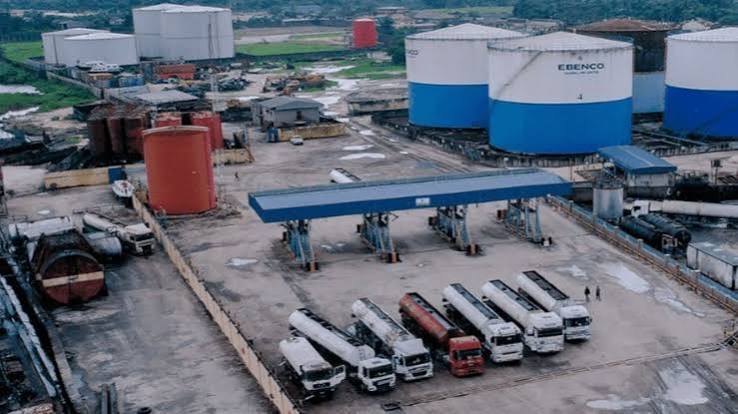
Nigeria’s domestic refining capacity is set for a potential boost as Ebenco Global Link Limited receives regulatory approval to introduce hydrocarbons into its 30,000-barrel-per-day modular refinery in Koko, Delta State.
Nigeria’s drive to strengthen domestic petroleum refining has reached another milestone following regulatory approval for the Ebenco Refinery to begin introducing hydrocarbons into its facility in Koko, Delta State.
The Nigerian Midstream and Downstream Petroleum Regulatory Authority (NMDPRA) granted the authorisation after the refinery completed a Pre-Start-Up Safety Audit (PSSA), moving the project into its final commissioning and performance-testing phase.
Designed to process up to 30,000 barrels of crude oil per day, the refinery is expected to contribute additional domestic refining capacity when it becomes fully operational. The development could support Nigeria’s efforts to improve local petroleum production, strengthen energy security and reduce its reliance on imported refined products.
However, the facility must still complete its reliability and performance tests before its ability to operate consistently at commercial scale can be established. ebencogroupltd.com
NMDPRA Approves Introduction of Hydrocarbons
Ebenco Global Link Limited announced that it had received authorisation from the NMDPRA to introduce hydrocarbons into the refinery.
According to the company, the approval followed a Pre-Start-Up Safety Audit conducted at the facility on September 14 and 15, 2026.
In a letter dated October 12, 2026, the regulatory authority confirmed that the audit had produced a satisfactory outcome and authorised the introduction of hydrocarbons, subject to conditions governing commissioning and reliability testing.
The approval represents an important step in the development of the refinery. Before this stage, the facility had been undergoing pre-start-up preparations to establish its readiness for the introduction of petroleum feedstock and the testing of its processing systems.
With the regulatory clearance secured, the project can proceed to the next stage, during which its equipment, systems and operational processes will be assessed under actual operating conditions.
The authorisation does not, however, mean that the refinery has already reached full commercial production. Rather, it allows the facility to advance through the controlled commissioning process required before its operational readiness can be confirmed. ebencogroupltd.com
Refinery to Undergo 90-Day Reliability Test
One of the major requirements attached to the approval is a 90-day reliability test under the supervision of the NMDPRA.
The test will include a 72-hour continuous performance test designed to assess the refinery’s ability to operate continuously under specified conditions.
Reliability testing is an important stage in refinery commissioning because it helps establish whether equipment and processing systems can perform as expected, maintain stable operations and meet relevant performance and safety requirements.
The testing period will also provide an opportunity to identify operational problems that may require adjustments or corrective measures before the plant moves towards regular commercial operations.
Throughout the process, the NMDPRA’s pre-commissioning team will continue to provide regulatory guidance and monitor the facility’s progress.
The outcome of the testing process will be significant in determining how quickly the refinery can move from commissioning towards dependable production.
Although the plant has a planned capacity of 30,000 barrels per day, that figure represents its designed processing capacity. Actual output during commissioning may be lower, and the facility’s ability to sustain higher production will depend on the successful completion of testing and other operational requirements. ebencogroupltd.com
Daily Reports and Strict Regulatory Conditions
The NMDPRA has also established reporting and oversight requirements for the commissioning period.
Ebenco is required to submit daily reports detailing commissioning activities, operating performance and product quality.
These reports are intended to provide the regulator with regular information about the refinery’s progress and the condition of its operations as testing continues.
The authority has further directed that the company must obtain prior approval before taking petroleum products off the facility during commissioning.
This requirement means that the refinery cannot assume it is free to sell or distribute products simply because it has received authorisation to introduce hydrocarbons. Product offtake during the testing period remains subject to regulatory approval.
The company must also report any shutdowns or safety incidents, including information about their causes and the corrective actions taken.
These conditions are designed to maintain regulatory oversight during a sensitive stage of the project, when the facility’s systems are being tested and its operating performance is being assessed.
The requirements also make safety, product quality and operational accountability important considerations as the refinery progresses towards commercial readiness. ebencogroupltd.com
Why the 30,000-Barrel-Per-Day Refinery Matters
Nigeria has historically relied heavily on imported refined petroleum products despite being a major crude oil producer.
Expanding domestic refining capacity offers a way to process more crude locally, potentially reducing the volume of finished petroleum products that must be imported to meet domestic demand.
A refinery operating at 30,000 barrels per day would be smaller than the Dangote Petroleum Refinery, which has a reported current capacity of 700,000 barrels per day. Nevertheless, the Ebenco project could add another source of domestic processing capacity to Nigeria’s downstream petroleum industry.
Smaller modular refineries can form part of a broader refining network, serving as additional processing facilities alongside larger industrial plants. Their contribution will depend on factors such as access to crude oil, operating costs, product demand, infrastructure and the ability to maintain reliable production.
If the Ebenco facility successfully completes commissioning and develops into a dependable commercial operation, it could help broaden Nigeria’s domestic refining base rather than leaving the country’s refining expansion dependent on a small number of large facilities.
The refinery’s eventual contribution will therefore depend not only on its stated capacity but also on the volume of crude it can secure and process, the products it can produce and the consistency of its operations.
The additional capacity could also support activity across related sectors, including crude supply, petroleum transportation, product distribution, maintenance and industrial services. The scale of any employment or wider economic benefits, however, will depend on the refinery’s actual operations and associated business activity.
Indigenous Technology and Local Industrial Development
The Ebenco project is being developed by Ebenco Global Link Limited as an indigenous refining initiative.
The company has described the development as part of its broader objective of contributing to Nigeria’s domestic refining capacity through local fabrication, indigenous technology and locally driven energy infrastructure.
Local industrial development is an important consideration for Nigeria’s petroleum sector because refinery projects require more than the installation of processing equipment. They also involve engineering, construction, technical maintenance, logistics, safety management and the development of specialised skills.
Greater participation by Nigerian companies in these areas could help build domestic expertise and create opportunities for local suppliers and service providers.
The benefits are not automatic, however. They depend on how much work is carried out locally, the availability of skilled personnel, the sustainability of the investment and the refinery’s ability to operate successfully over time.
The Ebenco facility’s progress towards commissioning provides a further example of efforts to expand refining infrastructure beyond Nigeria’s largest industrial projects.
Its long-term significance will become clearer as the plant moves through testing and establishes its operating performance.
The Challenge of Turning Capacity into Actual Production
Although the refinery is approaching a significant milestone, several practical issues will determine its eventual contribution to Nigeria’s petroleum supply.
The first is the successful completion of the 90-day reliability test. The facility must demonstrate that its systems can operate reliably and satisfy the relevant regulatory requirements.
The second is access to sufficient crude oil feedstock. A refinery’s designed capacity cannot be translated into actual output unless it can obtain the crude oil required to keep its processing systems running.
The third is the ability to produce petroleum products that meet applicable quality standards and to distribute them efficiently to customers.
Financing, operating costs, maintenance, transportation infrastructure and market conditions can also influence the performance of a refinery once it enters commercial operations.
For these reasons, the approval to introduce hydrocarbons should be viewed as a substantial step towards production rather than proof that the plant is already supplying the market at its full capacity.
The regulator’s conditions will remain important as the company works through commissioning and seeks to establish stable operations.
The immediate priority for Ebenco Global Link Limited is to proceed with hydrocarbon introduction and complete the required testing under NMDPRA supervision.
The company must maintain its daily reporting obligations, comply with restrictions on product offtake during commissioning and report any shutdowns or safety incidents alongside the causes and corrective measures.
Successful completion of the reliability and performance tests would represent a further step towards establishing the refinery as an operational contributor to Nigeria’s domestic petroleum supply.
As of October 18, 2026, the company’s announcement confirms regulatory authorisation to introduce hydrocarbons and advance into commissioning. It does not establish a confirmed date for the commencement of full commercial sales or confirm that the refinery is already producing at its 30,000-barrel-per-day design capacity.
For Nigeria’s petroleum industry, the project’s next test will be whether the refinery can convert its regulatory progress and installed capacity into safe, consistent and commercially sustainable production.
The Ebenco Refinery in Koko, Delta State, is moving closer to operation after receiving NMDPRA authorisation to introduce hydrocarbons following a satisfactory pre-start-up safety audit.
With a planned capacity of 30,000 barrels per day, the facility could provide an additional boost to Nigeria’s domestic refining industry once commissioning and reliability testing are successfully completed.
The next 90 days of testing will be crucial in establishing the plant’s operating performance. Until that process is completed and commercial production is confirmed, its projected capacity should not be mistaken for an already achieved level of output.
About the Author