
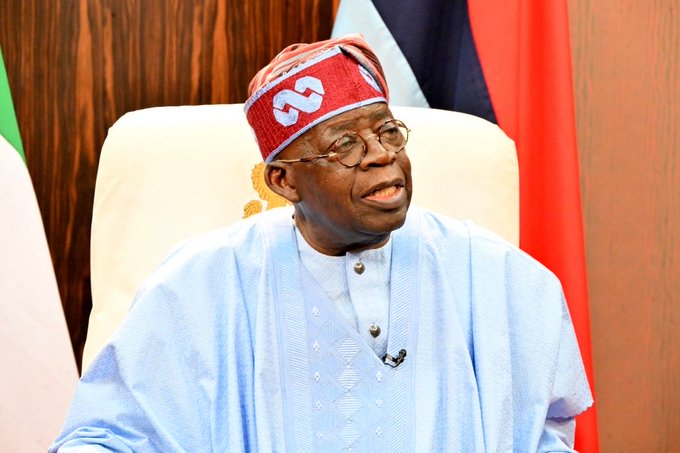
Nigeria’s 2027 election campaign is placing President Bola Tinubu’s economic reforms, security record and promise of national recovery under renewed scrutiny as he seeks a second term in office. With rising living costs continuing to affect households, persistent insecurity troubling communities and opposition parties preparing to challenge the ruling All Progressives Congress (APC), the coming election is shaping up as a test of whether the administration’s policies have delivered enough tangible benefits for Nigerians.
Campaigns for the presidential and National Assembly elections officially began on August 19, 2026, ahead of the presidential vote scheduled for January 16, 2027. The election will give voters an opportunity to assess Tinubu’s performance since taking office in May 2023, particularly his decisions to remove the petrol subsidy and reform Nigeria’s foreign exchange system.
The reforms were presented by the administration as necessary measures to address longstanding economic weaknesses, improve public finances and attract investment. However, the transition also brought sharp increases in transport and living costs, placing considerable pressure on households and businesses.
Tinubu’s re-election campaign must therefore address two competing questions: whether the reforms have strengthened Nigeria’s economic foundations and whether ordinary citizens are beginning to experience meaningful improvements in their daily lives.
The president’s party is preparing to defend its record, while opposition figures are seeking to turn public frustration over the economy and insecurity into a challenge to the incumbent.
APC Inaugurates Tinubu’s Presidential Campaign Council
The APC moved further into election preparations on October 14, when Tinubu inaugurated the party’s Presidential Campaign Council at the State House in Abuja.
During the ceremony, the president called on party leaders and campaign officials to demonstrate unity, discipline and commitment as they worked towards the 2027 general election.
Tinubu said the party was ready to renew its covenant with Nigerians, presenting the election as an opportunity to continue the administration’s policy direction.
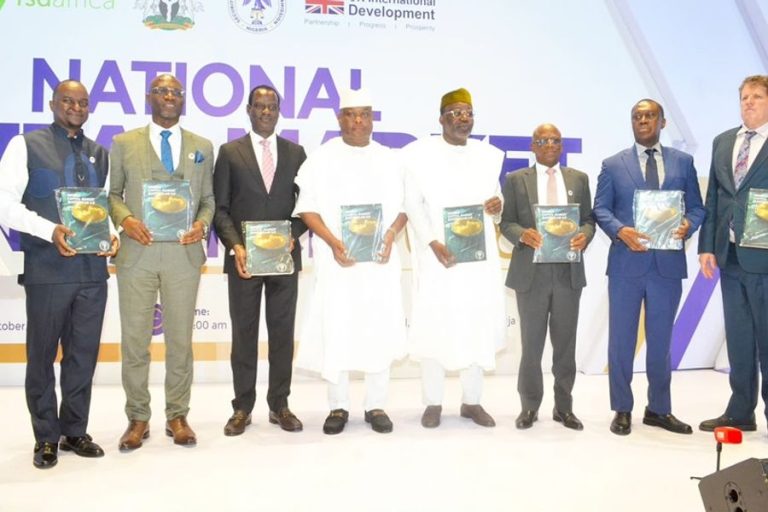
Senior government officials and APC leaders attended the inauguration, including Vice-President Kashim Shettima, Senate President Godswill Akpabio, House of Representatives Speaker Tajudeen Abbas and other prominent political figures.
The council is expected to coordinate campaign activities, mobilise supporters and communicate the administration’s achievements and plans to voters across the country.
Abdulaziz Yari, director-general of the campaign council, had earlier announced plans for Tinubu to launch his re-election campaign in Kaduna on October 24.
The inauguration and planned launch mark a shift from general election preparations towards a more organised campaign effort. The party will need to explain its record in office while setting out what a second Tinubu administration would prioritise.
The APC has said its campaign will focus on the president’s performance, economic reforms, infrastructure development and education programmes.
However, the effectiveness of that message will depend partly on whether voters believe the policies have improved their circumstances.
Economic Reforms Become the Central Election Issue
Tinubu began his presidency in May 2023 with major changes to Nigeria’s economic policy.
One of his first decisions was to announce the removal of the longstanding petrol subsidy. The administration argued that the subsidy placed an unsustainable burden on government finances and diverted public resources that could be used for infrastructure, education, healthcare and other priorities.
The government subsequently introduced foreign exchange reforms intended to reduce distortions in the naira’s value and allow market forces to play a greater role in determining exchange rates.
Supporters of the measures argued that Nigeria needed to confront structural economic problems rather than continue policies that placed pressure on public finances.
The reforms also attracted support from some investors and international financial institutions, which had long called for changes to Nigeria’s fuel pricing and foreign exchange arrangements.
However, the immediate consequences were difficult for many Nigerians. Petrol prices increased, transport became more expensive, businesses faced higher operating costs and households struggled to maintain their previous spending levels.
The naira’s depreciation also increased the cost of imported goods and inputs, affecting prices across several sectors of the economy.
The government has defended the reforms as necessary steps towards economic stability. Critics, meanwhile, argue that the administration has not provided sufficient protection for vulnerable households or delivered improvements quickly enough.
As campaigning intensifies, the debate is likely to centre on whether the reforms are producing measurable benefits and how those benefits can reach people who continue to face financial pressure.
Inflation Eases, but the Cost of Living Remains a Concern
Recent economic figures offer a mixed picture for the administration.
According to Reuters reporting on data released by Nigeria’s National Bureau of Statistics, annual inflation eased to 14.63 per cent in September 2026, down from 15.39 per cent in August.
However, food inflation remained considerably higher, at 19.59 per cent.
The figures suggest that the pace of overall price increases has slowed, but they do not mean that prices have returned to earlier levels. When inflation falls, prices may continue to rise, only at a slower rate.
For families already spending a large share of their income on food, rent, transportation and electricity, that distinction matters.
A household that has experienced several years of higher prices may still struggle even when the official inflation rate declines. Meaningful relief depends partly on whether incomes rise, essential costs become more manageable and employment opportunities improve.
Nigeria’s economic growth also remains an important part of the discussion. Reuters reported that the economy grew by 4.4 per cent year-on-year in the second quarter of 2026, although this was below the 7 per cent growth rate Tinubu has said he wants to achieve by 2027.
The administration can point to improving macroeconomic indicators as evidence that its policies are beginning to stabilise the economy. Opposition figures and dissatisfied voters are likely to ask whether those changes have translated into better living standards.
The difference between improving economic indicators and improving household welfare is likely to remain one of the central issues of the campaign.
Temporary Petrol Discount Adds to the Debate
The government has also faced pressure over fuel prices, which influence transportation, food distribution, electricity generation and the operating costs of many Nigerian businesses.
In October, the Nigerian National Petroleum Company Limited introduced a temporary petrol discount of ₦66 per litre at its outlets, with the discount period extended through October 31.
The measure followed public frustration over elevated petrol prices, which had been affected by international developments and domestic market conditions.
The government said the temporary discount was not a return to the former petrol subsidy system. Nevertheless, the move prompted questions about how the administration intends to balance immediate relief for consumers with its longer-term reform programme.
For households, even a temporary reduction can provide some breathing room. For investors and businesses, however, policy consistency remains important when making decisions about production, transport and future investment.
The issue illustrates the challenge confronting Tinubu’s campaign: voters may want immediate relief from high costs, while the administration must explain how short-term measures fit into its broader economic strategy.
Insecurity Remains a Major Challenge
Economic conditions are not the only issue confronting the president.
Nigeria continues to face serious security threats, including insurgency in the northeast, kidnapping, banditry and attacks on communities in parts of the northwest and north-central regions.
The consequences extend beyond deaths and injuries. Insecurity can prevent farmers from accessing their land, disrupt food production, force families from their homes, interrupt schooling and discourage investment in affected areas.
Kidnapping along major roads has also raised concerns among travellers and businesses, while repeated attacks have placed pressure on security agencies and local authorities.
The administration has maintained that it is working to strengthen security operations and improve the capacity of the armed forces and other agencies. However, the persistence of attacks means that security will remain a major test of the government’s performance.
Opposition parties have criticised the administration’s handling of insecurity, arguing that Nigerians need stronger protection and more effective responses to armed groups.
For voters in affected communities, the issue is immediate and personal. They will be looking for evidence that roads are safer, farmers can return to their fields and communities can go about daily activities without fear.
The election debate is therefore likely to connect national security policy with the broader question of whether government institutions are delivering the protection citizens expect.
Opposition Parties Prepare to Challenge Tinubu
Tinubu’s main political challenge comes from opposition figures seeking to build a credible alternative to the ruling APC.
Former Vice-President Atiku Abubakar and former Anambra State governor Peter Obi are among the prominent figures associated with the opposition challenge.
Atiku has criticised the administration’s record and previously pursued presidential office through the Peoples Democratic Party before his more recent political realignments. Obi, who gained significant support among younger voters in the 2023 election, has also positioned himself as a critic of the government’s economic and governance record.
However, the opposition has faced difficulties in coordinating its efforts and establishing a unified political platform.
An attempted coalition involving major opposition figures in 2025 failed to produce a lasting unified challenge. By October 2026, six opposition parties were reported to have opened consultations involving figures including Atiku, Obi, Seyi Makinde, Donald Duke and Adewole Adebayo.
Whether these discussions produce a workable agreement remains a significant question for the opposition.
A coordinated opposition could provide voters with a clearer alternative, while separate campaigns may allow different candidates to appeal to distinct constituencies. The outcome will depend on political negotiations, candidate selection, campaign organisation and voter participation.
The APC, meanwhile, has worked to strengthen its alliances beyond its traditional membership. Political defections and the support of state-level political networks have increased the party’s organisational reach.
These developments make political organisation an important part of the election, alongside policy debates and the public’s assessment of the administration.
APC’s Long Record in Government Under Scrutiny
The 2027 election will also be an assessment of the APC’s broader record, not just Tinubu’s time in office.
The party first came to power federally in 2015 under former President Muhammadu Buhari. Tinubu succeeded Buhari in 2023, meaning the APC has governed Nigeria for more than a decade by the time of the forthcoming election.
During that period, the party campaigned on promises to improve security, fight corruption and revive the economy.
Opposition figures argue that Nigeria continues to face deep economic and security problems despite the party’s lengthy period in power. They contend that voters should judge the government by concrete results rather than promises of future improvements.
The APC, on the other hand, argues that some of the current difficulties reflect structural problems that earlier governments failed to resolve and that reform requires time before its full benefits become visible.
This disagreement places the party’s history at the centre of the campaign. Voters will be weighing the administration’s recent policies against the longer record of the party that has governed the country since 2015.
Young Voters and Household Welfare Could Shape the Debate
Nigeria has a large young population, making employment, education, affordability and economic opportunity important issues for the next election.
Young people entering the labour market face concerns about job availability, income security, access to skills training and the cost of starting businesses.
For families, the same economic pressures can affect school fees, healthcare, rent and the ability to save for emergencies.
These concerns are not confined to one age group or region. Small-business owners, workers, farmers, students and professionals all experience economic changes in different ways.
The administration will need to explain how its reforms are expected to support job creation, increase real incomes and widen access to economic opportunity.
Opposition candidates will need to present credible alternatives and explain how their proposed policies would address the same challenges.
The campaign will provide an opportunity for voters to compare proposals on taxation, public spending, energy, agriculture, education, healthcare and social protection.
Ultimately, promises will need to be assessed against their feasibility, funding and potential impact on ordinary citizens.
What Voters Will Be Watching Before Election Day
Several issues are likely to remain central as the campaign progresses.
First, voters will want to know whether the recent slowdown in inflation can continue and whether food prices will become more manageable.
Second, they will look for evidence that economic growth is creating jobs and improving household incomes rather than benefiting only selected sectors.
Third, security will remain a critical concern, particularly in areas affected by kidnapping, insurgency and rural attacks.
Fourth, voters will be assessing the credibility of both the ruling party’s record and the opposition’s policy proposals.
The conduct of the election itself will also matter. Confidence in electoral administration, transparency and the ability of citizens to participate peacefully is essential to the credibility of the democratic process.
The presidential and National Assembly elections are scheduled for January 16, 2027, while governorship elections are scheduled for February 6, 2027.
With the campaign now moving into a more organised phase, parties will be seeking to mobilise supporters, present their policies and persuade undecided voters.
Nigeria’s 2027 election campaign is becoming a test of both policy and public trust. Tinubu’s administration argues that its reforms are laying the groundwork for a more stable economy, while critics point to the continuing burden of living costs and insecurity. As the campaign develops, voters will have to assess the evidence behind each side’s claims, compare proposed alternatives and decide which approach best addresses the country’s economic and security challenges.
About the Author