
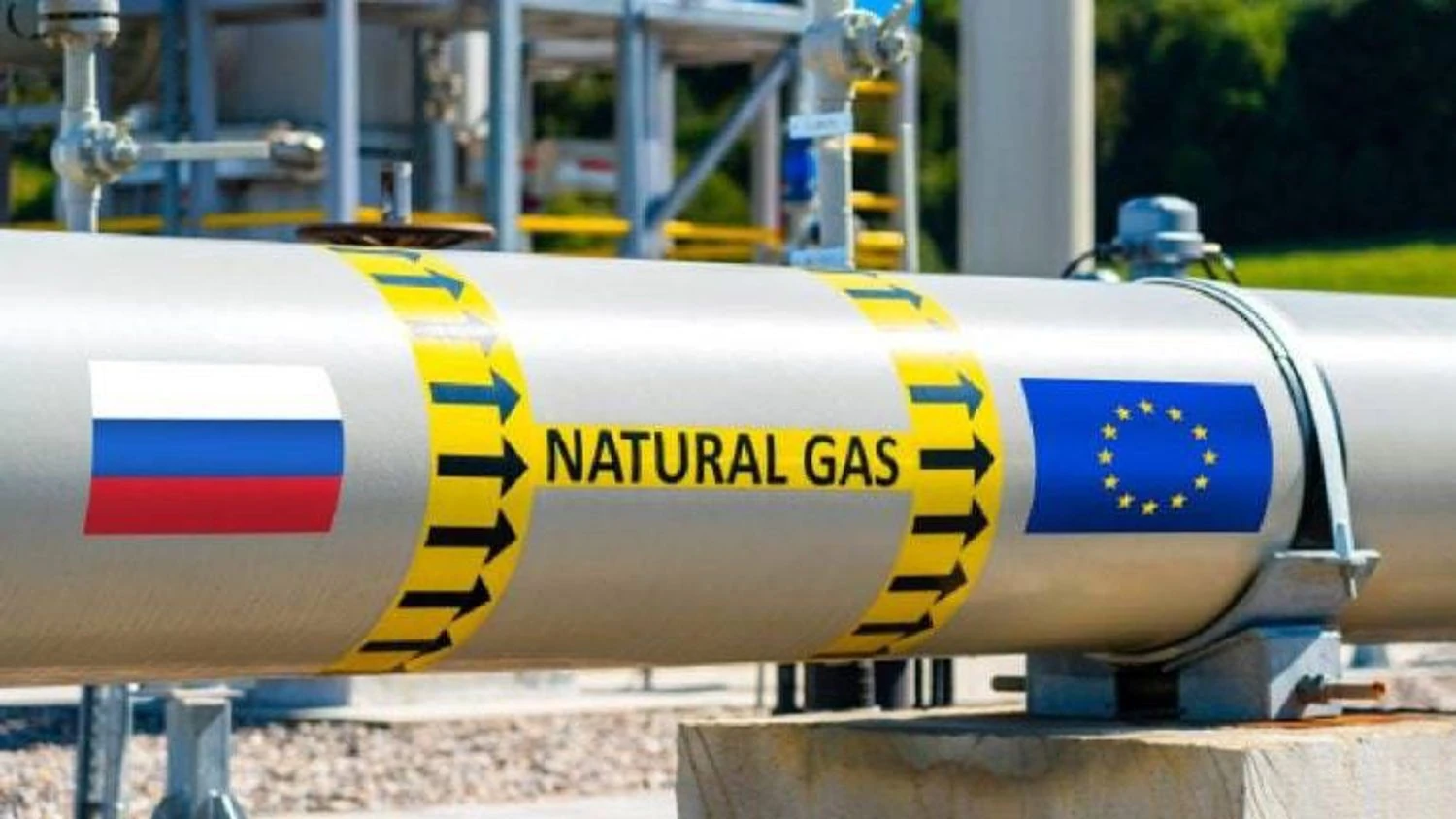
The European Union (EU) has reached a historic agreement to phase out all Russian gas imports by November 2027, marking one of the bloc’s most decisive steps yet toward severing its energy reliance on Moscow.
The “provisional agreement,” announced on Wednesday, was brokered between the European Council—representing all 27 member states—and the European Parliament. Although the deadline is later than what some countries and lawmakers initially pushed for, it represents a major breakthrough in the EU’s long-running effort to cut off a critical source of revenue for Russia as the war in Ukraine continues.
Key Timeline of the Phase-Out
-
- Russian LNG imports end by December 2026
- Pipeline gas imports end by November 2027
- Long-term pipeline contracts banned from September 30, 2027 (or earlier if gas storage allows)
- Short-term pipeline contracts prohibited from June 17, 2026
- Long-term LNG contracts banned from January 1, 2027
- Short-term LNG contracts phased out from April 25, 2026
Companies will be able to legally exit existing contracts using force majeure, citing the EU-wide import bans.
Why This Matters
Before Russia’s full-scale invasion of Ukraine in 2022, the EU depended on Moscow for nearly 50% of its natural gas supply. Even as the bloc reduced reliance over the last four years, Russia still accounted for:
-
-
-
19% of EU gas imports in 2023
-
20% of EU LNG imports in 2024
(making Russia the second-largest LNG supplier after the United States)
-
-
The new deal seeks to completely shut off this dependency, which EU officials say has been exploited by Moscow to manipulate markets and pressure European governments.
EU Leaders React
The announcement was met with strong words from top EU officials:
-
-
-
Ursula von der Leyen, European Commission President:
“Europe is closing the tap on Russian fossil fuels once and for all. Energy independence starts now.” -
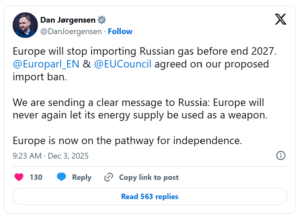
Dan Jørgensen, EU Energy Commissioner:
“We’ve chosen energy security and independence for Europe. No more blackmail. No more market manipulation by Putin. We stand strong with Ukraine.”
-
-
The agreement still requires formal approval by both the European Council and the European Parliament.
Remaining Challenges and Opposition
Despite the progress, political resistance persists.
Hungary and Slovakia—the EU countries most dependent on Russian energy and politically closest to Moscow—have consistently opposed sanctions on Russian fuel.
-
-
-
Hungary’s Foreign Minister Peter Szijjarto rejected the deal outright, saying Budapest will not implement it and plans to challenge it in the EU’s Court of Justice.
-
Slovakia’s Prime Minister Robert Fico said his government has legal grounds to consider filing a lawsuit, though he stopped short of committing to one.
-
-
Both countries also benefit from loopholes in existing EU energy sanctions, prompting the new agreement to mandate that the European Commission produce a plan to close those gaps in the coming months.
A Turning Point for Europe’s Energy Future
With oil sanctions already in place and the new gas phase-out deal now in motion, the EU is accelerating its long-term shift toward renewable energy, diversification of suppliers, and enhanced energy security.
If fully implemented, the decision will mark one of the most dramatic overhauls of Europe’s energy landscape in modern history.
About the Author