

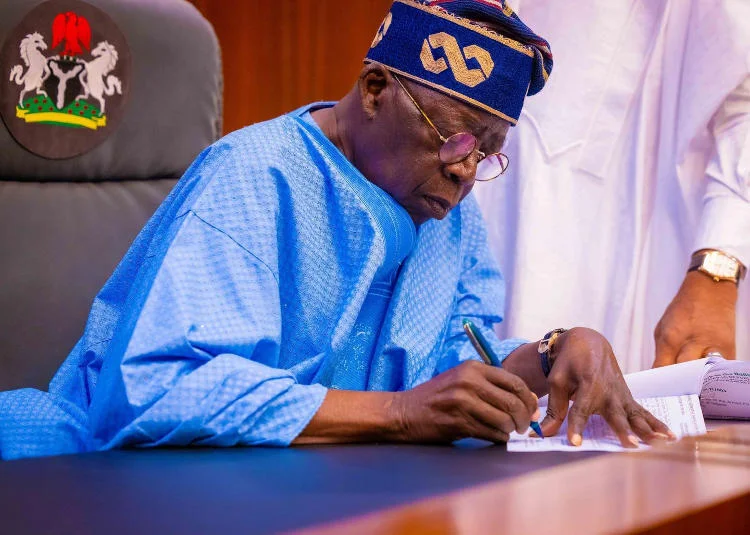
Presidential Assent and Public Outcry
President Bola Tinubu has signed the amended Electoral Act into law, despite public criticism and protests from civil society groups and concerned citizens.
For many Nigerians still reflecting on the controversies surrounding the 2023 general elections, the decision signals a missed opportunity to strengthen electoral safeguards, particularly the clause mandating real-time electronic transmission of results.
With the president’s assent, the legislative phase has ended. However, the broader debate over electoral credibility has only intensified.
The Core Controversy: Real-Time Transmission
At the heart of the amendment is the removal of a firm guarantee for real-time electronic transmission of election results from polling units.
The new provision allows manual transmission, supported by electronic systems “where possible.” Critics argue that this phrasing introduces ambiguity into a process that requires clarity and precision.
Many citizens and democracy advocates had insisted that real-time electronic transmission was critical to restoring trust in Nigeria’s electoral system. Without it, concerns remain about discrepancies between polling unit results and figures announced at collation centres.
INEC Under Renewed Scrutiny
The burden now shifts to the Independent National Electoral Commission (INEC), which must implement elections under the revised framework.
INEC faces the challenge of designing operational guidelines that prioritise transparency while navigating the flexibility introduced by the amendment. The commission’s credibility in 2027 will depend not only on legal provisions but on how effectively it closes potential loopholes.
Duty Bearers and Political Responsibility
Key actors in the amendment process include:
-
President Bola Tinubu
-
The National Assembly leadership
-
The ruling All Progressives Congress (APC) caucus, which supported the Senate’s version of the amendment
-
INEC, responsible for administering elections under the new law
Critics argue that the speed of presidential assent, coming shortly after the bill’s passage, suggests strategic timing that allows political actors to prepare for the 2027 elections under the revised framework.
A Rights-Based Concern
Transparent elections are not merely administrative procedures but constitutional and democratic rights.
Nigeria is a signatory to the African Charter on Democracy, Elections and Governance, which commits member states to credible and participatory electoral processes.
Ambiguity in result transmission mechanisms may undermine public confidence in whether votes are accurately counted and reflected in final outcomes.
Groups often most affected by electoral irregularities, including women, young people, persons with disabilities, and first-time voters, risk further marginalisation if transparency measures are weakened.
What Citizens Can Do
As attention turns toward the 2027 elections, citizens and civil society organisations can:
-
Demand that INEC publish clear operational guidelines prioritising electronic transmission
-
Advocate for lawmakers to revisit contentious provisions
-
Require political parties to publicly commit to transparent collation processes
-
Strengthen election monitoring and civic oversight efforts
Meanwhile, the judiciary must prepare to handle potential post-election disputes impartially and efficiently.
Looking Ahead to 2027
The amended Electoral Act sets the legal foundation for Nigeria’s next general elections.
Whether the 2027 polls will be peaceful and broadly accepted will depend on how institutions interpret and implement the law, and whether transparency is treated as a technical option or a democratic obligation.
The credibility of Nigeria’s electoral system now rests not only on legislation but on institutional integrity and sustained citizen engagement.
About the Author