
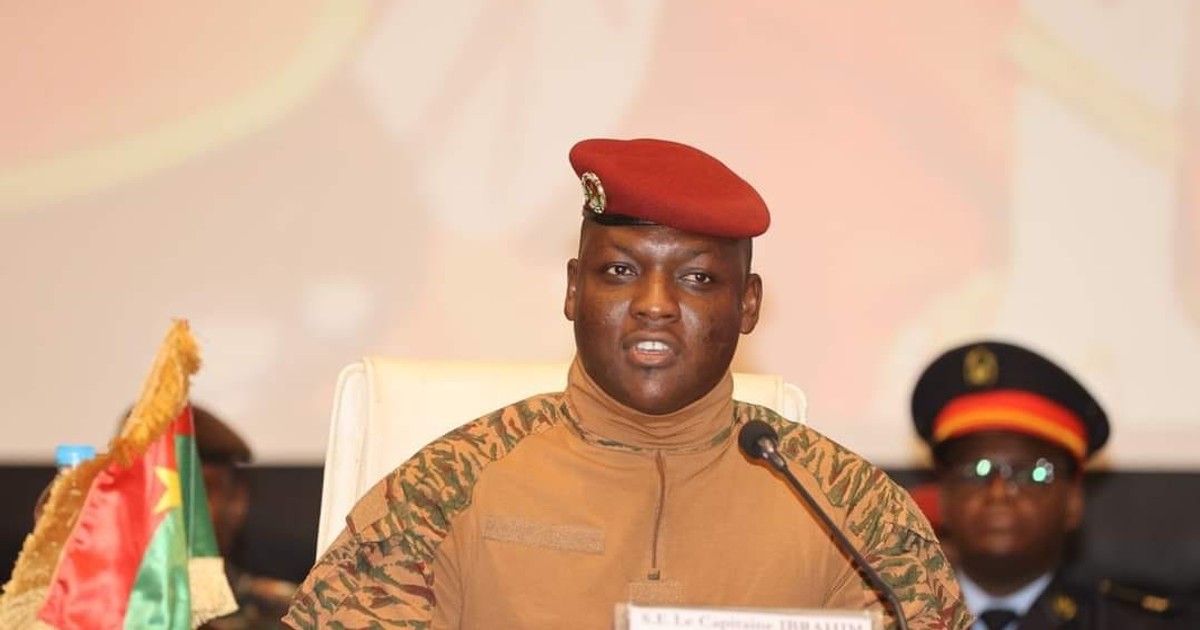
Burkina Faso has taken another major step toward military self-reliance under Captain Ibrahim Traoré, unveiling locally adapted “Nanga” armored vehicles for its defense and security forces as the West African country seeks to reduce its dependence on imported military equipment.
The development represents a significant part of Traoré’s broader push for what his government describes as national sovereignty, local industrial development and reduced dependence on foreign suppliers.
The first batch of Nanga armored vehicles has reportedly been delivered to Burkina Faso’s defense and security forces. The vehicles are described as locally adapted and transformed units, with the initiative presented by authorities as part of an effort to build domestic capacity in military equipment production.
The announcement comes against the backdrop of Burkina Faso’s increasingly close relationship with Russia and its continuing deterioration of traditional military ties with Western countries, particularly France.
However, the development should not be interpreted simply as Burkina Faso replacing every foreign weapon system with locally manufactured equipment overnight. The Nanga project is one component of a much broader effort to increase domestic production and military independence.
Traoré Pushes Military Self-Reliance
Since taking power, Captain Ibrahim Traoré has repeatedly emphasized the importance of Burkina Faso producing more of what it needs domestically.
That strategy extends beyond weapons.
The government has increasingly promoted local production of uniforms, textiles, agricultural products, machinery and other goods as part of its wider economic and political vision.
The latest armored-vehicle initiative fits directly into that philosophy.
Instead of depending entirely on foreign suppliers for military vehicles, Burkinabè engineers and technicians have been involved in adapting armored platforms locally.
The government’s messaging presents the move as an important step toward national sovereignty.
Meet The Nanga Armored Vehicle
The newly presented vehicle carries the name Nanga, a word associated with the scorpion in the Mooré language.
The first units have reportedly been adapted and transformed in Burkina Faso before being integrated into the country’s defense and security forces.
According to reporting from La Nouvelle Tribune, the project has roots in a prototype presented at the SYSDEF 2025 international security and defense exhibition in Ouagadougou.
The prototype was developed by Burkinabè engineer Thierry Alain Belemkoabga together with a team of local engineers and technicians.
The development reportedly took more than 24 months.
The prototype also received recognition in the innovation category at the SYSDEF exhibition.
Designed For Different Military Roles
The locally adapted platform is not necessarily limited to a single military role.
Information surrounding the prototype indicated that the vehicle could be configured for different missions.
Potential applications included:
- Troop transportation
- Security operations
- Patrol missions
- Medical evacuation
- Other specialized military configurations
This flexibility could make the platform useful to Burkina Faso’s armed forces, particularly in an environment where military units operate across difficult terrain and face asymmetric threats.
The exact technical specifications, armor protection levels, engine configuration and weapons systems of the Nanga vehicles have not been comprehensively disclosed in the publicly available reports.
That makes it difficult to independently assess the vehicle’s performance against established international armored platforms.
Burkina Faso’s Growing Relationship With Russia
The development is also taking place alongside Burkina Faso’s increasingly close security relationship with Russia.
Since Traoré came to power, Ouagadougou has moved away from its former military relationship with France and sought alternative international partners.
Russia has become one of the most important of those partners.
In September 2023, Traoré received a Russian military delegation to discuss implementation of military cooperation agreements between the two countries. The Burkinabè presidency said the discussions focused partly on military matters and operationalizing commitments made between the two governments.
More recently, Burkina Faso and Russia have continued discussions on security cooperation.
In July 2026, Burkina Faso’s foreign minister held talks with Russian Foreign Minister Sergei Lavrov on bilateral cooperation, including security.
The Burkinabè government said Russia had expressed willingness to continue providing technical support to strengthen the operational capabilities of Burkina Faso’s defense and security forces.
The Decline Of French Military Influence
The move toward local production also reflects a much larger geopolitical transformation across the Sahel.
Burkina Faso, Mali and Niger have all experienced military takeovers and subsequently reduced their military relationships with France.
Under Traoré, Burkina Faso expelled French forces and sought alternative security partnerships.
Russia has subsequently expanded its presence in the region.
A U.S. Congressional Research Service summary notes that Russian security personnel have been deployed to Burkina Faso since late 2023 and that Russia has supplied weapons to the country.
The same assessment describes Burkina Faso’s relationship with Moscow as part of a broader effort by Sahel military governments to seek alternative security partners.
The Nanga project therefore fits into a larger strategic picture.
Burkina Faso is not simply attempting to build an armored vehicle.
It is attempting to reduce its vulnerability to foreign supply chains.
Local Military Production Goes Beyond Armored Vehicles
The armored vehicles are only one part of the government’s industrialization strategy.
On September 9, 2026, Traoré inaugurated the TEXFORCES-BF industrial complex in Bobo-Dioulasso.
The facility is designed to manufacture clothing for Burkina Faso’s defense and security forces, Volunteers for the Defense of the Homeland, paramilitary personnel and civilians.
The government says the project is designed to transform locally produced Burkinabè cotton into finished textile products inside the country.
The complex was established with reported capital of 17 billion CFA francs and is intended to process large quantities of cotton while creating thousands of jobs.
The government describes the facility as another symbol of industrial sovereignty.
That means Burkina Faso’s military self-reliance strategy is increasingly extending from weapons to uniforms and other military supplies.
From Cotton To Military Uniforms
The TEXFORCES-BF project is particularly significant because Burkina Faso is one of Africa’s major cotton-producing countries.
Instead of exporting raw cotton and importing finished military clothing, the government wants more of the value chain to remain inside Burkina Faso.
The official government description says the complex is intended to strengthen local transformation of cotton, reduce dependence on imports and create employment.
The factory is expected to produce fabrics, knitted materials, shirts, socks and other clothing products for both military and civilian markets.
The approach represents a broader economic philosophy:
produce locally, process locally and supply national institutions locally.
Why Military Independence Matters To Burkina Faso
Burkina Faso has been battling jihadist insurgencies for years.
The country faces attacks from groups affiliated with al-Qaeda and Islamic State networks operating across the Sahel.
Recent reporting indicates that militant violence across the region has reached extremely high levels, with Burkina Faso, Mali and Niger remaining among the principal areas affected.
In such an environment, reliable access to military equipment is strategically important.
Dependence on foreign suppliers can create vulnerabilities involving:
- Delivery delays
- Export restrictions
- Political disagreements
- Spare-parts availability
- Maintenance requirements
- Foreign currency pressures
Local adaptation could potentially reduce some of these vulnerabilities.
However, producing sophisticated military equipment domestically requires substantial engineering, manufacturing, testing and maintenance capabilities.
Questions About What “Made In Burkina” Means
The Nanga announcement has also attracted scrutiny.
Burkina Faso’s official messaging presents the vehicles as evidence of local production and says the country is moving away from imported armored vehicles.
However, independent reporting has questioned the extent to which the vehicles are entirely manufactured domestically.
One report noted that the available public evidence does not establish that every major component of the vehicles is produced in Burkina Faso.
This distinction matters.
There is an important difference between:
manufacturing an armored vehicle completely from domestically produced components
and
importing a vehicle or components and locally adapting, modifying or assembling them.
The available reporting strongly supports the latter description for at least the early Nanga project.
That does not make the achievement insignificant.
Local adaptation still requires engineering knowledge, workshops, technicians and technical infrastructure.
But it is important for readers to understand exactly what has been demonstrated.
A Changing Sahel Military Landscape
Burkina Faso’s approach reflects a wider transformation taking place across the Sahel.
Military-led governments in Burkina Faso, Mali and Niger have moved closer to Russia while reducing their reliance on traditional Western security partners.
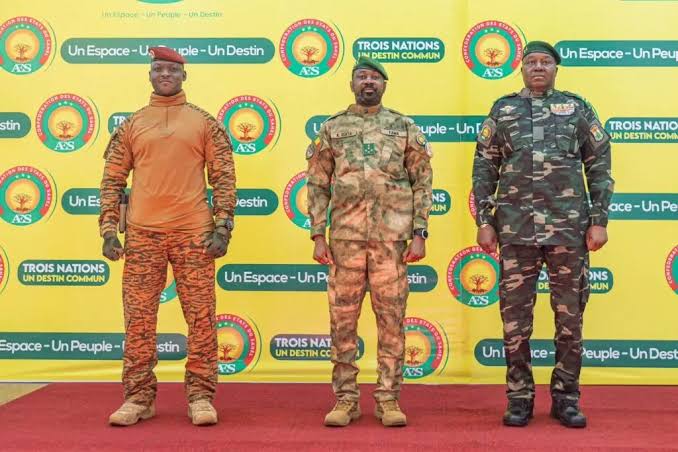
The three countries have also deepened their own regional cooperation through the Alliance of Sahel States, known by its French acronym AES.
Their governments argue that greater regional autonomy is necessary to address security problems without depending heavily on Western governments.
Critics, however, have questioned whether alternative foreign partnerships alone can solve the region’s security problems.
The continuing strength of jihadist groups demonstrates the scale of the challenge.
What The Nanga Project Could Mean For Burkina Faso
If Burkina Faso can successfully expand local production of armored vehicles, the long-term implications could extend beyond the military.
A domestic defense industry could create opportunities for:
- Engineering employment
- Technical training
- Manufacturing development
- Metalworking
- Automotive technology
- Electronics
- Maintenance and repair
- Research and development
Military procurement can sometimes stimulate civilian industries when technologies and skills developed for defense applications later find commercial uses.
For Burkina Faso, building these capabilities could therefore become part of a wider industrial strategy.
The Security Challenge Remains
Despite the symbolism of the new equipment, locally manufactured or adapted vehicles will not by themselves resolve Burkina Faso’s security crisis.
The country continues to face attacks from well-armed militant groups operating across the Sahel.
Military equipment is only one component of counterinsurgency.
Other factors include:
- Intelligence gathering
- Local community cooperation
- Logistics
- Training
- Border security
- Air support
- Medical services
- Governance
- Economic development
The effectiveness of the Nanga vehicles will ultimately depend on how well they perform in real operational conditions and whether Burkina Faso can sustain production and maintenance over time.
What Happens Next?
The immediate significance of the Nanga rollout is that Burkina Faso has demonstrated a willingness to move beyond simply purchasing finished military equipment from abroad.
The country is attempting to build its own industrial capabilities while simultaneously strengthening its relationship with Russia and other non-Western partners.
The inauguration of TEXFORCES-BF just days before the armored vehicle announcement reinforces the impression that the government is pursuing a coordinated strategy rather than isolated projects.
Whether Burkina Faso can transform these initiatives into a fully developed defense-industrial ecosystem remains to be seen.
For now, however, the message from Ouagadougou is unmistakable: military sovereignty increasingly means producing more at home.
And with the first Nanga armored vehicles entering service, that ambition has moved from political speeches into physical equipment.
About the Author