
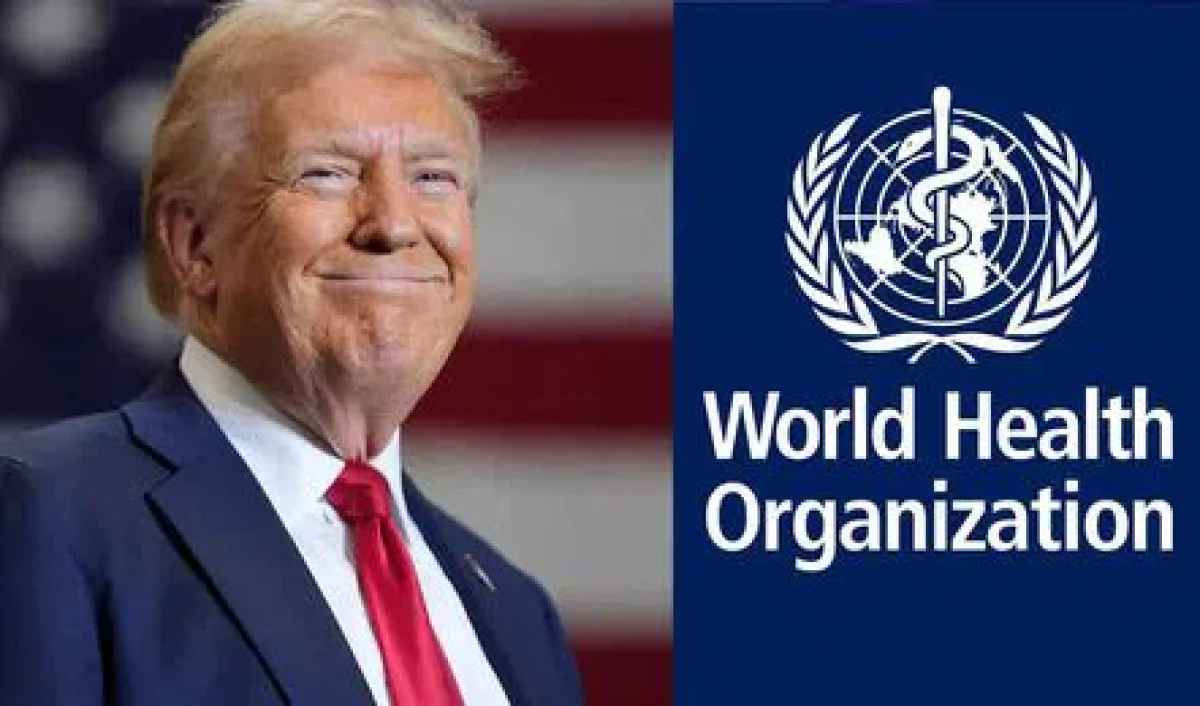
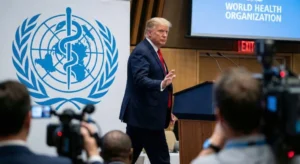
The United States has formally completed its withdrawal from the World Health Organization, ending a 78-year relationship with the global health body, federal officials confirmed on Thursday. The move follows an announcement made a year ago by President Donald Trump, citing dissatisfaction with the WHO’s handling of the COVID-19 pandemic.
However, the departure is far from a clean break.
According to the WHO, the U.S. still owes approximately $280 million in unpaid membership dues and financial obligations. Trump administration officials dispute that claim, arguing that the United States is not legally required to settle outstanding payments after withdrawing.
Beyond finances, public health experts warn that the U.S. exit could significantly weaken both global and domestic preparedness for future disease outbreaks. Officials acknowledge that unresolved issues remain, including the loss of access to international disease surveillance data that often provides early warnings of emerging pandemics.
Why the WHO Matters
The WHO is the United Nations’ specialized health agency, responsible for coordinating international responses to health emergencies such as mpox, Ebola, polio, and influenza outbreaks. It also supports poorer nations with technical expertise, helps distribute vaccines and medical supplies, and sets global health standards across hundreds of conditions, from mental health to cancer.
Nearly every country in the world is a WHO member.
Historically, the U.S. played a central role in the organization’s creation in 1948 and has been one of its largest contributors. On average, Washington paid about $111 million annually in mandatory dues and roughly $570 million more in voluntary contributions, according to the U.S. Department of Health and Human Services. American public health experts from the Centers for Disease Control and Prevention also held key advisory roles within the agency.
Trump Administration’s Rationale
In an executive order issued shortly after returning to office, Trump accused the WHO of mismanaging the COVID-19 pandemic, failing to implement needed reforms, and being overly influenced by member states. Administration officials also criticized the organization’s early guidance during the pandemic, including initial opposition to mask use and its delayed acknowledgment that COVID-19 spreads through the air.
Another longstanding grievance was leadership representation. None of the WHO’s nine directors-general since its founding have been Americans, a point Trump officials argue is unfair given the scale of U.S. funding and expertise.
Public Health Concerns Grow
Public health leaders say the withdrawal risks crippling global efforts to eradicate polio, improve maternal and child health, and detect new viral threats.
Dr. Ronald Nahass, president of the Infectious Diseases Society of America, described the decision as “shortsighted and misguided” and warned that it undermines science-driven responses to global health emergencies.
The U.S. has already ceased participation in WHO committees, leadership bodies, and technical working groups. This includes groups that monitor circulating flu strains and determine updates to seasonal flu vaccines, potentially limiting America’s access to critical disease intelligence.
“These systems put Americans at the front of the line when outbreaks occur and rapid vaccine development is needed,” said Lawrence Gostin, a public health law expert at Georgetown University.
Data Sharing and Legal Disputes
Trump administration officials insist the U.S. is pursuing direct bilateral health data-sharing agreements with other countries, bypassing the WHO. However, they declined to specify how many such agreements exist.
Gostin questioned the feasibility of that approach, noting that many emerging viruses are first detected in countries unlikely to enter direct data-sharing agreements with the U.S.
“Is China going to sign a contract with the United States? Are African nations going to do so?” he asked. “The claim borders on implausible.”
Gostin also argued that the withdrawal itself may be legally flawed, since the U.S. joined the WHO through an act of Congress and, in his view, requires congressional approval to leave.
Outstanding Financial Dispute
Under WHO rules, member states must provide one year’s notice of withdrawal and settle all outstanding financial obligations. While the U.S. complied with the notice requirement, it has not paid its 2024 or 2025 dues, leaving a reported balance of about $280 million.
An administration official rejected the WHO’s interpretation, maintaining that the U.S. bears no financial responsibility after its withdrawal.
About the Author